
New Frontiers of Sound: A Quiet Revolution

Sound waves are all around us. They govern vibrations from the sweetest of sound to the most destructive earthquakes. Now, a team of researchers across the US has embarked on an ambitious project, named ‘New Frontiers of Sound’, which will pave the way for advanced technologies that operate using sound waves. Combining the expertise of more than 30 leading scientists and engineers from across the field of acoustics, the project promises to discover new properties of sound, while offering exciting opportunities for researchers from a diverse range of backgrounds.
Acoustic Waves
Although we spend little time thinking about them, sound waves constantly surround us, and permeate virtually every aspect of our lives. Scientifically, they are called ‘acoustic’ waves of compression and decompression, which propagate through materials as atoms and molecules bump into each other in chain reactions of energy exchange. These processes are now well understood by physicists, but, until now, they have not been widely exploited in the latest technologies.
In recent years, the study and application of acoustic waves has been somewhat eclipsed by the field of optics, which exploits the properties of light waves. However, these two phenomena share many similarities, for instance, they obey analogous governing mathematical equations.
The New Frontiers of Sound (NewFoS) team believes that, since sound offers fundamentally different properties to light, this overshadowing has been preventing many exciting acoustics-based technologies from coming to fruition. Through the NewFoS project, the researchers will focus on various areas and applications of sound wave manipulation, combining their expertise to rectify this issue. ‘We will leverage the analogies between sound and light to bring powerful concepts demonstrated with light to totally unexplored venues to control sound propagation,’ explains Dr Andrea Alù, one of the team leaders on the project.
Exceptional Points
Dr Alù and his colleagues at the City University of New York have explored the properties of ‘singularities’ in models of physical systems. At these so-called ‘exceptional points’, the mathematics needed to describe a system’s response becomes entirely different from that used for conventional systems. So far, Dr Alù’s work on exceptional points has been based on rare types of optical systems that exchange energy with their surrounding environments, making them useful for manipulating light waves in exotic ways.
These manipulations can be practically achieved using ‘photonic’ systems, which comprise engineered materials with features just a few nanometres across. Through experiments with these nanostructures, Dr Alù’s team determined that these features are ideally suited for enhancing sensitivity and manipulating light in highly unusual ways. This discovery yielded important insights for optical applications, including ultrasensitive measurements and better control over lasers. Through NewFoS, these findings will be extended to acoustic waves – with important implications for a wide range of sound-based technologies.

Breaking Symmetry
Most systems that transport energy are symmetric, which means that the amount of energy transmitted from a source to a receiver remains unchanged when the two devices are switched around. This phenomenon is known as reciprocity. ‘Listening to an echo is experiencing reciprocity,’ says Dr Chiara Daraio, another team lead on the project. ‘Hearing attenuation of sound intensity in a forest due to scattering by trees is experiencing reciprocity, as scattering leads to energy loss.’
At the California Institute of Technology, Dr Daraio’s team studied systems in which symmetry can be broken through the principle of ‘nonreciprocity’, meaning that if the source and receiver are swapped, and the direction of energy flow is reversed, a different amount of energy is exchanged between them. ‘Nonreciprocity can be used to create sound-based low energy loss devices and make the battery of your mobile device last longer,’ explains Dr Daraio.
Dr Daraio’s group uses advanced calculations and experiments to produce a new material with a repeating yet asymmetrical structure. As they hoped, the researchers found that nonreciprocity could emerge in different systems and at different frequencies, contributing to the design of one-way transport for acoustic waves – similar to that observed in electrical diodes. In addition, they identified the mechanisms responsible for this symmetry breaking – which would prove critical for the new devices and technologies planned as part of the NewFoS project.
One-way Travel
On larger scales than those investigated by Dr Daraio, symmetry breaking can occur in acoustic waves with a wide variety of shapes – which can be quantified by their wavelengths and amplitudes. NewFoS team lead Dr Massimo Ruzzene at the University of Colorado, Boulder investigated how the most extreme form of nonreciprocity can be recreated in acoustic waves: a completely one-way flow of sound, where no energy would be transmitted if a source and receiver were switched. To do this, his team devised a setup in which a beam of aluminium was partially covered in tightly packed, repeating arrays of patches that impart mechanical forces as they gather electrical charge. These patches were then connected to circuits and switches that periodically varied the mechanical properties of the beam over time as the waves passed through. Through experiments, Dr Ruzzene and his colleagues demonstrated that within a certain band of frequencies, the beam could be manipulated to allow waves to freely travel in one direction, but completely block them in the other.
Quantum-like Sound Waves
At the same time as these studies, project lead Dr Pierre Deymier at the University of Arizona focused on the intriguing similarities between acoustic waves and ‘entangled’ quantum particles – one of the most famous and mysterious properties of quantum mechanics. The phenomenon describes how pairs of particles can stay linked to each other, even when they become separated by large distances. Importantly for Dr Deymier’s team, entanglement is also comparable to a property that emerges in propagating waves, known as ‘nonseparable’ states. In previous studies, nonseparable states have been observed experimentally using laser beams, but not with sound waves.
For the first time, Dr Deymier and his colleagues demonstrated this using a specialised ‘waveguide’ – an instrument typically used to direct waves along particular paths while sustaining minimal losses. In this case, nonseparable states were produced by stacking multiple sound waves on top of each other and linking them to the elastic waveguide through which they propagated. This setup allowed the researchers to carefully prepare and tune the shapes of the intricately connected waves as they travelled. At last, this result opened a clear door to the application of sound in modern technologies.

Sensing Forests
In addition to this study, Dr Deymier has explored how acoustic wave sensing could provide useful new ways to monitor the distribution of vegetation across the Earth’s surface. In this study, his team introduced a new technique for exploiting acoustic waves that travel through the ground, such as seismic waves emanating from earthquakes, which become scattered and distorted by the roots of trees. Using simulated model forests, Dr Deymier’s team calculated how these waves would respond to different arrangements and densities of trees.
The researchers found that acoustic waves in the ground are, in fact, extremely sensitive to these arrangements – displaying characteristic scattering patterns that depend strongly on tree distribution. They now hope that their results could lead to important new ways to characterise tree distributions, with applications including improvements to forest management and conservation, especially in more remote areas. Overall, the study clearly demonstrated just how broad the potential benefits of acoustic science can be.
New Frontiers of Sound
Each of these lead researchers, as well as the wider NewFoS team, foresees a ‘quiet revolution’ in the field of ‘topological acoustics’. Now teaming up to bring sound to the forefront of scientific research, they are joined by an educational team led by Dr Sara Chavarria at the University of Arizona. Through this program, NewFoS will also promote greater involvement of researchers in typically underrepresented demographics.
The team has set out three goals for achieving these results. Firstly, the researchers will develop new techniques for producing miniaturised devices that can process large amounts of information encoded into sound waves. Secondly, they aim to produce acoustic wave-generating devices that offer far more tuneability than their previous counterparts. Finally, they will develop accurate acoustic sensors embedded into materials that could become invaluable for monitoring the infrastructures of technologically integrated ‘smart cities’ – all with lower signal losses than previous devices.
The NewFoS team hopes that by realising these aims, they will ‘maximise the positive societal impacts from the pursuit of a new science of sound for information processing, communications, and sensing, and to leverage these societal impacts to foster successful and integrated transitions along education-to-professional career paths for a diverse workforce.’

Setting Out a Mission Plan
Ultimately, the NewFoS team hopes that their work will enable us to fully exploit the physical properties of sound waves for the broadest societal benefits, and attract the interest of partners in industry. At the same time, they will develop programs to educate and mentor a workforce encompassing researchers from a diverse variety of backgrounds and demographics. To do this, the NewFoS researchers have drawn out a mission plan centred around three central areas.
Firstly, the team will use advanced data science to build new materials and structures – combining their expertise to make informed decisions of how to manipulate sound waves in the most effective ways. Secondly, they will fabricate miniaturised devices that incorporate these materials using techniques such as 3D printing, which will enable intricate, repeating structures to be fabricated on small scales. Finally, they will develop techniques for incorporating sound waves from across the spectrum of acoustic frequencies, keeping their applications as broad as possible.
New Opportunities for Sound
As the modern technological landscape becomes ever more diverse and expansive, the NewFoS team hopes that their project will accelerate an expansion of the role that acoustic waves play in driving progress further. Their efforts will unite groups as wide-ranging as technologists, researchers, leaders, and policymakers to realise these goals, incorporating a combination of cutting-edge science and coordinated collaboration.
The researchers now hope that with the success of NewFoS, the science of sound may soon play a greater role in improving our everyday lives. ‘We imagine a world in which miniaturised devices process massive sound-encoded information in way current computers cannot; acoustic wave devices enable a generation revolution in low loss, tunable, multifunctional wireless technologies; and embedded, distributed acoustic-sensors with high sensitivity and selectivity reveal and monitor the infrastructure integrity of smart cities and augment human performance in the work environment,’ concludes Dr Deymier.
Reference
https://doi.org/10.33548/SCIENTIA513
Meet the researchers
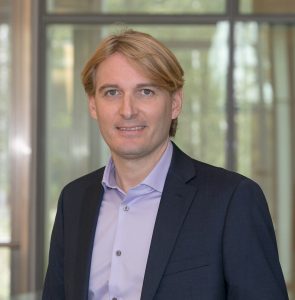
Dr Andrea Alù
Advanced Science Research Center,
City University of New York
Dr Andrea Alù received his PhD from the University of Roma Tre, Italy, in 2007. He was the Temple Foundation Endowed Professor at UT Austin until 2018, when he became the founding director of the Photonics Initiative at the Advanced Science Research Center at the City University of New York (CUNY) and Einstein Professor at the CUNY Graduate Center. Dr Alu’s research focuses on a wide range of research interests, from nano-optics and photonics to acoustics and metamaterials.
E: aalu@gc.cuny.edu
W: http://www.alulab.org/
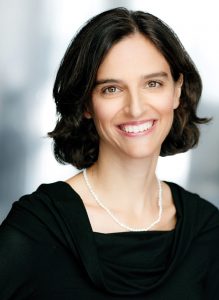
Dr Chiara Daraio
Department of Mechanical Engineering and Applied Physics,
California Institute of Technology
Dr Chiara Daraio completed her PhD at the University of California San Diego in 2006, and has since been on the faculty at Caltech. She is a Professor of Mechanical Engineering and Applied Physics. Dr Daraio’s research group focuses on engineering new materials, for applications in areas including robotics, medical devices, and vibration absorption.
E: daraio@caltech.edu
W: http://www.daraio.caltech.edu
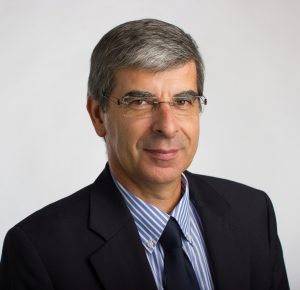
Dr Pierre Deymier
Department of Materials Science and Engineering,
The University of Arizona
Dr Pierre Deymier completed his PhD at Massachusetts Institute of Technology in 1985. He has worked at the University of Arizona ever since, where he heads the Department of Materials Science and Engineering. As well as research interests relating to acoustics and nanotechnology, Dr Deymier is currently involved in a variety of mentorship schemes that increase students’ engagement with practical science, and enhance opportunities for underrepresented students.
E: deymier@email.arizona.edu
W: https://mse.engineering.arizona.edu/faculty-staff/faculty/pierre-deymier
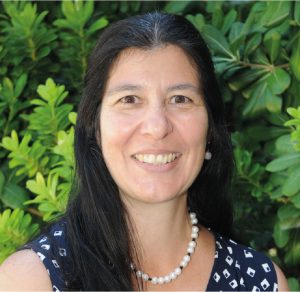
Dr Sara Chavarria
College of Education,
The University of Arizona
Dr Sara Chavarria is the Assistant Director of Science, Technology, Engineering and Mathematics (STEM) at the University of Arizona. She is dedicated to designing and conducting educational programs which enhance the learning experience of underserved and underrepresented students and the teachers who work with them. Dr Chavarria is involved in a variety of education research programs, including NAVIGATE and SBAR.
E: spchavar@email.arizona.edu
W: https://www.coe.arizona.edu/content/chavarria-sara-p
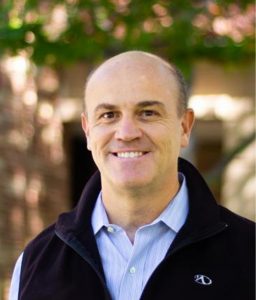
Dr Massimo Ruzzene
College of Engineering and Applied Science,
University of Colorado, Boulder
Dr Massimo Ruzzene is a Professor at the Paul M. Rady Department of Mechanical Engineering, with research interests including wave propagation and structural health monitoring. The insights gathered through his work have had several important societal impacts, including reductions of the effects of vibrations and noise on closed environments and transport systems.
E: massimo.ruzzene@colorado.edu
W: https://www.colorado.edu/mechanical/massimo-ruzzene
KEY COLLABORATORS
Joshua Levine, Nirav Merchant, Samy Missoum, Keith Runge, Helen Zhang, Pierre Lucas, Krishna Muralidharan, Andrew Wessman, Hao Xin, Arif Hasan, Tribikram Kundu, Kathleen Melde, Ravi Tandon, Sara Chavarria, Regina Deil-Amen, Kasi Kiehlbaugh, Alaina Levine, Blaine Smith & Sherard Robbins, University of Arizona
Noah Finkelstein & Elisabeth Stade, University of Colorado Boulder
Nicholas Fang & Keith Nelson, Massachusetts Institute of Technology (MIT)
Nicholas Boechler, University of California San Diego
Yuanxun Ethan Wang, University of California Los Angeles
Michael, Leamy, Georgia Institute of Technology
Alexander Khanikaev, CUNY
Derrick Hylton, Spelman College
FUNDING
National Science Foundation, Emerging Frontiers in Research and Innovation Program




Creative Commons Licence
(CC BY 4.0)
This work is licensed under a Creative Commons Attribution 4.0 International License. 
What does this mean?
Share: You can copy and redistribute the material in any medium or format
Adapt: You can change, and build upon the material for any purpose, even commercially.
Credit: You must give appropriate credit, provide a link to the license, and indicate if changes were made.
More articles you may like
Dr Rhett Martin | Governing Nature at the Edge of Collapse
For millions of men, ageing brings with it a set of frustrating and often disruptive urinary symptoms. These symptoms, caused by benign prostatic hyperplasia, or BPH, can affect sleep, confidence, and overall quality of life. Traditionally, treatment follows a familiar path. Patients begin with medications, often for years, and may eventually progress to surgery if symptoms worsen. Yet this pathway is not without its drawbacks. Medications can cause side effects, while surgery carries risks and recovery time. In recent years, a minimally invasive interventional radiology procedure called prostate artery embolisation, or PAE, has begun to challenge this traditional model. At the forefront of this shift is a collaborative research group, led by Dr. Nicholas Brown of the University of Queensland, whose series of P-EASY studies has explored whether PAE could transform how BPH is treated, particularly at earlier stages.

Assoc Prof. Nicholas Brown | Rethinking Prostate Care: A New Frontier in Treating Benign Prostatic Hyperplasia
For millions of men, ageing brings with it a set of frustrating and often disruptive urinary symptoms. These symptoms, caused by benign prostatic hyperplasia, or BPH, can affect sleep, confidence, and overall quality of life. Traditionally, treatment follows a familiar path. Patients begin with medications, often for years, and may eventually progress to surgery if symptoms worsen. Yet this pathway is not without its drawbacks. Medications can cause side effects, while surgery carries risks and recovery time. In recent years, a minimally invasive interventional radiology procedure called prostate artery embolisation, or PAE, has begun to challenge this traditional model. At the forefront of this shift is a collaborative research group, led by Dr. Nicholas Brown of the University of Queensland, whose series of P-EASY studies has explored whether PAE could transform how BPH is treated, particularly at earlier stages.

Jean Lycke | Addressing Unmet Medical Needs in Mucosal Disease: A Close-to-Market Innovation Approach
Recurrent Aphthous Stomatitis (RAS) is an oral condition characterized by one or several painful mucosal ulcers. RAS affects a large proportion of the population and has a point prevalence of approximately 2–3%, daily. The etiology remains unknown, and there is currently no curative treatment. Most patients experience recurring episodes over time, with each episode typically lasting up to a week. Here, we describe the development of a mucoadhesive patch which, when applied over a RAS ulcer, provides rapid pain relief. The patch is easy for patients to apply when symptoms begin and has the potential to be used as an over-the-counter product. The development of the Mucocort mucoadhesive patch is an example of a Close-to-Market innovation strategy that embraces simplicity within a complex healthcare system. By simplifying the product concept, the team has reduced the number of regulatory steps required before market approval. This MedTech/Pharma innovation model, known as the “4R” framework – Re-purposing, Re-formulation, Re-positioning, and Re-patenting – has guided the program from concept to commercialization. In addition to the biodegradable mucoadhesive patch developed for RAS ulcers, the team is extending the innovation concept to a mucoadhesive gel formulation for the prevention and treatment of chemotherapy-induced mucositis. This gel-based program is being commercialized separately through MucoShield.
The Translational Asian Agerelated Macular Degeneration Program Phase 2 (TAAP-2): Reimagining the Future of Vision Care
Age-related macular degeneration, often abbreviated as AMD, is one of the leading causes of vision loss among older adults worldwide. In Asia, where populations are ageing rapidly, its impact is particularly profound. For many, the disease quietly erodes central vision, making everyday activities such as reading, driving, and recognising faces increasingly difficult. Against this backdrop, the Translational Asian Age-related Macular Degeneration Programme, or TAAP for short, has emerged as a bold and ambitious effort to confront the disease headon. Now in its second phase, TAAP-2 represents a significant evolution in both scientific scope and clinical ambition.