
MORE ARTICLES YOU MAY LIKE
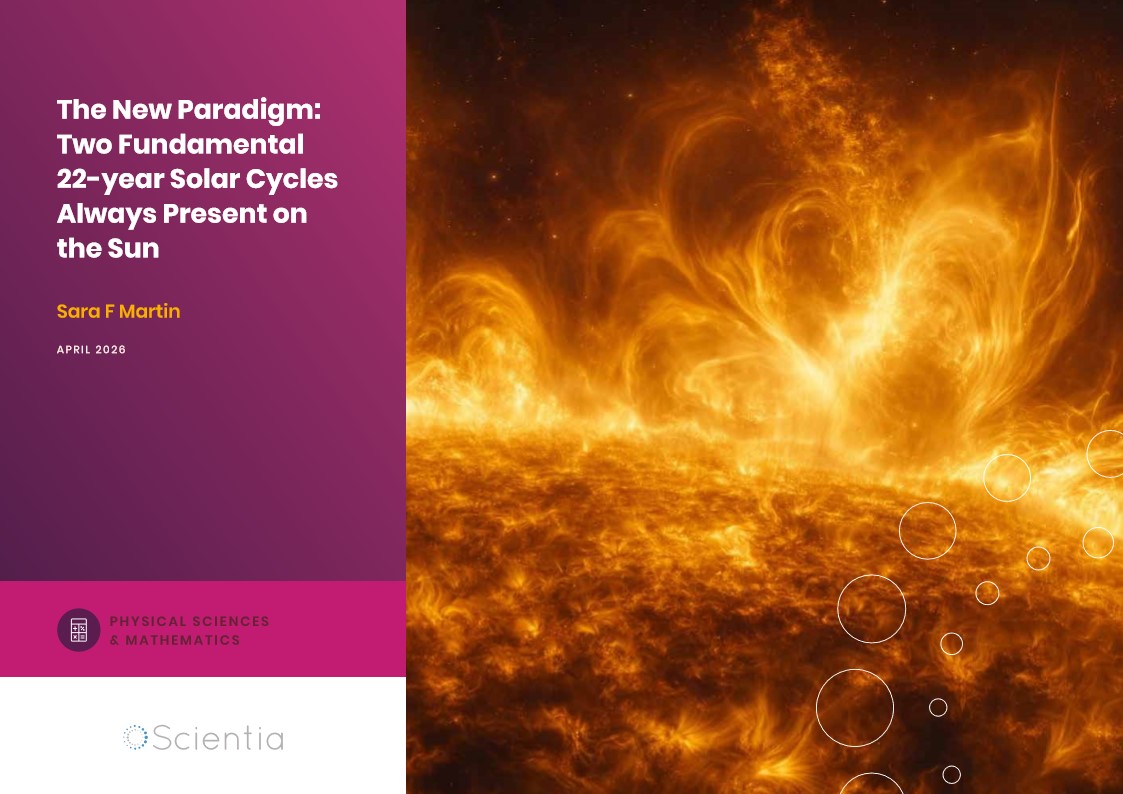
Sara F Martin | The New Paradigm: Two Fundamental 22-year Solar Cycles Always Present on the Sun
For millennia, humans have looked up towards the life-giving Sun and sought to understand its nature. One of its earliest features noticeable before the age of technology was the presence of small dark patches scattered across its surface – sunspots. These blemishes appeared to wax and wane on a regular 11-year cycle, which was thought for over a century to be a fundamental time period governing the Sun’s magnetic activity. But new discoveries suggest a radically different understanding where sunspots are merely peak phases of two, more fundamental 22- year magnetic cycles present simultaneously in different bands of latitude.
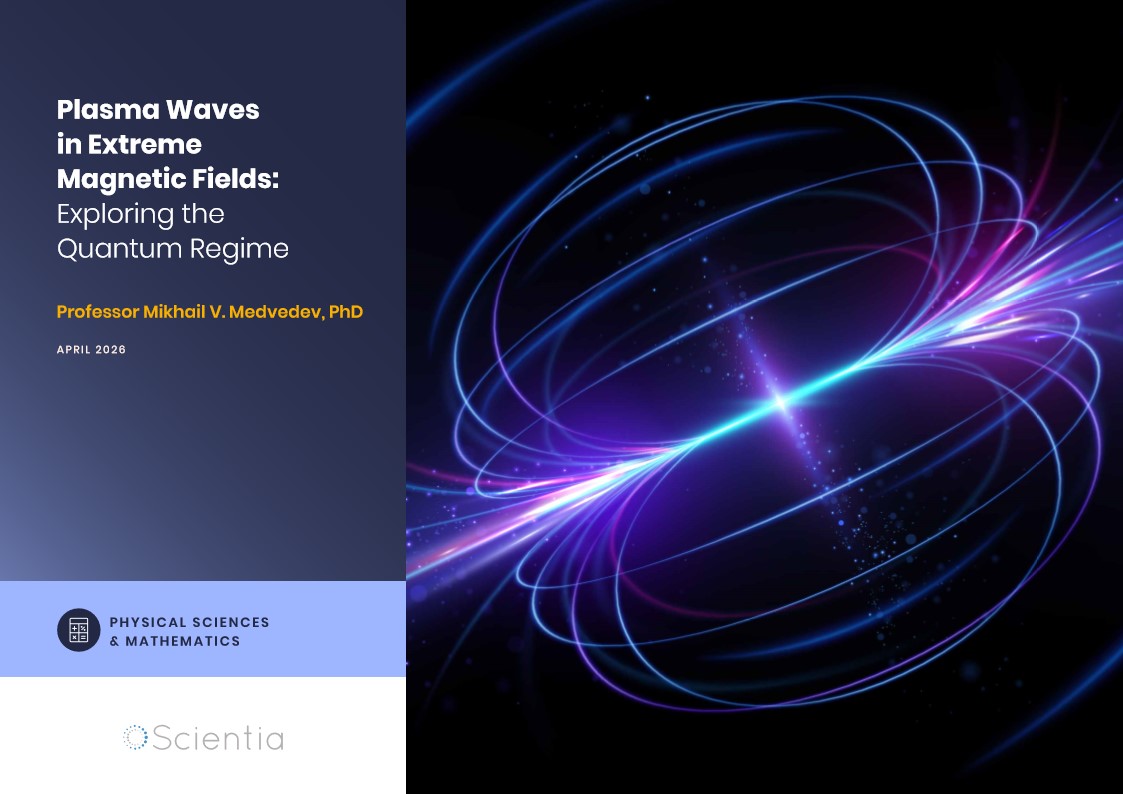
Professor Mikhail V. Medvedev | Plasma Waves in Extreme Magnetic Fields: Exploring the Quantum Regime
In environments where magnetic fields exceed even the limits of classical physics, such as magnetars and next-generation laser experiments, plasma behaviour is fundamentally altered by quantum effects. Professor Mikhail V. Medvedev and colleagues have developed a framework to understand how these extreme conditions reshape plasma waves, revealing that while familiar wave structures persist, their properties are significantly modified. These insights provide a foundation for interpreting astrophysical observations and advancing high-energy plasma experiments.

Distinguished Professor Michael Zhdanov | Mapping Magma and Drilling for Oil: New Methods for Geophysical Modelling
Geophysicists use a variety of different methods to peer beneath the Earth’s surface. Seismic activity, gravitational fields , and magnetic fields each offer their own windows into the world underground, but, in isolation, are incapable of giving us the full picture. Combining data from distinct geophysical surveys, however, is its own challenge. For a number of years, a team of researchers led by Professor Michael Zhdanov has worked to develop a mathematical framework capable of generating detailed geophysical models from multiphysics data.
Through application to modelling magma chambers underneath Yellowstone and searching for oil deposits in the Barents Sea, they demonstrate that their approach can produce robust and accurate predictions

Dr Alex Fedoseyev | Unravelling Turbulence Mysteries
Turbulence remains one of the most enigmatic and poorly understood phenomena in physics, despite being ubiquitous in nature and everyday life—from the experience of flying through turbulent air, to driving at high speed, to observing water swirling in a river. The challenge of understanding turbulence has captivated some of history’s greatest minds.
Albert Einstein (physicist): “A turbulent flow is a problem whose solution has always defied the greatest minds.”
Richard Feynman (physicist): “Turbulence is the most important unsolved problem of classical physics.”
What are the governing equations of turbulence? Dr Alex Fedoseyev is unravelling turbulence mysteries using the Alexeev Hydrodynamic Equations (AHE). The model he developed has enabled major advances in the prediction of turbulent flows and laid the foundation for practical turbulence management.