
Association of Medical Research Charities
 The Association of Medical Research Charities (AMRC) is dedicated to supporting medical research charities in saving and improving lives through research and innovation. Founded over 30 years ago, the AMRC has united more than 150 medical research charities in all areas of health and disease throughout the UK and overseas. In this exclusive interview, we follow up our 2019 interview with the new Chief Executive, Nicola Perrin, to hear their latest news.
When we last spoke to AMRC in 2019 and since then, the arrival of COVID-19 changed the world as we knew it. What has been the impact of the pandemic on medical research charities and how have they fared?
Since the pandemic started, medical research charities have lost at least £292 million in income, forcing them to cut £270 million of their research spend. This is the first substantial decrease in fundraising charity research spend in the last decade, a drop that is over seven times greater than the drop after the 2008 recession.
To honour existing research commitments many charities had to dig into precious reserves, adapt their fundraising activities, make redundancies, and cut funding for other activities. Our charities plan to cut their research spend by over £148 million over the next year and expect it to take three years for their research spend to return to normal levels.
With these funding uncertainties, the UK risks losing a generation of talented young scientists, potential future research leaders. In an AMRC survey, 40% of charity-funded early-career scientists indicated that they were considering leaving research. This would have a severe impact on decades of research crucial to finding new ways to diagnose, manage and treat diseases.
At the height of the pandemic, 70% of trials conducted in the NHS funded by AMRC members were on hold. That figure is now coming down but, despite best efforts, non-COVID research trials are struggling to recruit patients. In April 2019, about 200,000 people were recruited to trials. This April, the figure for non-COVID research was half that. The pandemic also forced charities to invest additional funding into ongoing trials to keep them going, funding that may have otherwise been used to start new clinical trials.
Despite these hardships, the sector stepped up to support the national research effort; providing a skilled workforce, infrastructure and support for testing and vaccine development, and they pivoted to fund new COVID-19 research. Cancer Research UK donated equipment and reagents to national COVID-19 testing and have set up their own testing hubs and the Asthma UK and British Lung Foundation Partnership co-funded a £1.3 million national research programme to evaluate coronavirus tests in hospitals, general practices and care homes and launched a post-COVID Hub and helpline for people left with breathing difficulties after COVID-19.
Between June 2020 and May 2021, AMRC and over 150 of our charities campaigned for Government to provide financial support to protect charity-funded research at risk. Over 105 MPs and Peers supported our call, 7,000 letters were sent to the Prime Minister from the public, and the campaign featured in over 150 news pieces. We raised awareness of the breadth of research that charities support and highlighted the vital role they play in the ecosystem. Finally, in May this year, Government announced a £20 million allocation for early-career researchers supported by charities. We’re keen to keep working with the government to make sure they understand the value of medical research charities and ideally to encourage them to continue to support and collaborate with them.
As new CEO, what are your next steps for the sector?
AMRC does such important work to support medical research charities and so I feel incredibly honoured to take on this role. At a difficult time for the sector, I am lucky to be able to build on the fantastic legacy of Aisling Burnand’s leadership over the past seven years.
Throughout the next few months, I will be meeting with all 151 member charity CEOs to hear what matters most to our charities and how we can continue to improve our services.
We have three priorities as an organisation, moving forward. The first is to provide our charities with the evidence and narrative to champion their vital role in the UK life sciences ecosystem. While we’ve done a lot over the last few years to advocate for medical research charities, our recent engagement with Government demonstrates that we still have a job to do to explain why medical research charities are so important.
I am also keen to make sure we are supporting our charities to collaborate effectively. The pandemic has demonstrated the power of partnerships; we need to do more to help AMRC charities identify potential partners and highlight opportunities to connect and collaborate.
The research landscape is changing and there is, rightly, increasing emphasis on the culture of research. We want to help you consider what those changes mean for charities, and to think about how we can support our charities to be responsible funders in a rapidly changing environment. We have already launched our Equity, Diversity and Inclusion Resource Hub, but we are looking at what else we can do to help share best practice.
I’m really excited to start working on these priorities with the amazing AMRC team.
Can you tell us about your 2020–2025 Strategic Plan?
In the run up to 2020, it was clear there were challenging times ahead: unprecedented political instability, economic uncertainty and an increasingly polarised society created a difficult environment for charities and the communities they represent. However, there were also new opportunities and hope to improve the life and experience of patients.
To assist with the development of our 2020–25 Strategic plan, we undertook a survey of our members. The survey highlighted that securing income had overtaken demonstrating impact as the most significant challenge for member charities. It gave a clear indication that making medical research funding more accessible to charities and research and innovation in the NHS should be higher priority focus areas.
With these insights in mind, we brought together a framework for our work and activity, setting out five overarching priorities:
- To champion the unique voice of the medical research charity sector by informing and educating internal and external stakeholders across the changing life sciences and digital health landscape.
- To influence the research and health funding landscape to ensure that medical research charities investment is leveraged efficiently for patient impact.
- To foster and enable better collaboration to address the needs of patients by working with industry, academia, NHS, regulators, our members, and other stakeholders.
- To maximise the potential for research and innovation in the NHS to ensure the investment from medical research charities has the greatest impact for patients.
- To drive forward the quality and future-focused membership offering which addresses changing needs and enhances AMRC’s delivery capability.
Why are medical research charities so important to the UK?
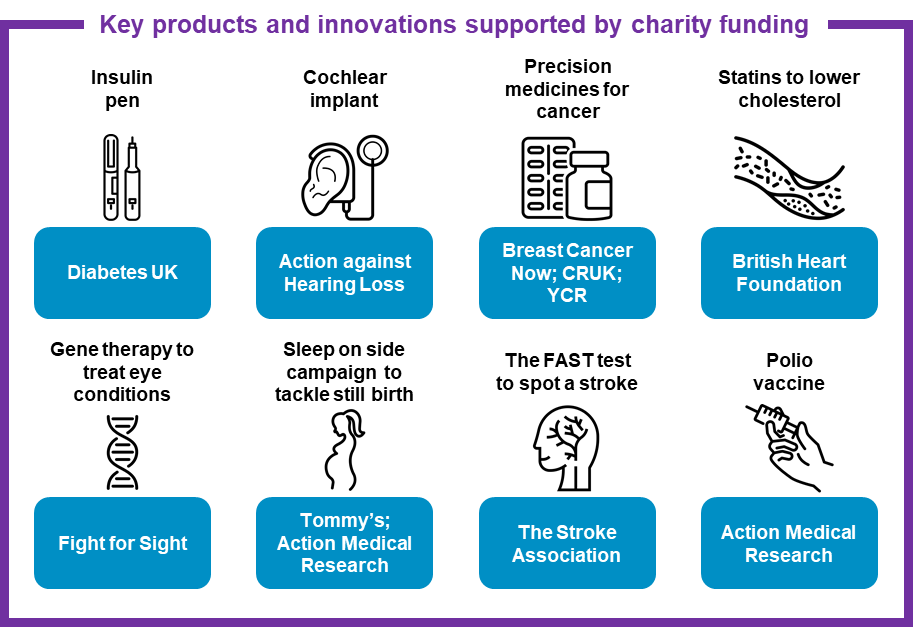
There’s this view of medical research charities as fluffy things doing good, whereas they’re actually an integral contributor to the UK’s life sciences: responding to the public’s priorities, tackling areas of unmet need, and accelerating health impact.

Responding to the public’s priorities
Charity research is shaped by the public’s priorities. Over 83% of AMRC charities are using patient voice in their research strategy or influencing work. This ensures funding is directed where it will make the most difference and lead to more efficient products and interventions that help prevent, diagnose, treat, cure, and improve quality of life for people. AMRC charities contribute to a quarter of medical products, interventions and clinical trials reported by public funders on the research evaluation platform Researchfish.
Areas of charity research are chosen by the fundraising public, identifying diseases that matter to them. AMRC charities account for 66% of public investment into cancer and cardiovascular research.
Tackling areas of unmet need
Charities invest in underfunded conditions, including rare diseases. 67 AMRC charities fund research on rare diseases, and 27 exclusively fund research into a rare disease.
Medical research charities also support research in common conditions where there is low investment, for example over a quarter of public funding into mental health research is provided by AMRC charities.
Charities are also helping to address geographical health inequalities, by funding research and creating infrastructure and networks that benefit people and institutions throughout the UK.
Accelerating health impact
Medical research charities’ sole purpose is to improve human health, not to make profits or cut costs. They help to convene and attract the necessary funders to move promising research forward and deliver benefits to patients sooner. AMRC charities account for a quarter of new collaborations and partnerships in the UK that have been reported by public funders on the research evaluation platform Researchfish. They have also leveraged more than £7 billion in further funding for UK research during the last 20 years.
Charities use their research to advise and shape policy and practice, helping to advance healthcare. They provide expert advice to Government committees, citations in clinical guidelines, and influence the training of health professionals, ensuring that decisions that impact patients are based on evidence. Over the past two decades, 10,000+ grants from 49 charities have led to 4,000+ unique influences on policy and practice that help advance healthcare.

What challenges and opportunities do you see on the horizon for medical research charities?
As a result of the pandemic, medical research has never been more visible, across government, the NHS, and the public. We need to build on that, to ensure continued investment in medical research, and to learn the lessons from the pandemic, including removing unnecessary bureaucracy, fostering collaborations, and engaging patients and NHS staff in the importance of research. Recent government reviews – the Spending Review settlement, the Life Sciences Vision, the Clinical Research Vision – are all moving in the right direction, and we hope there will be opportunities for partnerships with charities, but we need to see the detail of implementation plans.
At the moment, there is increasing focus on the sustainability of universities, and revisiting discussions about full economic costing. The partnership between government, charities and universities is very important for us, but there have been tensions about the current model of government support for charity-funded research in universities – the Charity Research Support Fund (CRSF). There are concerns that the size of the CRSF has not kept up with charity investment. This will be a key priority for us – we have just published a report exploring alternative models. We recognise there will be no easy answers but look forward to the start of a conversation between universities, government, and charities to find a sustainable approach.
While the pandemic has demonstrated the importance of research, there are still real challenges with capacity in the NHS workforce and dealing with the ongoing backlog from COVID-19. The Health and Social Care Bill currently passing through parliament provides an opportunity to mandate the need for research for Integrated Care Systems, but unfortunately, the amendment was not adopted at Committee stage. We hope there will be further discussions as the Bill passes through the Lords.
The UK-EU agreement reached Christmas 2020 left several issues unresolved. It is essential that charity-funded researchers in the UK can continue to collaborate with European colleagues. The uncertainty over association with Horizon Europe is a concern but the government announcement to provide a short-term scheme to cover the first wave of grant calls is a step in the right direction. The UK must also continue to attract talented science and research professionals. Unfortunately, the fast-track visa scheme to attract prize-winning scientists to the UK has received no applications over the last six months.
It’s also important to remember that amongst the challenges there are also opportunities, with proposed revisions both to clinical trials regulations and data protection. However, this needs to be done with care to make sure we don’t lose the potential for collaboration and data adequacy.
A positive new relationship between the UK and EU that benefits patients depends on resolving the outstanding problems. As a member of the Brexit Health Alliance and on behalf of our charities, we will continue to call on the government and EU to take steps to safeguard the interests of patients, and the healthcare and research they rely on.
Twitter: @AMRC
SHARE

DOWNLOAD E-BOOK

REFERENCE
https://doi.org/10.33548/SCIENTIA792
REPUBLISH OUR ARTICLES
We encourage all formats of sharing and republishing of our articles. Whether you want to host on your website, publication or blog, we welcome this. Find out more
Creative Commons Licence (CC BY 4.0)
This work is licensed under a Creative Commons Attribution 4.0 International License. 
What does this mean?
Share: You can copy and redistribute the material in any medium or format
Adapt: You can change, and build upon the material for any purpose, even commercially.
Credit: You must give appropriate credit, provide a link to the license, and indicate if changes were made.
SUBSCRIBE NOW
Follow Us
MORE ARTICLES YOU MAY LIKE

Assoc Prof. Nicholas Brown | Rethinking Prostate Care: A New Frontier in Treating Benign Prostatic Hyperplasia
For millions of men, ageing brings with it a set of frustrating and often disruptive urinary symptoms. These symptoms, caused by benign prostatic hyperplasia, or BPH, can affect sleep, confidence, and overall quality of life. Traditionally, treatment follows a familiar path. Patients begin with medications, often for years, and may eventually progress to surgery if symptoms worsen. Yet this pathway is not without its drawbacks. Medications can cause side effects, while surgery carries risks and recovery time. In recent years, a minimally invasive interventional radiology procedure called prostate artery embolisation, or PAE, has begun to challenge this traditional model. At the forefront of this shift is a collaborative research group, led by Dr. Nicholas Brown of the University of Queensland, whose series of P-EASY studies has explored whether PAE could transform how BPH is treated, particularly at earlier stages.

Jean Lycke | Addressing Unmet Medical Needs in Mucosal Disease: A Close-to-Market Innovation Approach
Recurrent Aphthous Stomatitis (RAS) is an oral condition characterized by one or several painful mucosal ulcers. RAS affects a large proportion of the population and has a point prevalence of approximately 2–3%, daily. The etiology remains unknown, and there is currently no curative treatment. Most patients experience recurring episodes over time, with each episode typically lasting up to a week. Here, we describe the development of a mucoadhesive patch which, when applied over a RAS ulcer, provides rapid pain relief. The patch is easy for patients to apply when symptoms begin and has the potential to be used as an over-the-counter product. The development of the Mucocort mucoadhesive patch is an example of a Close-to-Market innovation strategy that embraces simplicity within a complex healthcare system. By simplifying the product concept, the team has reduced the number of regulatory steps required before market approval. This MedTech/Pharma innovation model, known as the “4R” framework – Re-purposing, Re-formulation, Re-positioning, and Re-patenting – has guided the program from concept to commercialization. In addition to the biodegradable mucoadhesive patch developed for RAS ulcers, the team is extending the innovation concept to a mucoadhesive gel formulation for the prevention and treatment of chemotherapy-induced mucositis. This gel-based program is being commercialized separately through MucoShield.
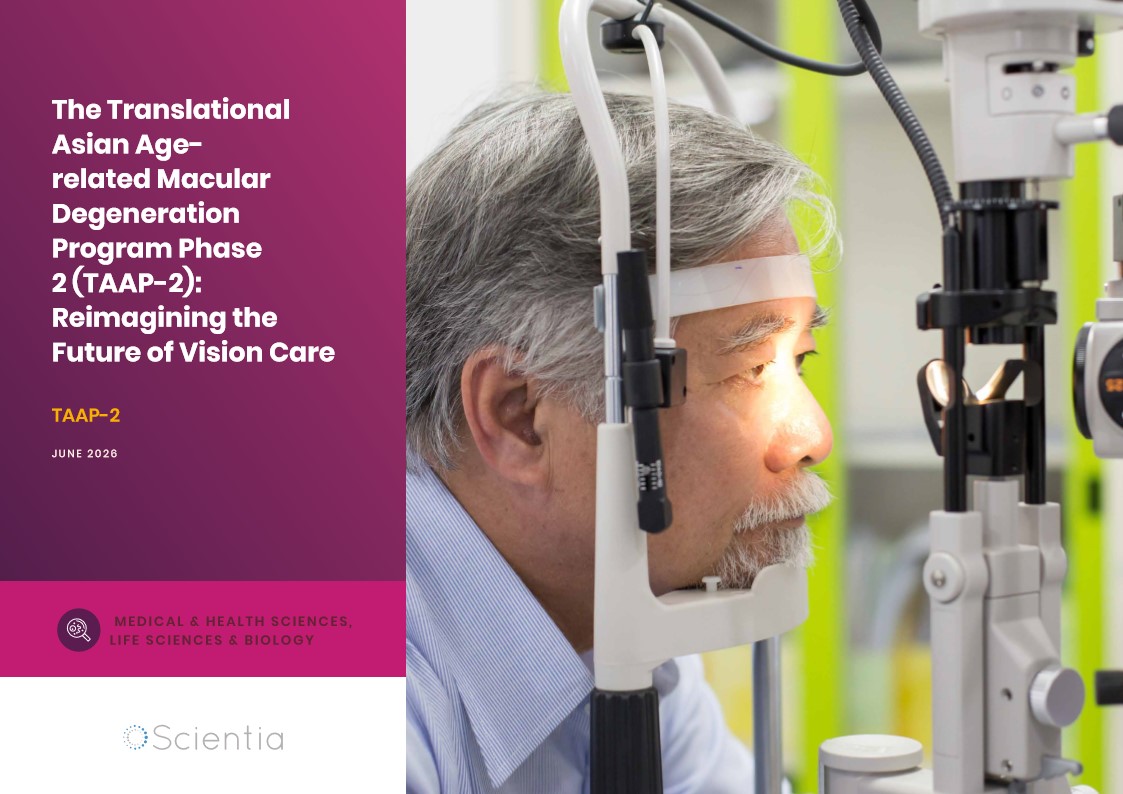
The Translational Asian Agerelated Macular Degeneration Program Phase 2 (TAAP-2): Reimagining the Future of Vision Care
Age-related macular degeneration, often abbreviated as AMD, is one of the leading causes of vision loss among older adults worldwide. In Asia, where populations are ageing rapidly, its impact is particularly profound. For many, the disease quietly erodes central vision, making everyday activities such as reading, driving, and recognising faces increasingly difficult. Against this backdrop, the Translational Asian Age-related Macular Degeneration Programme, or TAAP for short, has emerged as a bold and ambitious effort to confront the disease headon. Now in its second phase, TAAP-2 represents a significant evolution in both scientific scope and clinical ambition.

Ms. Aikaterini Dritsoula | Looking Beyond Snoring: How Hidden Airway Problems Shape Children’s Sleep
For many parents, a child’s snoring may seem harmless, even endearing. Yet in some cases, it signals something more serious. Obstructive sleep apnoea is a condition in which a child’s breathing is repeatedly disrupted during sleep. These interruptions can affect growth, behaviour, and learning. Children with this condition may toss and turn at night, struggle to concentrate during the day, or show signs of hyperactivity and fatigue. Traditionally, enlarged tonsils and adenoids have been seen as the main culprits. Surgery to remove them has long been considered the standard treatment. However, research led by Consultant ENT Surgeon Ms. Aikaterini Dritsoula of The Leeds Teaching Hospitals NHS Trust invites us to look deeper. Her work suggests that the story is often more complex, especially in very young children.