
Dr Ramez Labib – Dr Lisa Hoffman | Evaluating the Environmental Impact of Personal Care Products: The Eco-Innovation Ranking Method
Like many industries, the manufacture of personal care items such as beauty products is increasingly embracing sustainable practices. Dr Ramez Labib and Dr Lisa Hoffman at Avon Products Inc. in the USA have developed an eco-innovation ranking method to support the early stages of product design. Their semi-automated tool is unique in combining a wide range of measures from ecological risk assessment and life cycle assessment to comprehensively assess the environmental impact of products that end up as wastewater.
Sustainable Practice and Personal Care Products
Sustainable practice is increasingly being implemented across different industries. The vast industry dedicated to manufacturing personal care items (such as hair care products, fragrances, and cosmetics) is no exception. There is particular interest in the development of new processes and products with reduced environmental impact, and this is known as eco-innovation.
Many formulated personal care products end up ‘down-the-drain’ as wastewater due to being rinsed off, in the case of shampoo, for example. This means that the aquatic environment (rivers, lakes, oceans, and so on) and the water-dependent species, including fish, plants, and microorganisms that reside there, are vulnerable to potentially toxic and hazardous effects of end-of-life products.
Assessing Environmental Impact
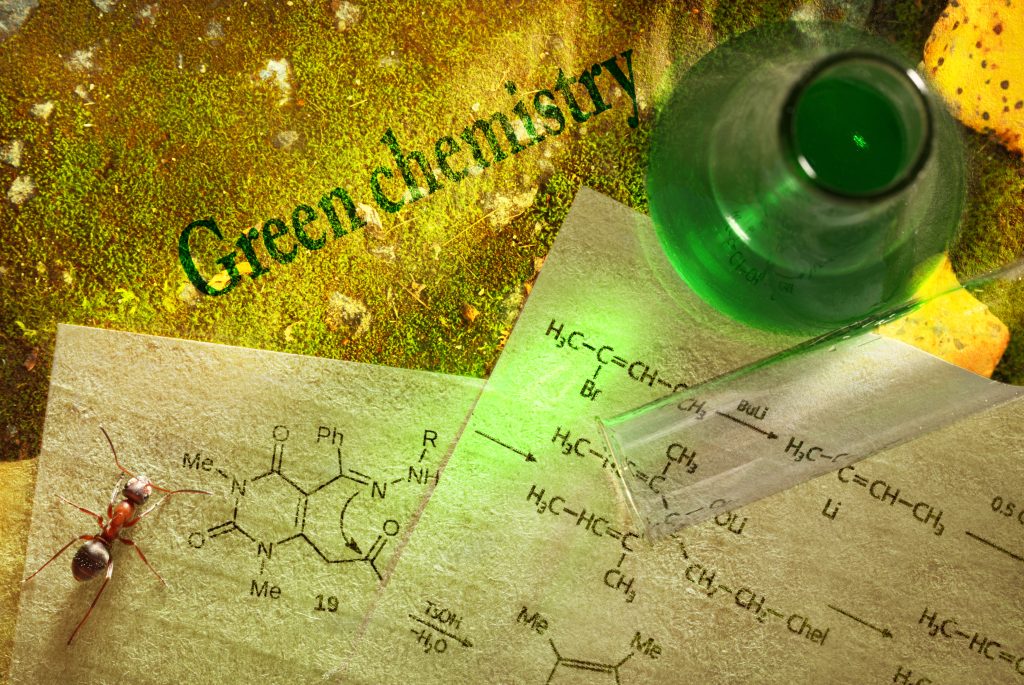
To support eco-innovation, product designers need to be able to evaluate the environmental impact of their products. Two widely used techniques are ecological risk assessment and life cycle assessment. Critical to both is green chemistry, the field of chemical engineering focussed on eliminating (or at least reducing) the use and generation of hazardous substances.
Ecological risk assessment is predominantly used for regulatory decision-making and by some governments to restrict the ingredients used in personal care products. When this happens, companies need to quickly reformulate their product or stop selling it altogether.
Life cycle assessment is the internationally standardised approach to assessing environmental impact. This comprehensive evaluation is time-consuming and resource-intensive to complete but provides more detailed and broader insights into the potential ecological impacts of a product. As such, there is increasing pressure on companies to adopt this approach in their assessments of personal care products. In an effort to develop ‘greener’ product ranges, some companies have been proactive in ascertaining the end-of-life impacts of all the ingredients in their products and not just fragrance compounds and active ingredients as typically undertaken.
The Need for a New Environmental Assessment Tool
Dr Ramez Labib and Dr Lisa Hoffman at Avon Products Inc. in the USA saw the need to be able to obtain comprehensive data via both ecological risk and life cycle assessment during product design to help companies minimise the potentially adverse environmental impacts.
However, a major challenge to this is that personal care products are made from thousands of different ingredients and life cycle data are missing for many of these. Furthermore, at the early stages of the design process, assessments have to rely on what is known about the key chemical properties of the ingredients and foreseeable product use.
Dr Labib and Dr Hoffman worked with Dr Jennifer Saxe (EcoSafety & Sustainability Inc., USA) to develop a new environmental assessment tool incorporating components from both ecological risk assessment and life cycle assessment to support the early design of down-the-drain products. A key aim was to help minimise the risk of new products being reformulated due to regulatory changes in the future.
Selection of Measures: Potential Impact Indicators
The scientists started by reviewing the scientific literature and regulatory models in the public domain to ascertain the potential impact indicators currently available. They ensured their selection of measurements included all ecological risk and life cycle assessment scales that could feasibly be incorporated into the new tool.
The next step was to identify distinct substance classes requiring dedicated and specific environmental assessment. This was achieved by taking representative personal care products, such as shampoos and make-up, and examining the ingredients. The most common ingredient type was classed as ‘non-polymer organic substances’ used either individually or with other similar compounds, and was chosen by the scientists for the initial development of their tool.
The potential impact indicators selected by the researchers include the ecological toxicity during end-of-life exposures, the potential for ground-level photochemical ozone (smog) formation, direct greenhouse gas emissions from the use of the personal care product, and depletion of scarce mineral resources. The concept of ‘persistence’ was included as an independent potential impact indicator, although not technically an environmental impact, in line with the approach taken by Regulators as a proxy measure for exposure and multiple impacts. The aim of this approach is to try to account for complex and unexpected ecosystem impacts that cannot be ascertained on the basis of the extant literature.
The Eco-Innovation Ranking Method
The semi-automated spreadsheet gathers and processes environmental impact data for ingredients and combines the data to produce a single rank value ranging from 1 (best) to 10 (worst) for each ingredient. The tool allows end users to change potential impact indicators as science progresses and priorities change. The scientists illustrated the use of the model with ten shampoos and nine make-up products to confirm its ability to differentiate among formulas.
Application and Implications
Although the scientists have focussed on personal care products, the eco-innovation ranking method can be applied to all down-the-drain products. Importantly, the weighting factors can be readily altered to fit sustainability goals as they emerge and evolve.
The eco-innovation ranking method is unique in combining to promote sustainability at the early product design stage approaches to support early stages of product design. This work will help companies to measure and achieve sustainability objectives, and contribute towards meeting the United Nations Sustainable Development Goals to more effectively manage chemicals throughout their lifecycle and minimise their adverse environmental impacts.
SHARE

DOWNLOAD E-BOOK
REFERENCE
https://doi.org/10.33548/SCIENTIA973
MEET THE RESEARCHERS

Ramez Labib, PhD, MBA, DABT, ERT
Senior Director, Toxicology
Avon Products Inc.
Suffern, NY
USA
Dr Ramez Labib obtained his PhD (Biomedical Sciences in Pharmacology and Toxicology) in 2002 at the University of Medicine and Dentistry of New Jersey, and an MBA at the New Jersey Institute of Technology in 2012. In 2009, he became a Diplomat of the American Board of Toxicology (recertified in 2019) and in 2014 was recognised as a European Registered Toxicologist. He is a full member of the Society of Toxicology, the Society of Environmental Toxicology and Chemistry, and the Mid-Atlantic Chapter of the Society of Toxicology. In his role as Senior Director, Toxicology at Avon, Dr Labib oversees a large team of safety professionals and liaises with R&D professionals to drive innovation.

Lisa Hoffman, PhD
Lead of Toxicology and Clinical Safety (Senior Manager)
Avon Products Inc.
Suffern, NY
USA
Dr Lisa Hoffman obtained her PhD in Pharmaceutical Sciences at St. John’s University (New York) in 2015. She has been a European Registered Toxicologist since 2022, is a member of the Society of Toxicology (SOT), the Mid-Atlantic Regional Chapter of SOT (MASOT), and since 2010, a member of the MASOT Education and Outreach Committee. Dr Hoffman re-joined Avon in 2019 as the Manager of Toxicology and Clinical Safety and is currently the Lead of Toxicology and Clinical Safety (Senior Manager) where she leads a team of toxicologists to ensure the safety of consumer products in all areas of cosmetics, fragrances, and toiletries
KEY COLLABORATORS
Dr Jennifer K. Saxe, EcoSafety & Sustainability Inc.
FUNDING
Avon Products International funded this work.
FURTHER READING
JK Saxe, L Hoffman, R Labib, Method to incorporate green chemistry principles in early-stage product design for sustainability: case studies with personal care products, Green Chemistry, 2022, 24, 4969–4980. DOI: https://doi.org/10.1039/D2GC00842D

REPUBLISH OUR ARTICLES
We encourage all formats of sharing and republishing of our articles. Whether you want to host on your website, publication or blog, we welcome this. Find out more
Creative Commons Licence (CC BY 4.0)
This work is licensed under a Creative Commons Attribution 4.0 International License. 
What does this mean?
Share: You can copy and redistribute the material in any medium or format
Adapt: You can change, and build upon the material for any purpose, even commercially.
Credit: You must give appropriate credit, provide a link to the license, and indicate if changes were made.
SUBSCRIBE NOW
Follow Us
MORE ARTICLES YOU MAY LIKE

Dr Haydee Laza | Identifying Aphidresistance to Protect Future Crops
Insect pests, such as aphids, are capable of decimating crop yields, leading to severe economic loss. Some plants, however, have developed traits that make them resistant to such pests. Identifying these traits in plants, however, is not simple. Dr. Haydee Laza from Texas Tech University has worked with colleagues to identify several sorghum aphidresistant leaf structure traits in sorghums. These traits can be used as the basis for developing future screening methods for identifying aphid resistance in sorghums, subsequently protecting future crop yields.
Dr Rhett Martin | Governing Nature at the Edge of Collapse
For millions of men, ageing brings with it a set of frustrating and often disruptive urinary symptoms. These symptoms, caused by benign prostatic hyperplasia, or BPH, can affect sleep, confidence, and overall quality of life. Traditionally, treatment follows a familiar path. Patients begin with medications, often for years, and may eventually progress to surgery if symptoms worsen. Yet this pathway is not without its drawbacks. Medications can cause side effects, while surgery carries risks and recovery time. In recent years, a minimally invasive interventional radiology procedure called prostate artery embolisation, or PAE, has begun to challenge this traditional model. At the forefront of this shift is a collaborative research group, led by Dr. Nicholas Brown of the University of Queensland, whose series of P-EASY studies has explored whether PAE could transform how BPH is treated, particularly at earlier stages.

Nick Martin | Data Assimilation: Overcoming AI’s Data Uncertainty Limitations for Water Resources
Water resources are essential for human life. Knowing how to manage water, both now and in the future, is necessary to continue using it as well as possible. Nick Martin and Jeremy White are examining limitations to artificial intelligence applications in water resources generated from noisy and estimated data sets. For poor quality data sets, they found that machine learning models will perform poorly relative to tools that explicitly include physics-based descriptions of physical processes; this is because physics-based calculations can use both data and physics knowledge through data assimilation techniques.

Nick Martin | The Future of Floods: Smarter Risk Tools for Sustainable Water Management in a Changing Climate
Sustainable decision-making requires balancing the costs borne by today’s society with those that will fall on future generations. Climate change is intensifying extreme weather, making floods more severe because a warmer atmosphere can hold and deliver a larger volume of water as precipitation. It may also be the case that severe floods are becoming more frequent as drought becomes more frequent, average conditions rarely occur, and weather oscillates between short duration wet and long duration dry extremes. Worryingly, traditional infrastructure (often designed using outdated, backward-looking models) risks failing under these evolving conditions.
Nick Martin from Vodanube LLC, and his colleagues have applied Probabilistic Risk Assessment (PRA) to flood inundation. Their research optimises current adaptation and future mitigation strategies, even while acknowledging PRA’s limitations. The team demonstrates how this approach can guide more resilient water resource management, and highlights opportunities for further study.