
Dr Priya Sriskandarajah | Blood Clotting Risk in Haemato-Oncology Patients: Impact of Catheter Selection
Venous catheters are an important medical tool, enabling haemato-oncology patients (i.e., those with blood cancers) to receive vital chemotherapy. However, there is the risk of thrombosis, more commonly known as blood clotting, particularly with peripheral catheters. Dr Priya Sriskandarajah, a consultant haematologist, retrospectively analysed patients’ medical records to study the implications of catheter selection in this group of patients.
Venous Catheters in Cancer Care
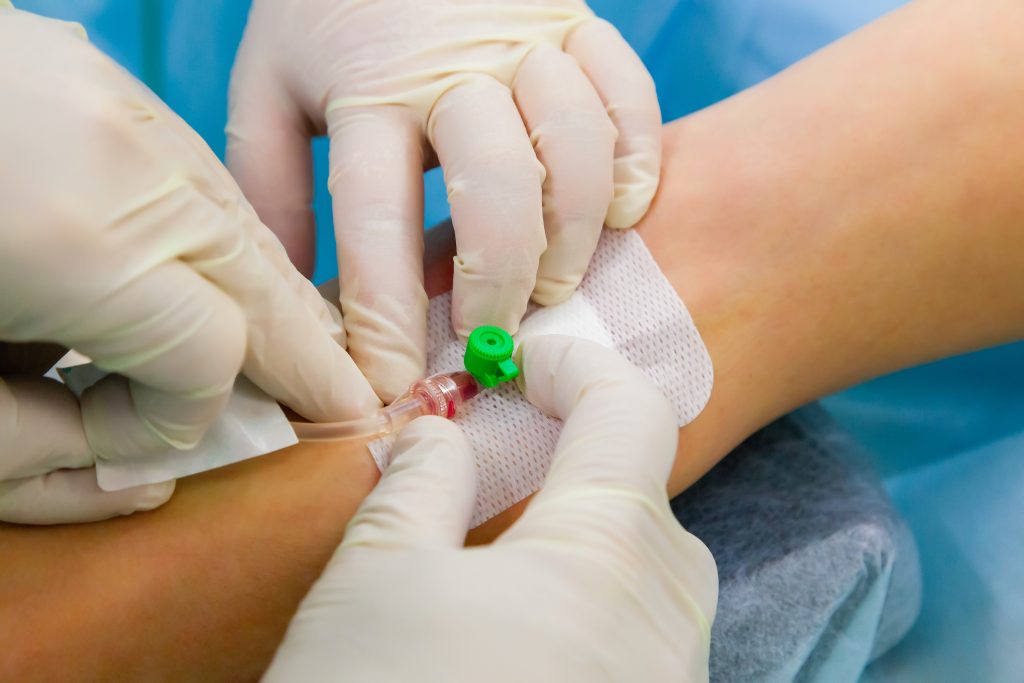
There have been breathtaking advances in cancer treatment in the past century. Also important are the supportive technologies enabling efficient treatment administration, such as venous catheters. A catheter is a tube device (a ‘line’) surgically inserted into a patient’s vein, allowing medication or nutrition to be administered via intravenous infusion. This is necessary for patients who are unable to eat normally or for the delivery of medication while bypassing the digestive system. Catheters have revolutionised cancer care, allowing the passage of chemotherapy directly into the bloodstream. However, they are not without risk. Catheters provide some resistance to blood flow and may lead to thrombosis (blood clotting).
There are two main types of catheters – long-term skin tunnelled catheters (LTSTCs) and peripheral catheters (PICC – pronounced ‘pick’). An LTSTC is surgically tunnelled under the skin into a central vein (usually in the chest) with separate insertion and exit sites, and may remain in place for several months. A PICC is an external catheter connected to a peripheral vein, usually in the arm. PICCs are less invasive and are more easily installed. Haematologists and oncologists must consider the various risk and benefit factors when deciding whether to insert an LTSTC or PICC catheter.
Investigating Thrombotic Impacts of Catheter Selection
Dr Priya Sriskandarajah is a consultant haematologist with a special interest in catheter selection in the clinical practice of haemato-oncology – the field of ‘blood cancers’. Patients with haematological cancers often require long-term intravenous access for blood products, chemotherapy, or stem cell rescue. In UK hospitals, PICCs are typically used for first-line chemotherapy. As they are less invasive than LTSTCs, they are not as susceptible to mechanical complications. LTSTCs are used for stem cell rescue. However, the increasing recognition of catheter-related thromboses is challenging this status quo. Haemato-oncology patients often take anticoagulant medication to thin the blood and reduce the risk of blood clots.
Dr Sriskandarajah led a pivotal cohort study into the risk of catheter-related thrombosis at the Royal Marsden Hospital, UK. Her team analysed medical records of patients with haematological cancers who were admitted and had a PICC or LTSTC line inserted. After insertion, patients underwent duplex ultrasound assessment to detect the presence of thromboses. The team reviewed patients’ ultrasound reports, as well as their demographics, medical histories, and treatment plans.
Records of 583 patients were retrospectively analysed – of these, 346 patients received a PICC and 237 received an LTSTC. The haematological cancers included acute myeloid leukaemia (AML), acute lymphoblastic leukaemia, Hodgkin or non-Hodgkin lymphoma, multiple myeloma (MM), and chronic lymphocytic leukaemia. There was a higher number of patients with AML receiving a PICC than an LTSTC. In contrast, there was a higher number of patients with MM who received an LTSTC compared to a PICC.
Increased Risk and Secondary Complications with PICC Catheters
There was a greater cumulative incidence of catheter-related thrombosis with a PICC than with an LTSTC. During follow-up, about 1 in 20 patients receiving a PICC (5.6%) developed thrombosis vs 1 in 50 patients (1.7%) receiving an LTSTC, a statistically significant difference. Thromboses usually occurred early in treatment. Within 30 days after insertion, catheter-related thrombosis was reported in 5% of patients with a PICC and 1% of patients with an LTSTC.
The ‘dwell time’ of a catheter line refers to the duration of its placement within a patient’s vein. Typically, LTSTCs are inserted for longer than PICCs, and this was confirmed in the current study. The median dwell time for LTSTCs was almost twice as long as for PICCs (109 days vs 65 days). The risk of thrombosis increased the longer a PICC or LTSTC was inserted. After 6 months, deep vein thrombosis (DVT) was reported in 14% of patients with a PICC. For comparison, DVT was reported in 6% of patients with an LTSTC after 27 months. Thus, thrombosis risk increased at a slower rate with an LTSTC than with a PICC despite longer dwell times with an LTSTC.
Thrombosis can lead to complications that can delay a patient’s treatment plan. Thus, secondary complications were assessed in patients who experienced a catheter-related thrombosis. Patients with a PICC had more than double the risk of a catheter infection than those with an LTSTC (45% vs 20%). Following a catheter-related thrombosis event, 80% of patients had their PICC removed, compared with 50% of patients who had their LTSTC removed. All patients who developed a catheter-related thrombosis received an anticoagulant medication for 3 months. All the patients who received the anticoagulant had a normal platelet count, and no haemorrhage-related complications were reported.
Risk Factors for Catheter-Related Thrombosis
Dr Sriskandarajah and her team also considered the risk factors in patients who developed catheter-related thrombosis. These data were available for 20 patients with a PICC and four patients with an LTSTC. A venous thromboembolism (VTE) is a large clot that blocks blood flow in a vein. A history of VTE was reported in two patients with a PICC (10%), compared with no patients with an LTSTC. Given the small number of patients, it is not surprising that this difference was not statistically significant, but it does suggest that VTE history is a contributing factor for PICC-related thromboses. Patients with a PICC or LTSTC were equally likely to receive immunomodulatory drugs (10%) and an anticoagulant (10%). Rates of catheter-related thrombosis were similar between patients with newly diagnosed disease, relapsed or refractory disease, and remission (5.3% vs 6.1% vs 6.5%). Taken together, these findings suggest that the disease stage does not affect thrombosis risk.
Implications for Treatment
PICC catheters are routinely used to administer chemotherapy in haemato-oncology patients. While awareness is growing around the risk of PICC-related thrombosis, the literature is somewhat limited. Dr Sriskandarajah’s study is the largest to investigate the real-world impact of catheter selection. The finding of a greater risk of catheter-related thrombosis with PICCs than with LTSTCs, leading to a higher rate of thrombosis-related complications with PICCs, is critical. By analysing the potential risk factors for thrombosis, Dr Sriskandarajah was able to confirm that a history of VTE is likely a contributing factor in patients with PICCs.
In terms of clinical practice, Dr Sriskandarajah argues that the risk of thrombosis must be taken into account in catheter selection. This is particularly true when long-term chemotherapy is needed or when patients have a history of clotting. Clearly, patients must be continuously monitored, particularly those at higher risk. Finally, Dr Sriskandarajah’s research raises the important question of whether haemato-oncology treatment plans should include systemic anticoagulants to prevent thromboses.
SHARE

DOWNLOAD E-BOOK
REFERENCE
https://doi.org/10.33548/SCIENTIA988
MEET THE RESEARCHER

Dr Priya Sriskandarajah
Guy’s and St Thomas’ NHS Foundation Trust
London
UK
Dr Priya Sriskandarajah achieved her medical degree at Kings College London in 2007. She then embarked on haematology training as a National Institute for Health and Care Research Academic Clinical Fellow at the Royal Marsden Hospital while rotating at St Helier Hospital. In 2019, she obtained her PhD at the Institute of Cancer Research, examining molecular targets in RAS-mutant multiple myeloma. During her PhD, she was also a Clinical Fellow at the Institute of Cancer Research involved in Phase I trials as well as a sub-investigator on Phase III studies. In 2020, she transferred to Guy’s and St Thomas’ trust as a Clinical Fellow, where she screened and managed patients with systemic mastocytosis in Phase III clinical trials. Throughout her career, she has participated in teaching programmes for oncology fellows and junior medics, helping them gain a better understanding of the complexities of treating haematology patients.
CONTACT
E: priya.sriskandarajah@nhs.net
W: www.linkedin.com/in/priya-sriskandarajah-305ba4110
KEY COLLABORATORS
Dr Katharine Webb, Royal Marsden Hospital
Dr David Chisholm, Royal Marsden Hospital
Dr Ravi Raobaikady, Royal Marsden Hospital
Ms Natalie Lawrence, Royal Marsden Hospital
FURTHER READING
P Sriskandarajah, Webb K, Chisholm D, et al., Retrospective cohort analysis comparing the incidence of deep vein thromboses between peripherally-inserted and long-term skin tunneled venous catheters in hemato-oncology patients, Thrombosis Journal, 2015, 13, 21. DOI: https://doi.org/10.1186/s12959-015-0052-2
REPUBLISH OUR ARTICLES
We encourage all formats of sharing and republishing of our articles. Whether you want to host on your website, publication or blog, we welcome this. Find out more
Creative Commons Licence (CC BY 4.0)
This work is licensed under a Creative Commons Attribution 4.0 International License. 
What does this mean?
Share: You can copy and redistribute the material in any medium or format
Adapt: You can change, and build upon the material for any purpose, even commercially.
Credit: You must give appropriate credit, provide a link to the license, and indicate if changes were made.
SUBSCRIBE NOW
Follow Us
MORE ARTICLES YOU MAY LIKE

Assoc Prof. Nicholas Brown | Rethinking Prostate Care: A New Frontier in Treating Benign Prostatic Hyperplasia
For millions of men, ageing brings with it a set of frustrating and often disruptive urinary symptoms. These symptoms, caused by benign prostatic hyperplasia, or BPH, can affect sleep, confidence, and overall quality of life. Traditionally, treatment follows a familiar path. Patients begin with medications, often for years, and may eventually progress to surgery if symptoms worsen. Yet this pathway is not without its drawbacks. Medications can cause side effects, while surgery carries risks and recovery time. In recent years, a minimally invasive interventional radiology procedure called prostate artery embolisation, or PAE, has begun to challenge this traditional model. At the forefront of this shift is a collaborative research group, led by Dr. Nicholas Brown of the University of Queensland, whose series of P-EASY studies has explored whether PAE could transform how BPH is treated, particularly at earlier stages.

Jean Lycke | Addressing Unmet Medical Needs in Mucosal Disease: A Close-to-Market Innovation Approach
Recurrent Aphthous Stomatitis (RAS) is an oral condition characterized by one or several painful mucosal ulcers. RAS affects a large proportion of the population and has a point prevalence of approximately 2–3%, daily. The etiology remains unknown, and there is currently no curative treatment. Most patients experience recurring episodes over time, with each episode typically lasting up to a week. Here, we describe the development of a mucoadhesive patch which, when applied over a RAS ulcer, provides rapid pain relief. The patch is easy for patients to apply when symptoms begin and has the potential to be used as an over-the-counter product. The development of the Mucocort mucoadhesive patch is an example of a Close-to-Market innovation strategy that embraces simplicity within a complex healthcare system. By simplifying the product concept, the team has reduced the number of regulatory steps required before market approval. This MedTech/Pharma innovation model, known as the “4R” framework – Re-purposing, Re-formulation, Re-positioning, and Re-patenting – has guided the program from concept to commercialization. In addition to the biodegradable mucoadhesive patch developed for RAS ulcers, the team is extending the innovation concept to a mucoadhesive gel formulation for the prevention and treatment of chemotherapy-induced mucositis. This gel-based program is being commercialized separately through MucoShield.
The Translational Asian Agerelated Macular Degeneration Program Phase 2 (TAAP-2): Reimagining the Future of Vision Care
Age-related macular degeneration, often abbreviated as AMD, is one of the leading causes of vision loss among older adults worldwide. In Asia, where populations are ageing rapidly, its impact is particularly profound. For many, the disease quietly erodes central vision, making everyday activities such as reading, driving, and recognising faces increasingly difficult. Against this backdrop, the Translational Asian Age-related Macular Degeneration Programme, or TAAP for short, has emerged as a bold and ambitious effort to confront the disease headon. Now in its second phase, TAAP-2 represents a significant evolution in both scientific scope and clinical ambition.

Ms. Aikaterini Dritsoula | Looking Beyond Snoring: How Hidden Airway Problems Shape Children’s Sleep
For many parents, a child’s snoring may seem harmless, even endearing. Yet in some cases, it signals something more serious. Obstructive sleep apnoea is a condition in which a child’s breathing is repeatedly disrupted during sleep. These interruptions can affect growth, behaviour, and learning. Children with this condition may toss and turn at night, struggle to concentrate during the day, or show signs of hyperactivity and fatigue. Traditionally, enlarged tonsils and adenoids have been seen as the main culprits. Surgery to remove them has long been considered the standard treatment. However, research led by Consultant ENT Surgeon Ms. Aikaterini Dritsoula of The Leeds Teaching Hospitals NHS Trust invites us to look deeper. Her work suggests that the story is often more complex, especially in very young children.