
Dr Carolyn Fallahi | Stress and Substance Use: The Impact of COVID-19 on Sexual Minorities
Sexual minorities face unique challenges that can negatively impact their mental and physical health. The COVID-19 pandemic has exacerbated these issues, leading to increased rates of anxiety, depression, and substance use among lesbian, gay, bisexual, transgender, and queer (LGBTQ+) individuals. Dr Carolyn Fallahi and her colleagues at Central Connecticut State University have been studying the effects of minority stress on sexual minorities, particularly in the context of the pandemic. Their research sheds light on the complex relationships between minority stress, mental health symptoms, and substance use in this vulnerable population.
The Burden of Minority Stress
Sexual minorities experience stressors related to their identity that can accumulate over time, a phenomenon known as minority stress. This includes both external stressors like discrimination and internal ones like fear of rejection. Dr Fallahi explains that minority stress puts sexual minorities at higher risk for mental health issues and unhealthy coping behaviors like substance use.
The minority stress model, developed by psychologist Ilan Meyer, proposes that these chronic stressors contribute to health disparities seen in LGBTQ+ populations. Sexual minorities have higher rates of anxiety, depression, post-traumatic stress disorder (PTSD), and substance use disorders compared to heterosexual individuals.
Examining the Links Between Stress and Substance Use
To better understand these relationships, Dr Fallahi and her colleagues Dr Joanne DiPlacido and Carissa Daigle conducted a study examining minority stress, mental health symptoms, and substance use among sexual minorities during the COVID-19 pandemic. They surveyed nearly 400 LGBTQ+ adults in the USA about their experiences of minority stress, anxiety, depression, PTSD symptoms related to the pandemic, and substance use.
The researchers were particularly interested in how these factors might influence each other. They hypothesized that minority stress would predict higher substance use but that increased mental health symptoms would partially explain this relationship.
To test this idea, the team used a statistical technique called serial mediation analysis. This allowed them to examine both the direct relationship between minority stress and substance use, as well as indirect pathways through anxiety, depression, and PTSD symptoms.
Key Findings Reveal Complex Relationships
The results supported the researchers’ hypothesis, revealing a complex web of relationships between minority stress, mental health, and substance use. As expected, sexual minorities who reported higher levels of minority stress were more likely to engage in substance use. However, this relationship was partially explained by increases in mental health symptoms.
Specifically, the analysis showed that minority stress predicted higher levels of anxiety and depression. These symptoms, in turn, were associated with increased PTSD symptoms related to the COVID-19 pandemic. Finally, both anxiety/depression and PTSD symptoms independently predicted greater substance use.
Importantly, the study found that minority stress still had a direct relationship with substance use even after accounting for mental health symptoms. This suggests that minority stress may influence substance use through additional pathways beyond its impact on mental health.
Intersectionality and Varying Impacts
The researchers also examined how these relationships might differ based on other aspects of identity. They found some notable differences based on sexual orientation, gender identity, and race/ethnicity.
Individuals who identified as bisexual, pansexual, asexual, or queer reported higher levels of anxiety and depression compared to gay and lesbian participants. This aligns with previous research showing that bisexual and other plurisexual individuals often face unique challenges and may experience greater minority stress.
Interestingly, racial and ethnic minorities reported lower rates of substance use compared to white sexual minorities. This contradicted the researchers’ expectations but aligns with some previous studies showing lower substance use among racial minorities in general.
The Impact of COVID-19
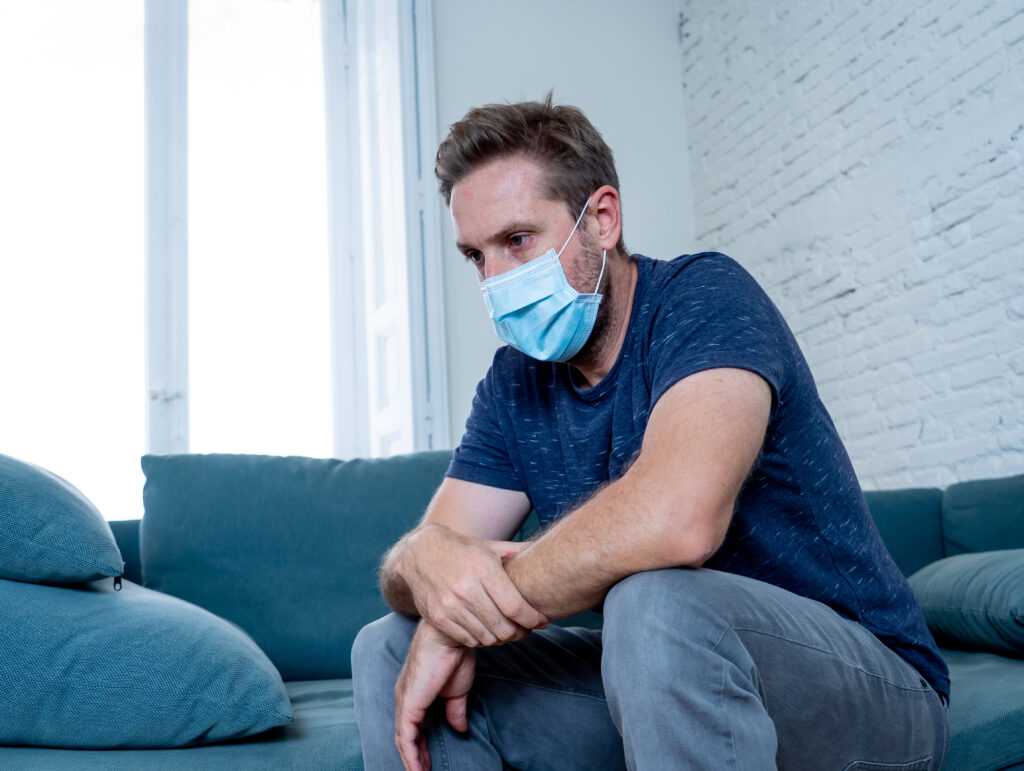
The study’s focus on PTSD symptoms related to COVID-19 provides valuable insight into how the pandemic has affected sexual minorities. Participants who reported more worry about the pandemic spreading and those who had lost jobs due to COVID-19 showed higher levels of PTSD symptoms.
Dr Fallahi emphasizes that the pandemic has created additional stressors for many LGBTQ+ individuals. For some sexual minorities, stay-at-home orders meant being confined with unsupportive family members or losing access to affirming communities. Others faced job loss or reduced access to gender-affirming healthcare. These challenges compounded existing minority stress.
The researchers suggest that the accumulation of stressors during the pandemic may have overwhelmed some individuals’ coping resources, increasing vulnerability to substance use as a means of managing distress.
Implications for Support and Intervention
The study’s findings have important implications for supporting the mental health and well-being of sexual minorities, particularly during times of widespread stress like the COVID-19 pandemic. Dr Fallahi and her team underscore the need for trauma-informed, culturally competent mental health care for sexual minorities. Providers should be aware of how minority stress can increase vulnerability to anxiety, depression, and PTSD, potentially leading to unhealthy coping through substance use.
The researchers emphasize the importance of addressing minority stress directly, not just its mental health consequences. This could involve interventions to build resilience, combat internalized stigma, and create more supportive environments for LGBTQ+ individuals.
Dr Fallahi notes that substance use treatment programs may need to be tailored for sexual minorities. Standard approaches may not adequately address the unique stressors and experiences of LGBTQ+ individuals. Integrating minority stress concepts into treatment could improve outcomes.
The team also highlights the critical role of social support in buffering against minority stress. During the pandemic, many sexual minorities lost access to supportive LGBTQ+ communities. Finding ways to maintain these connections, even virtually, may be crucial for well-being.
Looking Ahead: Research Directions
While this study provides valuable insights, many questions remain. Dr Fallahi and her colleagues are particularly interested in exploring the role of social support as a potential protective factor. They recognize that social support is crucial for well-being, but the pandemic disrupted many support networks. Understanding how to foster resilient support systems for sexual minorities, even in challenging circumstances, could be key to promoting health and reducing substance use.
The team is also keen to examine how these findings might inform public health responses to future crises. The pandemic has highlighted the unique vulnerabilities of sexual minorities. Going forward, they emphasize the need to ensure that disaster preparedness and response efforts take into account the specific needs of LGBTQ+ communities.
As research in this area continues to grow, Dr Fallahi hopes it will lead to more effective, tailored interventions to support sexual minority health. By understanding the complex interplay between minority stress, mental health, and substance use, researchers can develop better strategies to promote resilience and well-being among sexual minorities – not just during crises but in everyday life.
SHARE

DOWNLOAD E-BOOK
REFERENCE
https://doi.org/10.33548/SCIENTIA1108
MEET THE RESEARCHER

Dr Carolyn Fallahi
Department of Psychological Science, Central Connecticut State University, New Britain, CT, USA
Dr Carolyn Fallahi is a Professor in the Department of Psychological Science at Central Connecticut State University. She obtained her PhD in Counseling Psychology from the University of Missouri-Columbia in 1989. Dr Fallahi’s research spans diverse areas, including improving student writing skills, the effects of vicarious exposure to mass shootings, and substance use in college students. She has published extensively in peer-reviewed journals and presented at numerous conferences. Dr Fallahi has received several awards for her teaching and research, including multiple Excellence in Teaching honours from Central Connecticut State University. Most recently, she has been conducting research in the area of sexual minorities and minority stress. She is the co-director of the Sexual and Gender Minority Stress and Health Lab and Central Connecticut State University. She also has served as Chair of the Department of Psychological Science and on various university committees. Dr Fallahi is also an editorial board member for the APA journal Psychological Trauma: Theory, Research, Practice and Policy.
CONTACT
E: fallahic@ccsu.edu
KEY COLLABORATORS
Dr Joanne DiPlacido, Professor Emeritus, Department of Psychological Science, Central Connecticut State University, USA
Carissa D Daigle, Department of Psychological Science, Central Connecticut State University, USA
FURTHER READING
J DiPlacido, CR Fallahi, CD Daigle, Minority stress and substance use: The role of anxiety/depression and PTSD symptoms in response to the COVID-19 pandemic, Cogent Psychology, 2023 10(1). https://doi.org/10.1080/23311908.2023.2218258

REPUBLISH OUR ARTICLES
We encourage all formats of sharing and republishing of our articles. Whether you want to host on your website, publication or blog, we welcome this. Find out more
Creative Commons Licence (CC BY 4.0)
This work is licensed under a Creative Commons Attribution 4.0 International License. 
What does this mean?
Share: You can copy and redistribute the material in any medium or format
Adapt: You can change, and build upon the material for any purpose, even commercially.
Credit: You must give appropriate credit, provide a link to the license, and indicate if changes were made.
SUBSCRIBE NOW
Follow Us
MORE ARTICLES YOU MAY LIKE

Assoc Prof. Nicholas Brown | Rethinking Prostate Care: A New Frontier in Treating Benign Prostatic Hyperplasia
For millions of men, ageing brings with it a set of frustrating and often disruptive urinary symptoms. These symptoms, caused by benign prostatic hyperplasia, or BPH, can affect sleep, confidence, and overall quality of life. Traditionally, treatment follows a familiar path. Patients begin with medications, often for years, and may eventually progress to surgery if symptoms worsen. Yet this pathway is not without its drawbacks. Medications can cause side effects, while surgery carries risks and recovery time. In recent years, a minimally invasive interventional radiology procedure called prostate artery embolisation, or PAE, has begun to challenge this traditional model. At the forefront of this shift is a collaborative research group, led by Dr. Nicholas Brown of the University of Queensland, whose series of P-EASY studies has explored whether PAE could transform how BPH is treated, particularly at earlier stages.

Jean Lycke | Addressing Unmet Medical Needs in Mucosal Disease: A Close-to-Market Innovation Approach
Recurrent Aphthous Stomatitis (RAS) is an oral condition characterized by one or several painful mucosal ulcers. RAS affects a large proportion of the population and has a point prevalence of approximately 2–3%, daily. The etiology remains unknown, and there is currently no curative treatment. Most patients experience recurring episodes over time, with each episode typically lasting up to a week. Here, we describe the development of a mucoadhesive patch which, when applied over a RAS ulcer, provides rapid pain relief. The patch is easy for patients to apply when symptoms begin and has the potential to be used as an over-the-counter product. The development of the Mucocort mucoadhesive patch is an example of a Close-to-Market innovation strategy that embraces simplicity within a complex healthcare system. By simplifying the product concept, the team has reduced the number of regulatory steps required before market approval. This MedTech/Pharma innovation model, known as the “4R” framework – Re-purposing, Re-formulation, Re-positioning, and Re-patenting – has guided the program from concept to commercialization. In addition to the biodegradable mucoadhesive patch developed for RAS ulcers, the team is extending the innovation concept to a mucoadhesive gel formulation for the prevention and treatment of chemotherapy-induced mucositis. This gel-based program is being commercialized separately through MucoShield.

The Translational Asian Agerelated Macular Degeneration Program Phase 2 (TAAP-2): Reimagining the Future of Vision Care
Age-related macular degeneration, often abbreviated as AMD, is one of the leading causes of vision loss among older adults worldwide. In Asia, where populations are ageing rapidly, its impact is particularly profound. For many, the disease quietly erodes central vision, making everyday activities such as reading, driving, and recognising faces increasingly difficult. Against this backdrop, the Translational Asian Age-related Macular Degeneration Programme, or TAAP for short, has emerged as a bold and ambitious effort to confront the disease headon. Now in its second phase, TAAP-2 represents a significant evolution in both scientific scope and clinical ambition.
Ms. Aikaterini Dritsoula | Looking Beyond Snoring: How Hidden Airway Problems Shape Children’s Sleep
For many parents, a child’s snoring may seem harmless, even endearing. Yet in some cases, it signals something more serious. Obstructive sleep apnoea is a condition in which a child’s breathing is repeatedly disrupted during sleep. These interruptions can affect growth, behaviour, and learning. Children with this condition may toss and turn at night, struggle to concentrate during the day, or show signs of hyperactivity and fatigue. Traditionally, enlarged tonsils and adenoids have been seen as the main culprits. Surgery to remove them has long been considered the standard treatment. However, research led by Consultant ENT Surgeon Ms. Aikaterini Dritsoula of The Leeds Teaching Hospitals NHS Trust invites us to look deeper. Her work suggests that the story is often more complex, especially in very young children.