
Article written by Helen Rickard, PhD
MELAS is a rare and serious genetic condition that affects how the body’s cells produce energy, leading to extreme fatigue, muscle weakness, and a range of other symptoms. With no cure currently available, treatment focuses only on managing complications.
A team of researchers led by Dr Liisa Laakso at the Mater Research Institute-University of Queensland, Australia, is exploring an innovative, non-drug therapy called photobiomodulation, which uses light to stimulate mitochondria to work more efficiently. This pioneering study will provide intial evidence on whether PBM can safely reduce fatigue and improve quality of life for people living with MELAS, paving the way for future clinical trials.
Mitchondrial diseases
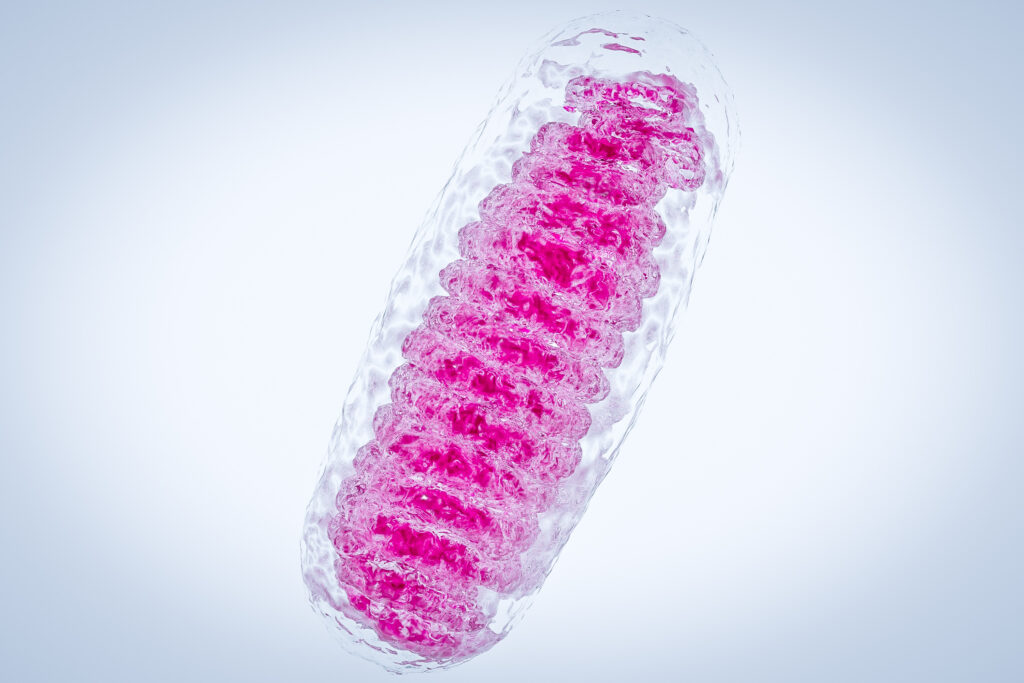
Mitochondria are famous as the powerhouses of the cell – they make the chemical energy molecule adenosine triphosphate (ATP) that keeps tissues working. They also do far more than burn fuel; mitochondria help control our immune system, calcium balance, hormone chemistry, cell renewal and death, and even stem-cell behaviour. When mitochondria fail, lots of different organs can be affected at once. That is why mitochondrial diseases can be hard for clinicians to diagnose and also why the symptoms can vary significantly from person to person.
Primary mitochondrial diseases are the most common inherited metabolic disorders, and happen when the mitochondrial machinery that makes ATP, called the electron transport chain, is faulty. One particular genetic change is linked to two overlapping conditions. One is maternally inherited diabetes and deafness (MIDD), which mainly causes diabetes and hearing loss. The other is mitochondrial encephalomyopathy, lactic acidosis, and stroke-like episodes (MELAS), which typically causes muscle weakness, exercise intolerance, severe fatigue, headaches, seizures, and episodes of neurological problems.
MELAS is progressive and life-limiting; it is rare but serious, and there is currently no cure. Most patients survive for less than 20 years following the onset of neurological symptoms such as seizures. There is an urgent need to explore and develop new treatment options to manage symptoms and improve the quality of life in people affected by this disease.
Photobiomodulation: light as medicine
Photobiomodulation (PBM) uses specific wavelengths of light to nudge cells into healthier behaviour. The idea is not new—lab studies stretching back decades show that light can change mitochondrial activity and cellular signalling. PBM devices deliver photons (particles of electromagnetic energy or light) into tissue where they are absorbed. This triggers chemical cascades that can raise ATP production, alter reactive oxygen species, and switch on genes to help repair, reduce inflammation, and improve circulation.
PBM is considered a physical therapy: a light-based intervention rather than a drug-based medicine. It has a strong safety record in thousands of peer-reviewed papers across many conditions, and international groups are now synthesising evidence into clinical guidelines and dosing recommendations for some problems. At the same time, because PBM has been applied to many different conditions, there remain areas where dosing and the ideal treatment recipe need more work, which is why clinical studies and supervised use are so important.
Using photobiomodulation in MELAS
MELAS currently has no cure, and is managed only by treatments to reduce and control existing symptoms. Dr Liisa Laakso from the Mater Research Institute-University of Queensland is leading a team of researchers to develop and validate new ways of improving the lives of people with MELAS, which includes Dr Liza Phillips (endocrinologist), Dr Tatjana Ewais (lead psychiatrist), and Prof Josephine Forbes (metabolism researcher).
People with MELAS often experience severe tiredness and find it hard to keep up with physical activity because their mitochondria don’t produce enough energy. Lots of previous research (both in laboratory settings and in humans) has shown that PBM may help mitochondria work better by boosting their energy output, as well as reducing the chemical stress and inflammation that damage cells. Studies in both healthy individuals and people with other conditions, like lung disease, have found that PBM can reduce muscle fatigue and improve physical performance. This suggests that PBM could help people with MELAS, by supporting their mitochondria and easing the stress that causes fatigue. Understanding PBM’s mechanism of action in alleviating MELAS symptoms is important because it helps researchers ensure the treatment is safe, demonstrating that PBM is a scientifically proven approach.

Designing trials to test photobiomodulation in MELAS
As MELAS is rare and symptoms vary a lot between people, a traditional large trial is hard to run. Dr Laakso’s research team designed an exploratory series of N-of-1 trials, which are essentially carefully controlled single-patient studies, with the aim to test safety and also efficacy—whether PBM produces measurable changes in fatigue and muscle metabolism. The study is carefully designed to make sure any improvements seen are truly due to the treatment and not just natural ups and downs in a person’s symptoms.
The study begins with a baseline observation period, where no treatment is given, so researchers can understand each participant’s usual pattern of fatigue. Next, comes a sham phase, where the device is used but without active light, to see how participants respond when no real treatment is delivered. After this, there is a planned break where no treatment is given. This acts like a reset, allowing any lingering effects from earlier phases to dissipate. Finally, participants begin the active PBM phase, receiving real light therapy for eight weeks. By comparing results across all these periods, the team can better determine whether PBM itself is making a meaningful difference.
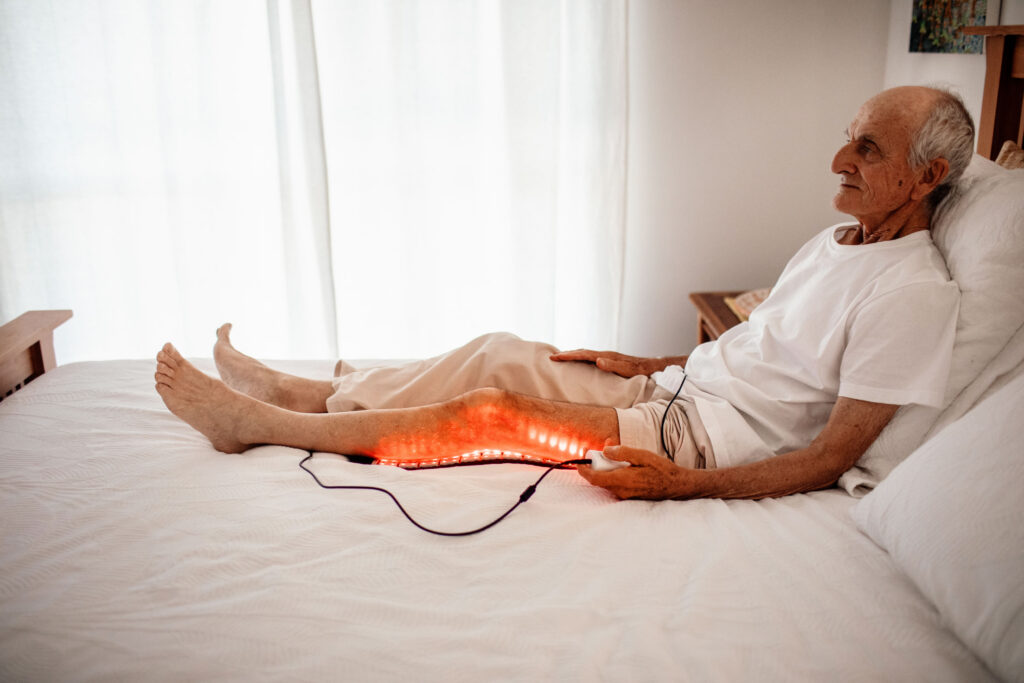
Participants will use a flexible LED device at home that emits three wavelengths chosen for complementary effects: blue (465 nm), red (660 nm), and near-infrared (850 nm). These wavelengths were selected because prior lab and animal studies suggest each can stimulate different aspects of mitochondrial activity and reduce inflammation, and the team hopes their combination will be synergistic. Treatments are self-applied to the thighs, calves, and abdomen for about 10 minutes per site, several times per week. Safety is a top priority: the BeniLight iLED-Pro Multi-Wave Multi-Pulse PBM device which will be used is an approved medical device, and participants will record any unexpected effects.
The main outcome is patient-reported fatigue using a validated 20-item checklist that captures not just tiredness but motivation, activity, and concentration. The study also measures depression, anxiety, sleepiness, physical activity, and simple muscle function tests, such as heel raises. To investigate whether PBM changes mitochondrial activity directly, the team will use a technique called proton magnetic resonance spectroscopy to look at lactate—a marker of glycolytic (non-mitochondrial) energy use. If lactate falls after PBM, that suggests a shift toward better mitochondrial ATP production.
From lab to real world
This pilot is designed to answer whether PBM is safe, and whether there are signs it might reduce fatigue and alter mitochondrial markers in people with MELAS. Because only a few patients will take part and N-of-1 trials are tailored to individuals, the results cannot prove PBM works for everyone with MELAS. The team acknowledge there are some limitations to this work, such as the small numbers, possible placebo effects despite a sham phase, and the fact that lab dosing rules do not always translate directly to people. However, the trial is a sensible, ethical first step, because if positive signals emerge, these will guide larger, controlled studies, and help set parameters (dose, timing, which wavelengths) for future work.
Dr Laakso and the team are working hard to provide evidence for a potential new treatment that would benefit people living with MELAS around the world. PBM has an established biological mechanism, is not a drug, and carries a strong safety record in thousands of peer-reviewed studies. It is already moving into clinical guidance in some areas, and where dosing rules are clear clinicians can apply them confidently. The team’s work is a careful, patient-centred effort to move from laboratory promise to real-world evidence. If the study shows PBM is safe and hints at benefit, it will open the door to larger trials that could, one day, add a useful, non-drug tool to help people living with MELAS.
SHARE

DOWNLOAD E-BOOK
WATCH THE ANIMATION
REFERENCE
https://doi.org/10.33548/SCIENTIA1332
MEET THE RESEARCHER

Dr Liisa Laakso
Mater Research Institute
The University of Queensland
Queensland
Australia
Dr Liisa Laakso is Principal Research Fellow (Allied Health) at the Mater Research Institute, Brisbane; Honorary Associate Professor at The University of Queensland Faculty of Health, Medicine and Behavioural Sciences; and Adjunct Professor of Physiotherapy in the School of Health Sciences and Social Work at Griffith University, Gold Coast, Australia. Dr Laakso was the first Australian to complete a PhD in the field of laser therapy. In 2020, Dr Laakso was recognised by the European Medical Laser Association with a lifetime achievement award.
Dr Laakso’s research focuses on the role of photobiomodulation (PBM) therapy for symptom control and tissue regeneration in a range of non-malignant and malignant laboratory and clinical models and populations especially chronic and rare diseases that have no gold standard medical treatment. Dr Laakso is an executive committee member of the Australian Medical Photobiomodulation Association (AMPA), and past-President of the World Association for Laser Therapy (WALT). Dr Laakso is a past Vice-President of the International Society for Electrophysical Agents in Physical Therapy (an official sub-group of the World Confederation of Physical Therapy). She is also on the editorial board of the journal Photobiomodulation, Photomedicine and Laser Surgery.
CONTACT
E: Liisa.Laakso@mater.uq.edu.au
W: https://www.materresearch.org.au/researchers/our-researchers/find-a-researcher/a-prof-liisa-laakso
KEY COLLABORATORS
Dr Liza Phillips (Endocrinologist, Mater Health)
Dr Tatjana Ewais (Lead Psychiatrist, Mater Young Adult Health Centre)
Prof Josephine Forbes (Diabetes and Metabolism Research Group Lead, Mater Research Institute-University of Queensland)
FURTHER READING
Laakso E-L, Ewais T, McMahon K, Forbes J, Phillips L, et al., Efficacy and Safety of Photobiomodulation in MELAS: Protocol for a Series of N-of-1 Trials, Journal of Clinical Medicine, 2025, 14(6), 2047. DOI: https://doi.org/10.3390/jcm14062047
REPUBLISH OUR ARTICLES
We encourage all formats of sharing and republishing of our articles. Whether you want to host on your website, publication or blog, we welcome this. Find out more
Creative Commons Licence (CC BY 4.0)
This work is licensed under a Creative Commons Attribution 4.0 International License. 
What does this mean?
Share: You can copy and redistribute the material in any medium or format
Adapt: You can change, and build upon the material for any purpose, even commercially.
Credit: You must give appropriate credit, provide a link to the license, and indicate if changes were made.
SUBSCRIBE NOW
Follow Us
MORE ARTICLES YOU MAY LIKE

Assoc Prof. Nicholas Brown | Rethinking Prostate Care: A New Frontier in Treating Benign Prostatic Hyperplasia
For millions of men, ageing brings with it a set of frustrating and often disruptive urinary symptoms. These symptoms, caused by benign prostatic hyperplasia, or BPH, can affect sleep, confidence, and overall quality of life. Traditionally, treatment follows a familiar path. Patients begin with medications, often for years, and may eventually progress to surgery if symptoms worsen. Yet this pathway is not without its drawbacks. Medications can cause side effects, while surgery carries risks and recovery time. In recent years, a minimally invasive interventional radiology procedure called prostate artery embolisation, or PAE, has begun to challenge this traditional model. At the forefront of this shift is a collaborative research group, led by Dr. Nicholas Brown of the University of Queensland, whose series of P-EASY studies has explored whether PAE could transform how BPH is treated, particularly at earlier stages.

Jean Lycke | Addressing Unmet Medical Needs in Mucosal Disease: A Close-to-Market Innovation Approach
Recurrent Aphthous Stomatitis (RAS) is an oral condition characterized by one or several painful mucosal ulcers. RAS affects a large proportion of the population and has a point prevalence of approximately 2–3%, daily. The etiology remains unknown, and there is currently no curative treatment. Most patients experience recurring episodes over time, with each episode typically lasting up to a week. Here, we describe the development of a mucoadhesive patch which, when applied over a RAS ulcer, provides rapid pain relief. The patch is easy for patients to apply when symptoms begin and has the potential to be used as an over-the-counter product. The development of the Mucocort mucoadhesive patch is an example of a Close-to-Market innovation strategy that embraces simplicity within a complex healthcare system. By simplifying the product concept, the team has reduced the number of regulatory steps required before market approval. This MedTech/Pharma innovation model, known as the “4R” framework – Re-purposing, Re-formulation, Re-positioning, and Re-patenting – has guided the program from concept to commercialization. In addition to the biodegradable mucoadhesive patch developed for RAS ulcers, the team is extending the innovation concept to a mucoadhesive gel formulation for the prevention and treatment of chemotherapy-induced mucositis. This gel-based program is being commercialized separately through MucoShield.
The Translational Asian Agerelated Macular Degeneration Program Phase 2 (TAAP-2): Reimagining the Future of Vision Care
Age-related macular degeneration, often abbreviated as AMD, is one of the leading causes of vision loss among older adults worldwide. In Asia, where populations are ageing rapidly, its impact is particularly profound. For many, the disease quietly erodes central vision, making everyday activities such as reading, driving, and recognising faces increasingly difficult. Against this backdrop, the Translational Asian Age-related Macular Degeneration Programme, or TAAP for short, has emerged as a bold and ambitious effort to confront the disease headon. Now in its second phase, TAAP-2 represents a significant evolution in both scientific scope and clinical ambition.

Ms. Aikaterini Dritsoula | Looking Beyond Snoring: How Hidden Airway Problems Shape Children’s Sleep
For many parents, a child’s snoring may seem harmless, even endearing. Yet in some cases, it signals something more serious. Obstructive sleep apnoea is a condition in which a child’s breathing is repeatedly disrupted during sleep. These interruptions can affect growth, behaviour, and learning. Children with this condition may toss and turn at night, struggle to concentrate during the day, or show signs of hyperactivity and fatigue. Traditionally, enlarged tonsils and adenoids have been seen as the main culprits. Surgery to remove them has long been considered the standard treatment. However, research led by Consultant ENT Surgeon Ms. Aikaterini Dritsoula of The Leeds Teaching Hospitals NHS Trust invites us to look deeper. Her work suggests that the story is often more complex, especially in very young children.