
Article written by Matthew Davies, PhD
Category 5 hurricanes, financial crashes, and global pandemics are just a few examples of rare events whose high risks necessitate understanding and mitigation. Developments in artificial intelligence (AI) could go a long way towards improving our ability to model and mitigate the impacts of such extreme events, but current training methods are often unable to deal effectively with outliers in data – which is exactly what extreme events are. If outliers are present in training data, they skew the AI’s expectations, but if they’re omitted entirely, models will wrongly assume they never occur. To address this shortcoming, the Photrek team, led by Dr Kenric Nelson, has developed a new training technique to design more robust AI systems that can cope with rare, extreme events.
Taking AI to the Next Level by Mimicking the Brain
While many of us are only just getting used to the age of artificial intelligence – still fumbling around for effective ways to incorporate ChatGPT into our workflows – researchers are already working on the next evolution: artificial general intelligence (AGI). Achieving AGI would mark a significant improvement in the reasoning capabilities of artificial systems. Current AI models are capable of replicating human performance in some areas, but not all. Seven-fingered hands and impossibly warped perspectives are common occurrences in AI-generated images. On the other hand, AGI represents the point where machines possess human-level intelligence that can be adapted and applied to a much broader array of tasks.
Experts disagree on how close we are to achieving this milestone, but it’s clear there’s work to be done, which raises the question of how we can improve upon the current generation of AI models. One approach is to try and mimic the behaviour of the human brain. The “predictive coding” hypothesis suggests that brains effectively operate as layers of prediction machines. Our senses collect data from the external world which is then passed up through the layers in the brain. Each of them predicts what data it expects to receive from the ones beneath it and compares that prediction to the data it actually receives. The brain’s aim is to minimise the difference between its own predictions and the real-world data as measured by a quantity called “free energy”. If the free energy is large, the brain is “surprised” and updates its modelling so that it can better predict how the world behaves in future.

Teaching Machines How to Reason Probabilistically
The corresponding process in machine learning is known as variational inference. During its training, an AI model will attempt to calculate a mathematical function called the posterior. It’s a probability distribution; it records the probabilities of different explanations for or hypotheses about the data. This is similar to how the higher levels of our brains have their own internal models of the world, which they use to generate forecasts and predictions. But while our brains learn continuously, current AI models are trained all in one go. From a given dataset, they estimate the posterior, trying to minimise error. This posterior then serves as the AI’s “predictions” in the future. By working with probability distributions, variational inference is a particularly suitable training method for AI models that will be working with complex systems. Fields like meteorology, finance, and public health involve lots of uncertainty and unknown variables. The best we can do is infer likelihoods from known data, such as the probability of a natural disaster or a global pandemic occurring. Variational inference means that AIs learn to think in terms of probabilities, to be aware of the uncertainties in their analysis.
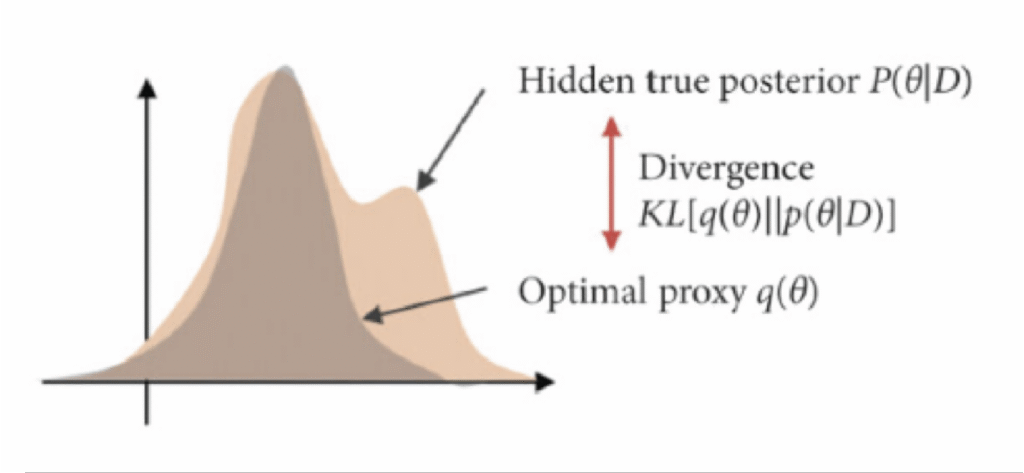
For complex systems, the true posterior is impossible to calculate, so scientists restrict the AI to working with a family of simpler probability distributions – like the familiar bell curve. With each new data point, the model estimates which of the simple distributions is closest to the real posterior by calculating and then minimising free energy – the same way our brains work!
But one thing variational inference isn’t so good at is dealing with outliers. This is what Dr Kenric Nelson and his colleagues want to fix. As the founder of the technology company Photrek, Dr Nelson is particularly interested in the application of AI to complex systems like financial markets and the environment. Predicting extreme weather events, such as category 5 hurricanes or floods, could help to mitigate their devastating impacts on people’s lives and improve our abilities to predict them with sufficient time to prepare. But, to an AI, events such as these are outliers; typical training methods result in AI models downplaying the chances of such extreme events ever occurring. On the flip side, if outliers are included in the AI training data, then models can erroneously believe that they’re part of the norm.
Using Curved Information Spaces for More Robust Models
To address this problem, Dr Nelson and his team tried working with a different set of probability distributions aside from the usual bell curves. The problem with standard bell curves is that they decay rapidly at extreme values – we say they have very short tails – and this leads AI models to think that these extreme values can be ignored. Instead, Dr Nelson considered another family of distributions called the coupled exponentials. These distributions may look quite similar to bell curves, but can have longer tails – meaning that there’s a higher probability of obtaining extreme values. This enables AI models to find a suitable middle ground—not ignoring outliers while also not letting them skew the training process too much.
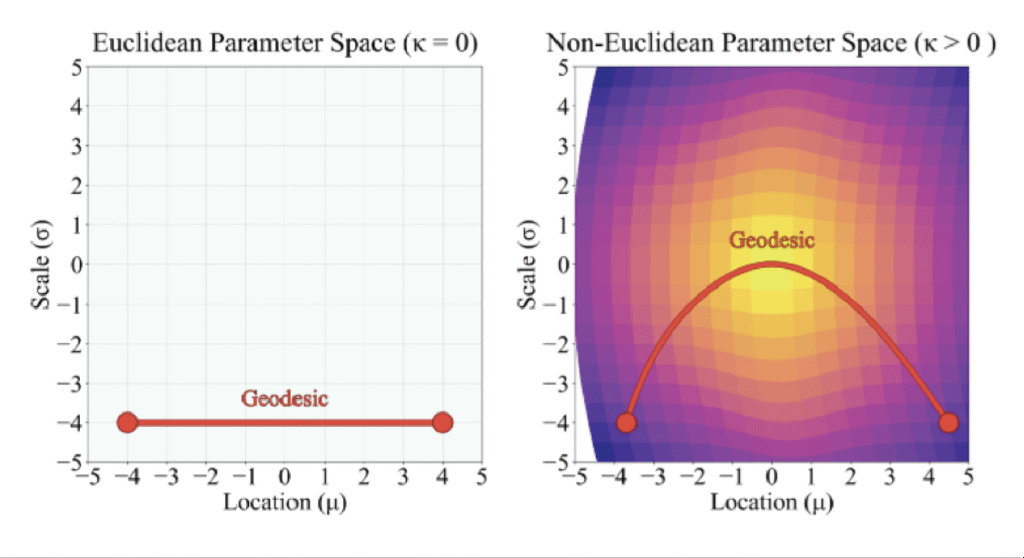
One of the novel features Dr Nelson found when considering this family of distributions is that they live in a non-trivial geometric space. Imagine we have a grid of points in space, then each point in the grid represents one of the specific distributions from the coupled exponential family. The same thing can be done for models working with bell curves, but in that case, you end up with an Euclidean space. In other words, you can treat the points as being spread out across a flat space where distances between points are calculated as usual. The concept of distance in this space is important, as it tells you which distributions are similar to one another and which ones are very different. As the machine learns, it adjusts its posterior distribution to something suitable that’s nearby. You don’t want the model jumping all over the place – that would be like someone completely changing their opinion whenever they read something new.
The special thing about coupled exponentials is that their space is not flat, but curved. This works the same way that curved spacetime does in physics. Out in deep space, the fabric of spacetime is flat and matter particles will travel through it along straight lines. On the other hand, if particles are in the vicinity of a heavy object like the sun, then the fabric of spacetime is curved and the matter particles travel along elliptical pathways instead. The same happens for the AI models Dr Nelson considered. The innovation Dr Nelson and the Photrek team have developed is that they can learn over a geometry with very high curvature, while actually completing the measurements over a lower-curvature geometry guaranteed to have a finite measure of variance.
Improved Performance using Celebrity Faces
To test their new framework, Dr Nelson and his team trained the model on the Celebrity-A data set. CelebA is a set of 202,599 images of celebrity faces that have a high degree of variability, making it a particularly complex data set for models to parse. This made it an ideal choice to test the new techniques. They found that their methods led to a 10–25% improvement in perception metrics over using standard bell curves.
Dr Nelson’s work is an important generalisation of existing AI training methods to a wider class of probability distributions. Using these methods, outliers can be incorporated into training data so that models are aware of their existence, but in a way that doesn’t spoil their overall performance, potentially generating AI models that are more robust. This has clear applications to a number of fields that deal with complex situations and environments including finance, medicine, and weather. In particular, AI models trained via this approach can appreciate that natural disasters and extreme weather events should be considered even if they are rare, improving our ability to predict such occurrences and lowering the risks of catastrophe.

SHARE

DOWNLOAD E-BOOK
REFERENCE
https://doi.org/10.33548/SCIENTIA1330
MEET THE RESEARCHER

Doctor Kenric Nelson
Photrek, Inc,
56 Burnham St Unit 1,
Watertown,
MA, USA
Doctor Kenric Nelson is the Founder and President of Photrek, a company dedicated to the safe and effective integration of artificial intelligence into society and the environment. The company commenced operations in 2020 following Dr Nelson’s five years as a research professor in electrical and computer engineering at Boston University. This came in the heels of working as a senior principal systems engineer for the Raytheon Corporation, after graduating Summa Cum Laude from Tulane University in 1986.
One of Dr Nelson’s primary research interests is the development of robust new training procedures for AI, specifically for the modelling of complex systems, such as extreme weather events, financial markets, and health analysis. He co-invented the Coupled Variational Autoencoder method for the learning of risk-aware AI models. He has also served as a member of the Cardano Catalyst Circle, where he facilitated a global review process for evaluation of blockchain innovation proposals, and is a proponent of sociocracy – a model of governance emphasising collaborative and inclusive decision-making, transparency, and efficiency.
CONTACT
LI: https://www.linkedin.com/in/kenric-nelson-ph-d-7495b77/
Bluesky: @kenricnelson.bsky.social
FUNDING
Photrek is appreciative of the grant funding from the SingularityNET Deep Funding program.
FURTHER READING
K Nelson, I Oliveira, A Al-Najafi, et al., Variational Inference Optimized Using the Curved Geometry of Coupled Free Energy, Artificial General Intelligence: 18th International Conference, 2025, 433-445. DOI: 10.1007/978-3-032-00686-8_38

REPUBLISH OUR ARTICLES
We encourage all formats of sharing and republishing of our articles. Whether you want to host on your website, publication or blog, we welcome this. Find out more
Creative Commons Licence (CC BY 4.0)
This work is licensed under a Creative Commons Attribution 4.0 International License. 
What does this mean?
Share: You can copy and redistribute the material in any medium or format
Adapt: You can change, and build upon the material for any purpose, even commercially.
Credit: You must give appropriate credit, provide a link to the license, and indicate if changes were made.
SUBSCRIBE NOW
Follow Us
MORE ARTICLES YOU MAY LIKE

Alex Spezowka | Responsible Research Writing in the Age of AI: From Detection to Transparency
Artificial intelligence is often discussed as a future challenge for research, yet it is already shaping how many papers are written. Drawing on emerging evidence and recent analysis, work led by Alex Spezowka highlights a key shift in thinking: rather than trying to detect AI use, the focus is moving towards how it can be used responsibly. This has important implications for how research is produced, evaluated, and trusted.

Distinguished Professor Michael Zhdanov | Mapping Magma and Drilling for Oil: New Methods for Geophysical Modelling
Geophysicists use a variety of different methods to peer beneath the Earth’s surface. Seismic activity, gravitational fields , and magnetic fields each offer their own windows into the world underground, but, in isolation, are incapable of giving us the full picture. Combining data from distinct geophysical surveys, however, is its own challenge. For a number of years, a team of researchers led by Professor Michael Zhdanov has worked to develop a mathematical framework capable of generating detailed geophysical models from multiphysics data.
Through application to modelling magma chambers underneath Yellowstone and searching for oil deposits in the Barents Sea, they demonstrate that their approach can produce robust and accurate predictions

Dr David Berry | Bridging the gap between Agriculture and Automation
As automation and controlled environments reshape modern farming, the need for technicians who understand both plant science and engineering is rapidly increasing. At Virginia Western Community College (VWCC) located in Roanoke, VA, Dr David Berry is leading a programme supported by the National Science Foundation (NSF) with the aim to merge agriculture with mechatronics, preparing students for the realities of emerging industries. A distinctive example of this approach is an automated hydroponics system designed by two industry-sponsored students, demonstrating how practical experience, interdisciplinary training and strong employer partnerships can create the skilled workforce required for the future of sustainable food production.
Revolutionising Chemical Safety: How AI Could Replace Animal Testing
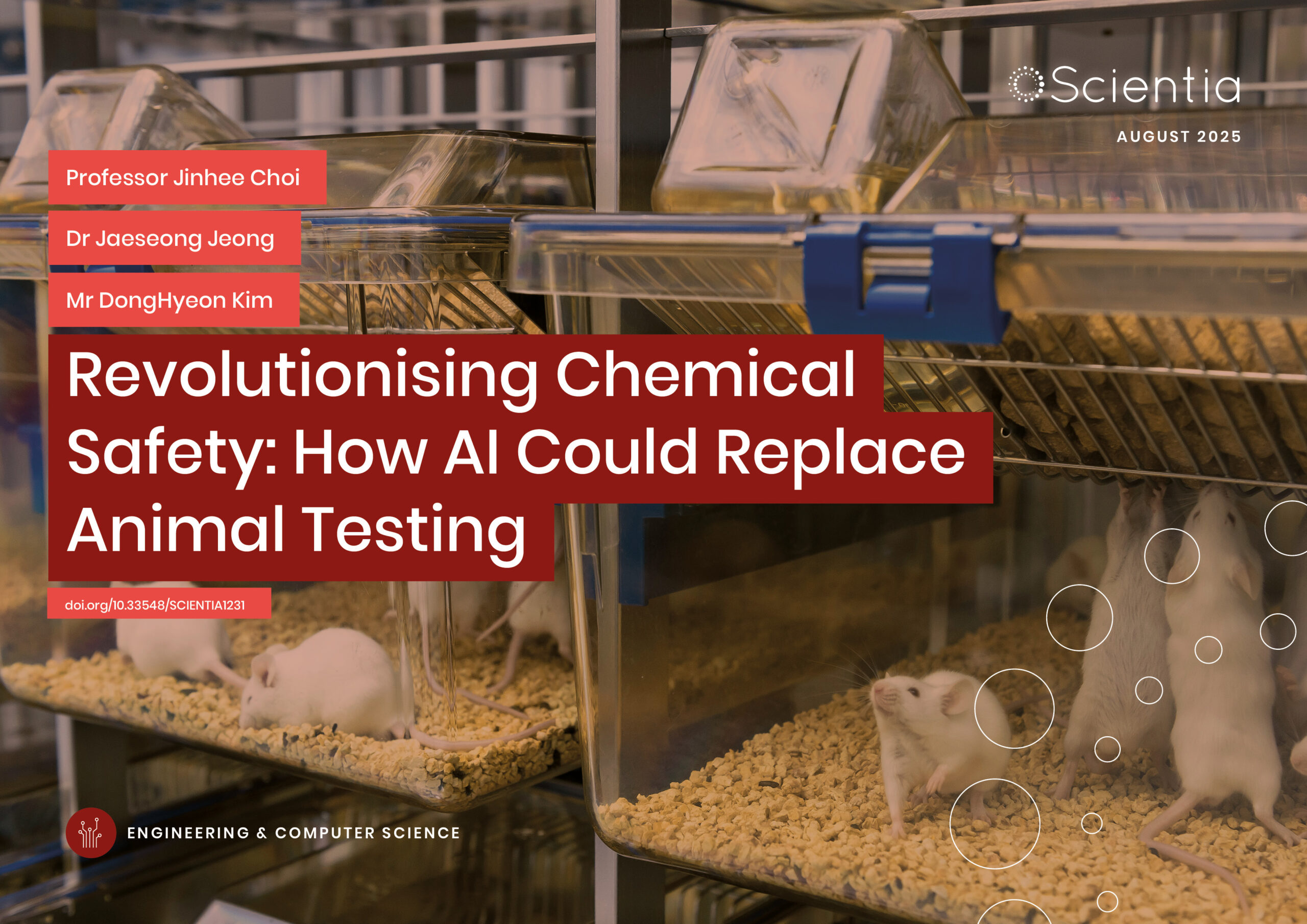
Modern life exposes us to a staggering array of synthetic substances—over 350,000 chemicals are registered for use worldwide, found in products as diverse as pesticides, plastics, cosmetics, and pharmaceuticals. Ensuring the safety of all these compounds is a daunting task. Researchers led by Prof Jinhee Choi at University of Seoul are developing cutting-edge artificial intelligence models to predict the potential dangers toxicity of chemicals, with the aim of reducing the need for controversial animal experiments. By analysing vast toxicology databases and pioneering new AI techniques, Prof Choi’s team is working towards a future where the safety of everything from industrial compounds to household products can be assessed more quickly, cheaply, and humanely.