
DOI: doi.org/10.33548/SCIENTIA1342
MORE ARTICLES YOU MAY LIKE
Professor Gino Verleye – Wim Vermeulen | Credibility of Green Advertising: Six Elements That Drive Credibility in Green Advertising
Green advertising is becoming an increasingly important means of differentiation in modern markets. Organisations that can credibly communicate their environmental sustainability efforts are often better positioned to build trust and strengthen their competitive standing.
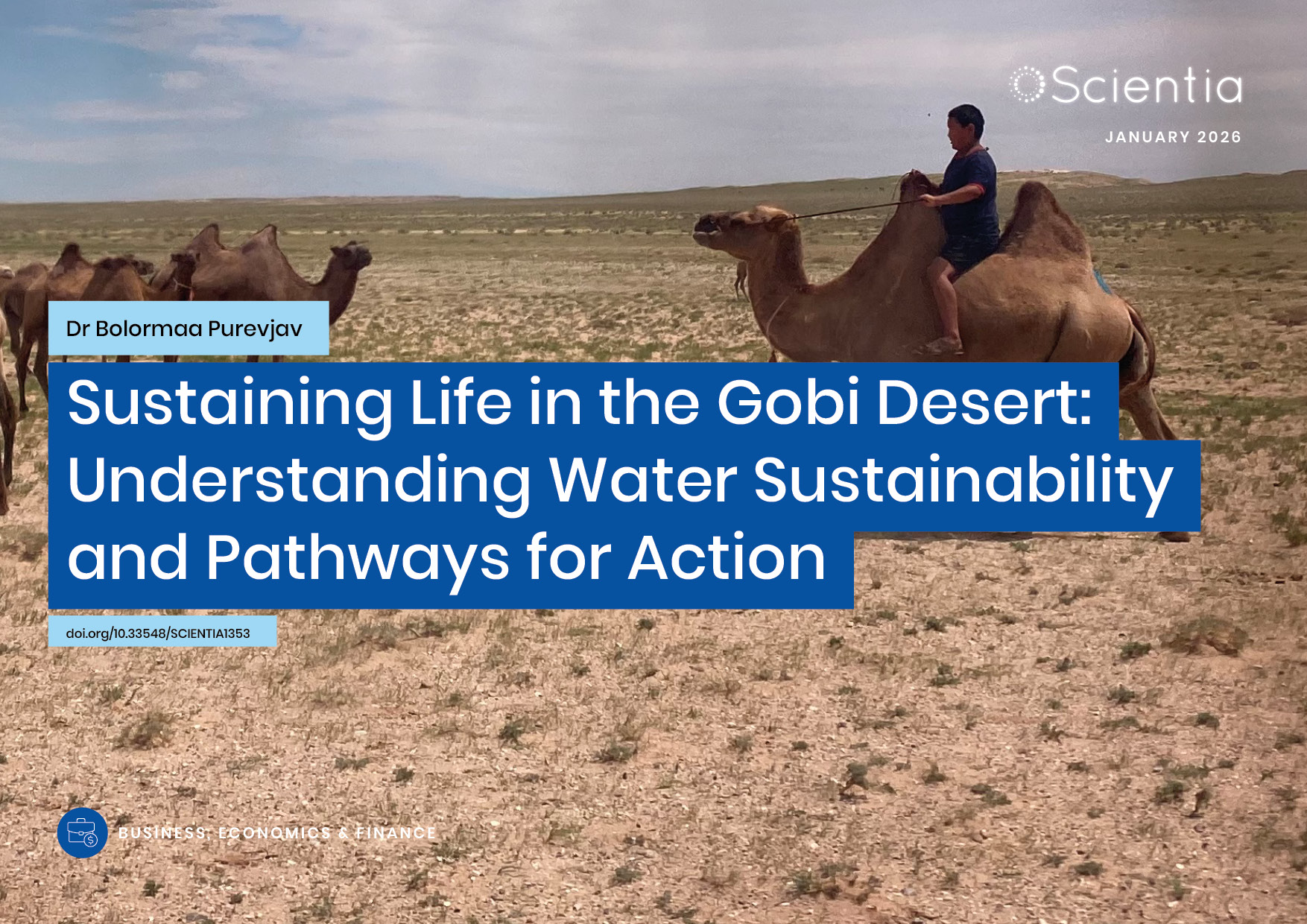
Dr Bolormaa Purevjav | Sustaining Life in the Gobi Desert: Understanding Water Sustainability and Pathways for Action
The mining industry plays a vital role in driving Mongolia’s economic growth and creating employment opportunities. However, in the Gobi Desert —one of the driest regions in Mongolia— water access, and community engagement remain critical challenges for the mining industry. In this region, water is a shared and scarce resource, relied upon by herders, towns, mining companies, wildlife, and fragile ecosystems alike.
A study by Dr Bolormaa Purevjav and her colleagues explored how a holistic approach which combines economic, social, and environmental principles called Integrated Water Resource Management (IWRM) can improve water sustainability in mining regions.

Professor David Gerbing | A Quick and Easy New Way to Visualise Data
Do you find data analysis dense and impenetrable, like a quantitative jungle? You’re not alone. Many of the most useful statistical tools have steep-learning curves and often demand both sophisticated mathematical ability and advanced programming skills. But, in a world where data is constantly generated and recorded, it’s essential that data analysis tools are as accessible as possible. And there’s no reason they can’t be; with such powerful digital tools at our disposal, data visualisation can be made as straightforward as the click of a button.
That’s the goal behind Professor David Gerbing’s latest project – lessR. lessR is a free, open-source package for one of the most popular analysis programming languages, R, designed to make data visualisation as simple as possible. See Professor Gerbing’s written and video introduction to using the R language for data analysis at the website he provides for his students.
Running on Empty: Climate Change and the Future of the Colorado River Basin
Amid growing pressures from climate change and population growth, water availability in the Colorado River Basin is declining while demand continues to rise. At the Water Dialogue Lab at the University of California, Riverside (UCR), Prof Mehdi Nemati and his colleagues, Dr Daniel Crespo, Prof Ariel Dinar, and Ms Paloma Avila from UCR’s School of Public Policy, along with Mr Zachary Frankel and Mr Nicholas Halberg from the Utah Rivers Council, have developed integrated models to assess changes in water availability, use, and associated economic values across the Basin. Their research evaluates the effects of climate change and policy interventions on both physical water supply and economic outcomes. Their findings highlight the need for adaptive planning, improved economic resilience, and policy reforms to ensure long-term sustainability in the region.