
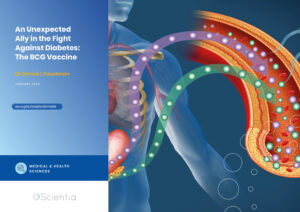
Dr Denise Faustman | An Unexpected Ally in the Fight Against Diabetes: The BCG Vaccine
Diabetes is a widespread health concern affecting millions worldwide. Recent research suggests an unexpected ally in the fight against this disorder: the Bacille Calmette-Guérin (BCG) vaccine. Originally developed to prevent tuberculosis, BCG is now showing promise in managing and potentially preventing type 1 diabetes. Dr Denise Faustman from Massachusetts General Hospital (MGH) and Harvard Medical School is leading groundbreaking studies that are reshaping our understanding of diabetes treatment and prevention.
A Century-Old Vaccine with Modern Potential
The BCG vaccine, first used in 1921 to combat tuberculosis, has been a cornerstone of global health initiatives for a century. Its strong safety record and widespread use make it one of the most commonly administered vaccines worldwide. However, recent research has uncovered a range of unexpected benefits beyond its original purpose, including potential protective effects against various non-mycobacterial infections and even certain autoimmune conditions.
Dr Denise Faustman and her team at MGH have been at the forefront of investigating BCG’s potential in diabetes management and prevention. Their work has revealed intriguing connections between this long-established vaccine and improved blood sugar control in individuals with type 1 diabetes.
Unravelling BCG’s Impact on Diabetes
Type 1 diabetes (T1D) is an autoimmune condition where the body’s immune system attacks and destroys insulin-producing cells in the pancreas. This leads to a lifelong dependence on insulin therapy. Type 2 diabetes (T2D), on the other hand, is characterised by insulin resistance and, in later stages, insufficient insulin production.
Dr Faustman’s research has shown that BCG vaccinations can lead to long-term improvements in blood sugar control for individuals with longstanding T1D. Multiple randomised controlled trials and observational studies in the United States have demonstrated that multi-dose BCG immunotherapy can lower blood sugar levels in individuals with longstanding type 1 diabetes, particularly those with juvenile-onset disease.
The Science Behind the Success
The team’s investigations revealed that BCG’s beneficial effects on blood sugar levels stem from both immune and metabolic changes. Dr Faustman’s research indicates that BCG appears to reset the immune system, increasing levels of regulatory T-cells and reducing the number of autoreactive immune cells that attack pancreatic beta cells.
Perhaps even more intriguingly, BCG treatment was found to induce a systemic shift in glucose metabolism in vivo with participants diagnosed and treated with Type 1 diabetes. Dr Faustman’s team discovered that individuals with type 1 diabetes have an underlying defect in their white blood cells’ metabolism. Instead of primarily using aerobic glycolysis (which uses sugar for energy), their white blood cells rely more heavily on oxidative phosphorylation (which uses fats for energy).
The BCG vaccine gradually switches glucose metabolism in immune cells from oxidative phosphorylation back to aerobic glycolysis. This metabolic change is driven by increased expression of a protein called Myc, which acts as a master regulator of several glucose metabolism pathways. Dr Faustman’s team observed that this shift to aerobic glycolysis represents a state of high glucose utilisation, which may explain the lowering of HbA1c levels seen in treated patients. Remarkably, this effect occurs even in the absence of a functioning pancreas, demonstrating that BCG immunotherapy can systemically lower blood sugar levels through its effects on the immune system.
BCG and Bladder Cancer: An Unexpected Connection
To further explore BCG’s potential effects on diabetes, Dr Faustman and her colleagues turned to an unexpected source: bladder cancer treatment data. BCG has been used as a therapy for early-stage bladder cancer since the 1970s, typically administered in high doses directly into the bladder.
The team analysed three large US clinical databases, focusing on individuals with bladder cancer who also had either T1D or T2D. They tracked changes in HbA1c levels following BCG treatment for bladder cancer. Remarkably, they found that T1D patients who received BCG for bladder cancer showed a consistent decrease in HbA1c levels in the years following treatment. This effect was observed across all three databases, with HbA1c reductions of nearly 10% persisting for several years after BCG administration.

A Different Story for Type 2 Diabetes
Interestingly, the team did not observe similar improvements in HbA1c levels for T2D patients treated with BCG for bladder cancer. Dr Faustman suggests this difference may be due to the underlying mechanisms of the two types of diabetes, but also points to a potential confounding factor: the use of metformin. Almost every T2D patient in the US takes metformin, a common diabetes medication. Their research and the research of Dr Mihai Netea indicates that metformin may interfere with the metabolic pathway through which BCG exerts its beneficial effects. More work needs to be done before any conclusions in type 1 can be drawn.
Global Implications: BCG Vaccination and Diabetes Prevention
Beyond its potential as a treatment for existing diabetes, Dr Faustman and her team were also interested in whether BCG might play a role in preventing diabetes onset. To investigate this, they conducted an ecological study examining the relationship between countries’ BCG vaccination policies and their diabetes incidence rates.
The researchers analysed data from two international databases, comparing T1D incidence in countries with mandatory neonatal BCG vaccination programmes to those without such policies. The results were striking: countries with BCG vaccination programmes consistently showed lower rates of T1D incidence. In one dataset, the team found an average 65% reduction in T1D incidence for countries with neonatal BCG vaccination policies. Another dataset showed a 47% reduction. While these are observational findings and cannot prove causation, they certainly suggest that BCG may have a protective effect against T1D development. The picture for T2D was less clear. One dataset showed no significant difference in T2D incidence between countries with and without BCG vaccination programmes. However, analysis of a larger dataset did reveal a significant reduction in T2D incidence in countries with BCG vaccination policies, with an average decrease of 28%.
Mechanisms of Action: How BCG Might Prevent Diabetes
Dr Faustman and her colleagues have proposed several mechanisms by which BCG might help prevent diabetes onset. One key factor appears to be BCG’s ability to modulate the immune system. The research suggests that BCG promotes a more balanced immune response. It increases regulatory T-cells, which help prevent autoimmune reactions, and it may also reduce the number of autoreactive immune cells that can attack insulin-producing cells in the pancreas.
Additionally, the metabolic changes induced by BCG play a crucial protective role. By promoting a shift towards aerobic glycolysis in immune cells, BCG helps correct the underlying metabolic defect in white blood cells of type 1 diabetics. This shift allows the body to maintain better overall glucose regulation, potentially reducing the risk of both T1D development.
Future Directions and Challenges
While the results of Dr Faustman’s research are promising, she emphasises that more work is needed to fully understand BCG’s potential in diabetes prevention and management. As research in this field continues to evolve, Dr Faustman and her team remain committed to unravelling the complex interactions between the immune system, metabolism, and chronic diseases like diabetes. Their work not only offers hope for improved diabetes management and prevention but also highlights the importance of looking at established medical interventions in new ways. BCG, from its worldwide use for over 100 years, has an impeccable safety track record.
By thinking outside the box and rigorously investigating unexpected connections, researchers like Dr Faustman are paving the way for innovative approaches to some of our most pressing health challenges. As we continue to learn more about the intricate workings of the human body, vaccines like BCG may prove to be valuable tools in our ongoing efforts to promote health and prevent disease.
SHARE

DOWNLOAD E-BOOK
REFERENCE
https://doi.org/10.33548/SCIENTIA1131
MEET THE RESEARCHER

Dr Denise L Faustman
Massachusetts General Hospital, Harvard Medical School, Boston, MA, USA
Dr Denise Faustman is Director of the Immunobiology Laboratory at Massachusetts General Hospital and an Associate Professor of Medicine at Harvard Medical School. She obtained her MD and PhD from Washington University School of Medicine. Dr Faustman’s research focuses on developing new therapeutic approaches for type 1 diabetes and other autoimmune diseases. Her lab made groundbreaking discoveries about the role of the proteasome and NF-κB in autoimmunity. She led clinical trials testing BCG vaccination to treat long-standing type 1 diabetes, finding it could restore blood sugar control. Dr Faustman also discovered the TNFR2 receptor as a target for cancer immunotherapy. She has published over 140 papers, holds numerous patents, and her work has been funded by major foundations and the NIH. Dr Faustman’s innovative research is advancing the understanding of autoimmunity and diabetes and translating findings into novel therapies.
CONTACT
E: faustman@helix.mgh.harvard.edu
W: https://faustmanlab.org/
FURTHER READING
WM Kühtreiber, L Tran, T Kim, et al., Long-term reduction in hyperglycemia in advanced type 1 diabetes: the value of induced aerobic glycolysis with BCG vaccinations, NPJ Vaccines, 2018, 3(23). DOI: https://doi.org/10.1038/s41541-018-0062-8
DL Faustman, M Davis, TNF receptor 2 pathway: drug target for autoimmune diseases, Nature Reviews Drug Discovery, 2010, 9(6), 482–493. DOI: https://doi.org/10.1038/nrd3030
WM Kühtreiber, H Takahashi, RC Keefe, et al., BCG vaccinations upregulate myc, a central switch for improved glucose metabolism in diabetes, iScience, 2020, 23(5), 101085. DOI: https://doi.org/10.1016/j.isci.2020.101085
GF Shpilsky, H Takahashi, A Aristarkhova, et al., Bacillus Calmette-Guerin ‘s beneficial impact on glucose metabolism: evidence for broad based applications , iScience, 2021, 24(10), 103150. DOI: https://doi.org/10.1016/j.isci.2021.103150
WM Kühtreiber, DL Faustman, BCG therapy for type 1 diabetes: restoration of balanced immunity and metabolism , Trends in Endocrinology and Metabolism, 2019, 30(2), 80-92. DOI: https://doi.org/10.1016/j.tem.2018.11.006
REPUBLISH OUR ARTICLES
We encourage all formats of sharing and republishing of our articles. Whether you want to host on your website, publication or blog, we welcome this. Find out more
Creative Commons Licence (CC BY 4.0)
This work is licensed under a Creative Commons Attribution 4.0 International License. 
What does this mean?
Share: You can copy and redistribute the material in any medium or format
Adapt: You can change, and build upon the material for any purpose, even commercially.
Credit: You must give appropriate credit, provide a link to the license, and indicate if changes were made.
SUBSCRIBE NOW
Follow Us
MORE ARTICLES YOU MAY LIKE

Assoc Prof. Nicholas Brown | Rethinking Prostate Care: A New Frontier in Treating Benign Prostatic Hyperplasia
For millions of men, ageing brings with it a set of frustrating and often disruptive urinary symptoms. These symptoms, caused by benign prostatic hyperplasia, or BPH, can affect sleep, confidence, and overall quality of life. Traditionally, treatment follows a familiar path. Patients begin with medications, often for years, and may eventually progress to surgery if symptoms worsen. Yet this pathway is not without its drawbacks. Medications can cause side effects, while surgery carries risks and recovery time. In recent years, a minimally invasive interventional radiology procedure called prostate artery embolisation, or PAE, has begun to challenge this traditional model. At the forefront of this shift is a collaborative research group, led by Dr. Nicholas Brown of the University of Queensland, whose series of P-EASY studies has explored whether PAE could transform how BPH is treated, particularly at earlier stages.

Jean Lycke | Addressing Unmet Medical Needs in Mucosal Disease: A Close-to-Market Innovation Approach
Recurrent Aphthous Stomatitis (RAS) is an oral condition characterized by one or several painful mucosal ulcers. RAS affects a large proportion of the population and has a point prevalence of approximately 2–3%, daily. The etiology remains unknown, and there is currently no curative treatment. Most patients experience recurring episodes over time, with each episode typically lasting up to a week. Here, we describe the development of a mucoadhesive patch which, when applied over a RAS ulcer, provides rapid pain relief. The patch is easy for patients to apply when symptoms begin and has the potential to be used as an over-the-counter product. The development of the Mucocort mucoadhesive patch is an example of a Close-to-Market innovation strategy that embraces simplicity within a complex healthcare system. By simplifying the product concept, the team has reduced the number of regulatory steps required before market approval. This MedTech/Pharma innovation model, known as the “4R” framework – Re-purposing, Re-formulation, Re-positioning, and Re-patenting – has guided the program from concept to commercialization. In addition to the biodegradable mucoadhesive patch developed for RAS ulcers, the team is extending the innovation concept to a mucoadhesive gel formulation for the prevention and treatment of chemotherapy-induced mucositis. This gel-based program is being commercialized separately through MucoShield.
The Translational Asian Agerelated Macular Degeneration Program Phase 2 (TAAP-2): Reimagining the Future of Vision Care
Age-related macular degeneration, often abbreviated as AMD, is one of the leading causes of vision loss among older adults worldwide. In Asia, where populations are ageing rapidly, its impact is particularly profound. For many, the disease quietly erodes central vision, making everyday activities such as reading, driving, and recognising faces increasingly difficult. Against this backdrop, the Translational Asian Age-related Macular Degeneration Programme, or TAAP for short, has emerged as a bold and ambitious effort to confront the disease headon. Now in its second phase, TAAP-2 represents a significant evolution in both scientific scope and clinical ambition.

Ms. Aikaterini Dritsoula | Looking Beyond Snoring: How Hidden Airway Problems Shape Children’s Sleep
For many parents, a child’s snoring may seem harmless, even endearing. Yet in some cases, it signals something more serious. Obstructive sleep apnoea is a condition in which a child’s breathing is repeatedly disrupted during sleep. These interruptions can affect growth, behaviour, and learning. Children with this condition may toss and turn at night, struggle to concentrate during the day, or show signs of hyperactivity and fatigue. Traditionally, enlarged tonsils and adenoids have been seen as the main culprits. Surgery to remove them has long been considered the standard treatment. However, research led by Consultant ENT Surgeon Ms. Aikaterini Dritsoula of The Leeds Teaching Hospitals NHS Trust invites us to look deeper. Her work suggests that the story is often more complex, especially in very young children.