
Dr Donald Fosnacht – Bringing Biomass into the Renewable Mix

A completely decarbonised society may now be firmly on the agendas of many businesses and world leaders, but the paths that need to be taken to realise this goal still remain far from clear. Dr Donald Fosnacht at the University of Minnesota believes that biomass is currently underappreciated as a way to realise a carbon-neutral society. The techniques his team has developed have already been demonstrated on industrial scales in some cases, and even promise to improve the lives of some communities in the developing world. With further research, Dr Fosnacht hopes that biomass will transform the ways in which our industries and power stations function.
Combatting Climate Change
As the urgency of tackling climate change becomes increasingly apparent, the push to obtain 100% of our energy from renewable sources has gained unstoppable momentum in recent years. So far, efforts to realise this goal have been dominated by instalments of wind turbines and solar panels. In reality, however, these technologies won’t be able to bring about a completely decarbonised economy by themselves.
When the wind isn’t blowing, or the sun isn’t shining, energy must either come out from storage, or from another renewable source entirely. Dr Donald Fosnacht and his colleagues at the University of Minnesota are studying a technology that can essentially do both: the combustion of plants, or ‘biomass’.
‘Our program is looking at the ability to store energy, and an alternative source of energy when stored energy is expended and the renewable source cannot supply what is needed,’ describes Dr Fosnacht. ‘To do this, we are examining energy storage options beyond batteries and by conversion of biomass materials into biofuels that can be used in conventional coal-based power plants.’
Since this method wouldn’t require policymakers to significantly change current infrastructures for energy production, it is a highly attractive prospect. Implementing it, however, will still require some significant research.
Difficulties with Biomass
Having been compressed and heated for many millions of years, fossil fuels such as coal, crude oil and natural gas are incredibly easy to combust, and release large amounts of energy in the process. Unfortunately, the case isn’t the same for newly grown plants.
‘Biomass is not easy to use directly due to several problems: logistics are often costly, the energy density is low, and the materials are often very difficult to grind and directly use in current fuel systems,’ Dr Fosnacht explains. If plants are not processed in the right way, their use in facilities such as coal-fired power plants will be highly inefficient, and may even cause damage to the facilities.
Therefore, if biomass is to realistically become as important as wind and solar in the renewable energy mix, the techniques used to produce it need to improve. Dr Fosnacht and his team believe that by developing better ways to convert plants into energy-dense, easily combustible fuels, this conversion will begin to look far more realistic. They envisage a wide variety of applications of such a fuel, including carbon-neutral industrial processes, distributed power generation, conversion into charcoal substitutes, and the development of even more advanced products such as liquid fuels.
‘Our laboratory philosophy is to help take ideas whether generated in our own laboratory or from a collaborator and show what can be practically achieved.’
‘Our laboratory philosophy is to help take ideas whether generated in our own laboratory or from a collaborator and show what can be practically achieved.’
New Processing Technologies
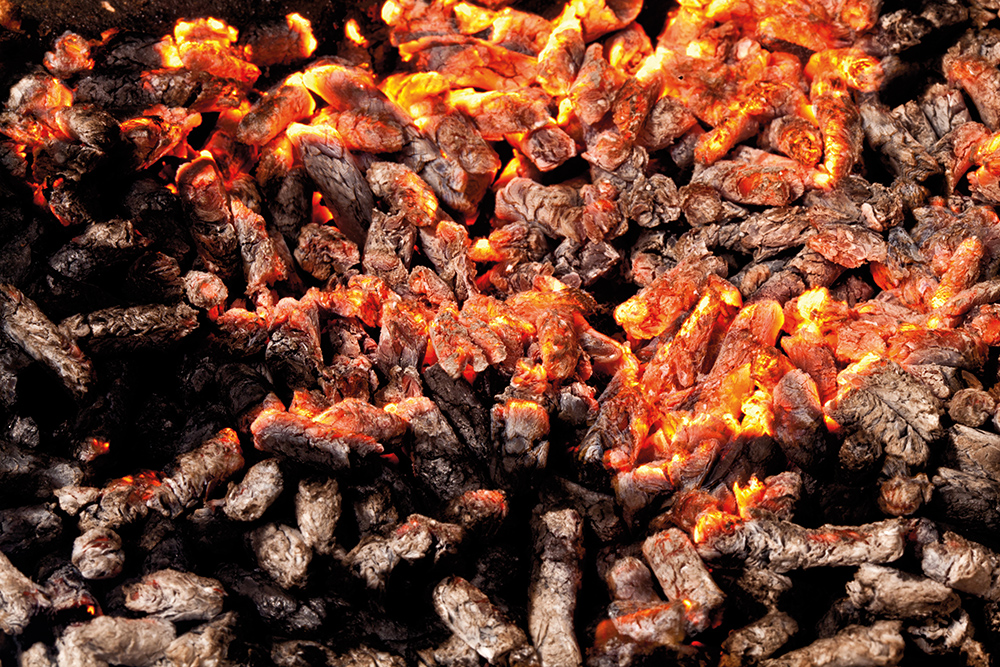
To achieve these capabilities, Dr Fosnacht describes two techniques for implementing the process of ‘torrefaction’, in which biofuels are roasted at low temperatures to produce dry, energy dense and easily combustible char. The first of these is an ‘indirectly heated rotary kiln’ – a slowly rotating tilted cylinder in which raw biomass is fed in at the top end, and is heated by external means to drive out volatile matter and increase its fixed carbon content as it passes through the structure. Once it reaches the bottom, the material will have transformed into a charcoal-like substance. Secondly, a ‘moving bed reactor’ involves processing biomass in a columnar reactor, where biomass and super-heated steam flow together through the reactor and the biomass is again transformed into a char material. Dr Fosnacht has demonstrated the feasibility of both reactors at his facility.
Another technology that Dr Fosnacht is developing is called hydrothermal carbonisation (or ‘wet torrefaction’), in which both pressure and temperature are employed to treat the biomass. ‘This technology allows some ash material to be removed while it concentrates the carbon and increases the fuel value of the biomass to much higher levels,’ says Dr Fosnacht. ‘We have found that the converted materials can be easily densified using methods including pelleting and briquetting.’
The researchers have now demonstrated these processes on industrial scales at their facilities; producing tons of biofuel on a campaign basis that is compatible with coal-fired power plants. Now, they are considering how their technology could be applied to tasks beyond power generation alone, including industrial processes where fossil fuels are still essential, such as steel production and chemical manufacturing.

Biomass in Industry
Currently, powdered coal is an important ingredient in the chemical reactions that convert iron ore extracted from mines into pure metallic iron, for use in steelmaking. Yet through several studies, Dr Fosnacht and his colleagues have shown that the biofuels produced with their technologies can perform exactly the same function, while still being a reliable fuel source.
‘We have participated in various trials at both industrial applications such as power generation and steelmaking,’ Dr Fosnacht recounts. ‘They show that the converted biomass materials can be a good substitute for coal. In addition, we have tested the produced fuels on stationary hearths using mobile steam boilers, and found that it can completely displace coal.’
Furthermore, the researchers believe that through further development of their biomass conversion techniques, a variety of other more valuable products could also be produced. ‘These include chars for agricultural use, and the production of clean water through absorption of undesired chemical agents onto char surfaces,’ describes Dr Fosnacht. In addition, he notes that the char material may be a good carrier for microbial agents that can be used to enhance agricultural performance.
This would be possible since such biofuels have many small pores on their surfaces, increasing their surface area. In turn, this would make them better at trapping the contaminants and impurities present in untreated water. Armed with this combination of demonstrated uses and realistic roadmaps to potential applications, Dr Fosnacht has recently turned his attention to how his team’s technologies could help to improve the prospects of poorer communities.
Biomass in Developing Countries
In 2016, Dr Fosnacht travelled to the Senegal River Region in West Africa. In recent years, an aquatic weed named Typha Australis has unleashed widespread disruption on activities including agriculture, fishing and access to drinking water along the river. On the trip, Dr Fosnacht met with local researchers and communities to examine the potential of Typha Australis as a biofuel. He proposes that such a project would not only provide an easy way to dispose of the weed on large scales, but it could also provide a carbon-neutral power source to the region, where a lack of sufficient infrastructure currently hinders the development of other renewables.
‘We have visited both Mauritania and Senegal and found that Typha Australis may be suitable feedstock for conversion of fuel products along the Senegal River,’ Dr Fosnacht describes. ‘By converting the material to a fuel, it potentially could allow various advantages for the communities along this river, including job creation, improved fishing, elimination of disease vectors, and improved river access.’
Dr Fosnacht’s findings from the trip indicate that with the help of the technologies developed in his team’s previous research, Typha Australis could be rapidly harvested from waterways throughout the Senegal River and converted from a nuisance into an economic resource.
In addition, once it has been converted to char, the large amounts of energy contained in the biofuel can be easily stored for indefinite periods. When required, the fuel could then be immediately used for everyday activities such as cooking, and could also make significant contributions to the electricity supplies of the two nations which straddle the river.
Encouragingly, Dr Fosnacht reported enthusiasm amongst many local people when discussing how his technologies could be built and scaled up in Senegal and Mauritania. He now believes that through further developments, his methods could become hugely beneficial to countries across the developing world, where extensive distribution infrastructures for renewable energy have yet to be built.

Towards Commercialisation
Dr Fosnacht and his colleagues now predict that the capabilities of their techniques could soon stretch even further. Currently, they are studying how effective they could be in realising carbon neutrality in a variety of public services. ‘We think our technologies may find practical use in processing municipal solid waste, plastics and other materials,’ Dr Fosnacht summarises.
Furthermore, the scale of the conversion processes they have already achieved provide the team with reliable pathways towards the implementation of biofuel conversion technologies on commercial scales.
As Dr Fosnacht concludes, ‘our laboratory philosophy is to help take ideas whether generated in our own laboratory or from a collaborator and show what can be practically achieved.’ With such collaborators in environmentally conscious industries and the developing world, where a widespread enthusiasm for tackling climate change has taken hold, this mindset promises to inspire a real force for change.
Overall, the insights gathered by Dr Fosnacht and his team have the potential to provide a significant boost to the immense efforts required globally to obtain 100% of our energy from renewable sources. If the energy that is naturally cycled through Earth’s ecosystems can be utilised on global scales, instead of that locked deep underground for many millions of years, we may be one step closer to our goal of true carbon neutrality.
Reference
https://doi.org/10.33548/SCIENTIA429
Meet the researcher

Dr Donald Fosnacht
Associate Director
Natural Resources Research Institute
University of Minnesota Duluth
Duluth, MN
USA
Dr Fosnacht received his PhD in metallurgical engineering from Missouri Science and Technical University in 1978. After initially working in the steel industry, and in consulting, he joined the University of Minnesota Duluth’s Natural Resources Research Institute as Director of the Center for Applied Research and Technology Development. He currently is Associate Director of the Institute. He has served on various state task forces related to minerals or energy with industrial, small business, governmental and academic collaborators. He has directed work related to iron ore conversion to metallic iron, renewable energy, and examining the efficacy of both torrefaction and hydrothermal carbonisation in pre-treating biomass to create enhanced energy fuel products.
CONTACT
W: https://www.nrri.umn.edu/leadership-team/faculty-staff/donald-fosnacht
KEY COLLABORATORS
Coalition for Sustainable Rail
Syngas Technology (a subsidiary of Gradient Technologies)
Consortium for Advanced Wood to Energy Solutions
Nu-Iron Technologies, LLC
University of Minnesota
Advanced Carbon Technologies, LLC
- R. Komarek, Inc.
Heyl Patterson Thermal Technologies
Minnesota Power
Oregon Torrefaction
New Biomass Energy
Airex
Biopower Sustainable Energy
Terramax
Permanente
FUNDING
US Commerce Department, Economic Development Administration
US Department of Energy
US Endowment for Forestry and Communities
US Department of Agriculture – US Forest Service
Minnesota Department of Commerce
Xcel Energy Renewable Development Fund
Permanent University Trust Fund – University of Minnesota
Initiative for Renewable Energy and the Environment – University of Minnesota
Private Industry

Creative Commons Licence
(CC BY 4.0)
This work is licensed under a Creative Commons Attribution 4.0 International License. 
What does this mean?
Share: You can copy and redistribute the material in any medium or format
Adapt: You can change, and build upon the material for any purpose, even commercially.
Credit: You must give appropriate credit, provide a link to the license, and indicate if changes were made.
More articles you may like

Dr Haydee Laza | Identifying Aphidresistance to Protect Future Crops
Insect pests, such as aphids, are capable of decimating crop yields, leading to severe economic loss. Some plants, however, have developed traits that make them resistant to such pests. Identifying these traits in plants, however, is not simple. Dr. Haydee Laza from Texas Tech University has worked with colleagues to identify several sorghum aphidresistant leaf structure traits in sorghums. These traits can be used as the basis for developing future screening methods for identifying aphid resistance in sorghums, subsequently protecting future crop yields.
Dr Rhett Martin | Governing Nature at the Edge of Collapse
For millions of men, ageing brings with it a set of frustrating and often disruptive urinary symptoms. These symptoms, caused by benign prostatic hyperplasia, or BPH, can affect sleep, confidence, and overall quality of life. Traditionally, treatment follows a familiar path. Patients begin with medications, often for years, and may eventually progress to surgery if symptoms worsen. Yet this pathway is not without its drawbacks. Medications can cause side effects, while surgery carries risks and recovery time. In recent years, a minimally invasive interventional radiology procedure called prostate artery embolisation, or PAE, has begun to challenge this traditional model. At the forefront of this shift is a collaborative research group, led by Dr. Nicholas Brown of the University of Queensland, whose series of P-EASY studies has explored whether PAE could transform how BPH is treated, particularly at earlier stages.

Assoc Prof. Nicholas Brown | Rethinking Prostate Care: A New Frontier in Treating Benign Prostatic Hyperplasia
For millions of men, ageing brings with it a set of frustrating and often disruptive urinary symptoms. These symptoms, caused by benign prostatic hyperplasia, or BPH, can affect sleep, confidence, and overall quality of life. Traditionally, treatment follows a familiar path. Patients begin with medications, often for years, and may eventually progress to surgery if symptoms worsen. Yet this pathway is not without its drawbacks. Medications can cause side effects, while surgery carries risks and recovery time. In recent years, a minimally invasive interventional radiology procedure called prostate artery embolisation, or PAE, has begun to challenge this traditional model. At the forefront of this shift is a collaborative research group, led by Dr. Nicholas Brown of the University of Queensland, whose series of P-EASY studies has explored whether PAE could transform how BPH is treated, particularly at earlier stages.

Jean Lycke | Addressing Unmet Medical Needs in Mucosal Disease: A Close-to-Market Innovation Approach
Recurrent Aphthous Stomatitis (RAS) is an oral condition characterized by one or several painful mucosal ulcers. RAS affects a large proportion of the population and has a point prevalence of approximately 2–3%, daily. The etiology remains unknown, and there is currently no curative treatment. Most patients experience recurring episodes over time, with each episode typically lasting up to a week. Here, we describe the development of a mucoadhesive patch which, when applied over a RAS ulcer, provides rapid pain relief. The patch is easy for patients to apply when symptoms begin and has the potential to be used as an over-the-counter product. The development of the Mucocort mucoadhesive patch is an example of a Close-to-Market innovation strategy that embraces simplicity within a complex healthcare system. By simplifying the product concept, the team has reduced the number of regulatory steps required before market approval. This MedTech/Pharma innovation model, known as the “4R” framework – Re-purposing, Re-formulation, Re-positioning, and Re-patenting – has guided the program from concept to commercialization. In addition to the biodegradable mucoadhesive patch developed for RAS ulcers, the team is extending the innovation concept to a mucoadhesive gel formulation for the prevention and treatment of chemotherapy-induced mucositis. This gel-based program is being commercialized separately through MucoShield.