
Dr Henri Leinonen | Fighting Blindness with Drug Repurposing
Article written by Luisa Postlethwaite, MPharm
For many types of inherited eye disease, there are currently very limited treatment options. These conditions, which are linked to distinctive genetic mutations, can eventually lead to blindness. Dr Henri Leinonen from the University of Eastern Finland leads a research team at the Leinonen Retina Laboratory investigating degenerative eye diseases and exploring drug therapies to treat these devastating conditions. This work is bringing fresh hope to millions around the globe.
An Unmet Need
The retina is the layer of light-sensitive cells covering the back portion of the inside area of the eyeball. Light enters the eye and it is then focused onto the retina by the lens. The cells of the retina, the rods and cones, react and create nerve impulses, which are then sent to the brain to interpret what is being seen. Inherited retinal degenerations (IRDs) comprise a large group of conditions, all of which are caused by mutations in the genes which are vital to the healthy function of the retina. These mutations eventually result in retina cell death and, in turn, a progressive loss of vision.
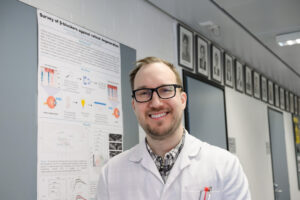
Dr Henri Leinonen, based in the School of Pharmacy at the University of Eastern Finland, explains that most IRDs are lacking in treatment options. IRDs affect around 1 in 2000 people around the world, often leading to blindness developing during childhood. There is a significant unmet medical need for a large number of people with serious life-changing eye disease. His ground-breaking research at the Leinonen Retina Laboratory aims to investigate the molecular mechanisms underlying disease in retina cells, and to develop new drug treatments for retinal degeneration.
Treating Inherited Retinal Degenerations
Dr Leinonen notes that IRDs (such as retinitis pigmentosa) are linked with hundreds of distinct genetic mutations. As such, targeted gene therapy is not only impractical but prohibitively expensive, both now and in the foreseeable future. He adds that there is only one gene therapy currently approved for IRDs, and it’s still unclear whether it can prevent the progressive nature of cell degeneration. Other options include untargeted disease-modifying treatment that aims to interrupt the mechanisms which drive the retinal cells to degrade across different IRD subtypes, regardless of the underlying genetic causes. Excitingly, certain methods of developing untargeted, and thus, more generally applicable disease modifying treatment, may offer a more attainable option for larger numbers of patients in a smaller timescale.
In describing his laboratory’s research, Dr Leinonen explains they have two main research programmes. The primary project is dedicated to identifying new retinal degeneration treatments utilising drug repurposing and untargeted disease modifying treatment strategies, as outlined above. The second project aims to better understand the retina’s homeostatic plasticity (its ability to adapt and function in certain disease situations). Dr Leinonen believes that once molecular pathways which enable the retina to adapt to sensory defects are identified, this will help guide the invention of new therapeutic targets that could be affected by repurposed drugs.
Drug Repurposing
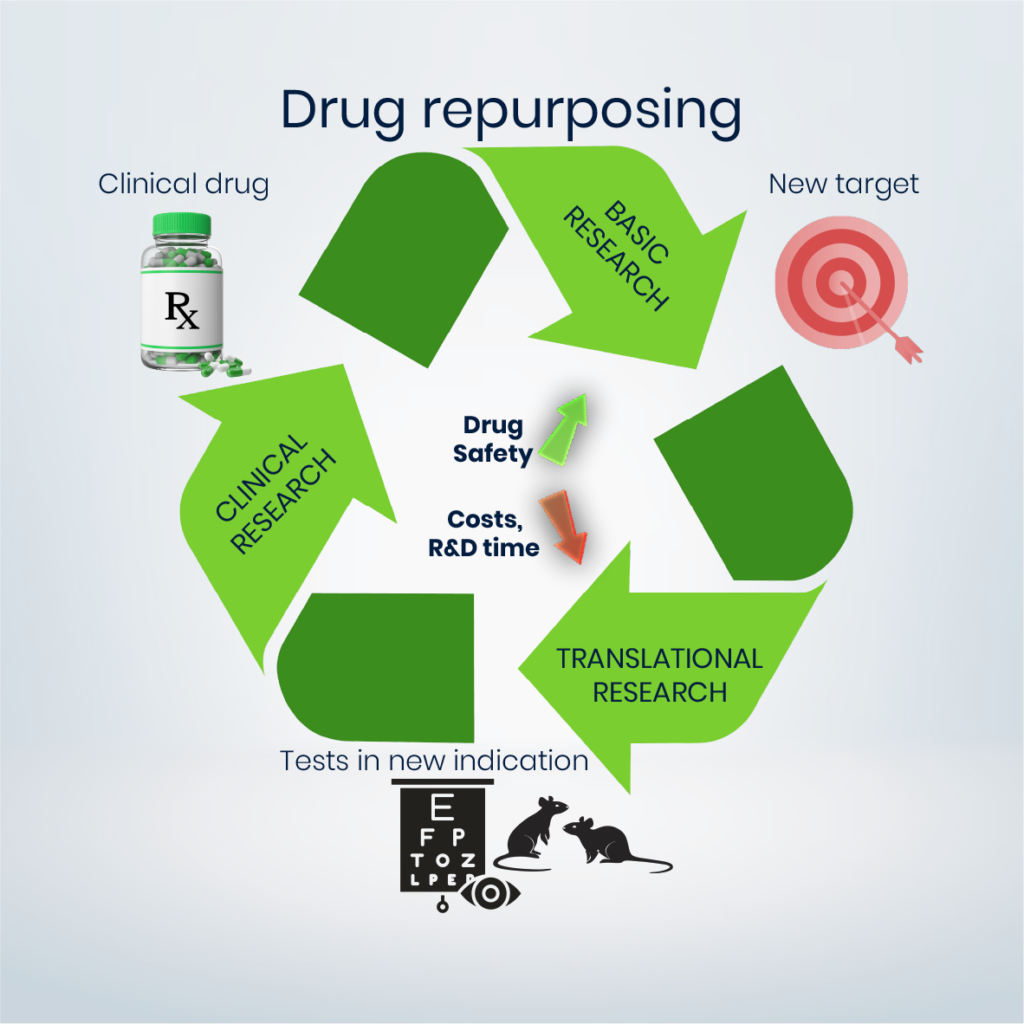
Dr Leinonen highlights that the search for disease modifying treatments often uses drug repurposing, which can significantly reduce the development timeline and also minimise the risks and costs linked with new drug development. Drug repurposing involves using currently available drugs for treating different conditions to what they are usually used for – a kind of recycling of medicines. Novel drugs can take decades to be researched, developed and tested, costing hundreds of millions in the process with no guarantee of ever making it to market. Older drugs have a significant advantage in that they have already been through detailed tests required by drug regulatory agencies, such as ADME studies (absorption, distribution, metabolism and excretion in the body), and their safety profile is well understood. He stresses that it is a positive step that drug repurposing is becoming more common, adding that it will likely play a significant role in the development of future treatments in general.
Dr Leinonen describes that his recent work has primarily focused on drugs that act on G protein-coupled receptors (GPCRs). GPCRs are like tiny sensors on the surface of our cells and they help to detect signals in the environment – things like light, smells, hormones, and neurotransmitters. With their selected GPCR drug cocktail, Dr Leinonen and coworkers intend to correct pathological cell communication that occurs during retinal degeneration, such as excessive intracellular calcium release. Their GPCR drug cocktail has demonstrated promising results against retinal degeneration, bringing new treatment hopes by repurposing older drugs.
The Triple Cocktail
Their cocktail contains a trio of drugs which are already prescribed but for other conditions: tamsulosin, metoprolol, and bromocriptine. Tamsulosin is used to treat benign prostate hyperplasia, a condition in males where the prostate gland becomes enlarged. Metoprolol, a beta-blocker, is used for blood pressure control and cardiac conditions. Bromocriptine is an old Parkinson’s disease drug, but today used more for other indications such as hyperprolactinemia. These drugs all impact GPCR modulation, and when given together, they found a synergistic suppression of retinal degeneration severity.
In his postdoctoral research project at the University of California, Irvine (UCI), Dr Leinonen used a variety of animal models of IRD. The drugs were given systemically and then circulated through to the eye where they showed action against receptors that are found both in mouse and human retinas. The team reported that their cocktail (tamsulosin, metoprolol, bromocriptine) improved cone function and slowed degeneration in the various animal models they investigated. They also found improvement in night vision as well as metabolic functions in the retina. Additionally, the team highlighted that their previous research into this drug combination and its effectiveness was done solely on acute administration. Unfortunately, any treatments that show benefits with acute administration can, in fact, prove harmful with prolonged use. The new study was the first to provide data on chronic, long-term administration of this drug combination in multiple types of IRD models, with positive effects.
Looking to the Future
Dr Leinonen explains that the triple combination of drugs has been shown to have benefits in the acute treatment of a variety of IRD mouse models, and also in progressive diabetic retinopathy models. Some of the therapeutic effects can be seen if the same drugs are given as a single-drug treatment but only at much larger doses, and the effect is not well sustained, which is a prerequisite for successful retinal degeneration therapy. When administered at lower doses, the tamsulosin-metoprolol-bromocriptine combination shows very promising long-term effects, indicating that the drugs are working together.
This vital work is renewing hope for the millions impacted by degenerative retinal diseases, shedding new light on promising effective, long-term treatments. The recently published ground-breaking work has demonstrated the successful repurposing of three well-known drugs, potentially significantly reducing the timeline of treatment development. Dr Leinonen highlights that his laboratory’s next crucial task is to understand further the therapeutic mechanisms involved to help facilitate treatment optimisation and preparation of clinical trials.
SHARE

DOWNLOAD E-BOOK
REFERENCE
https://doi.org/10.33548/SCIENTIA1254
MEET THE RESEARCHERS
Dr Henri Leinonen
Leinonen Retina Laboratory, School of Pharmacy, Faculty of Health Sciences, University of Eastern Finland, Finland
Dr Henri Leinonen obtained his MPharm and PhD/PharmD from the University of Eastern Finland. In 2016, he took up a postdoctoral position in the Department of Pharmacology at Case Western Reserve University, Cleveland, Ohio, USA, researching drug repurposing for retinal degeneration. He continued his postdoctoral work in this field at the Gavin Herbert Eye Institute and Department of Ophthalmology at the University of California, Irvine, between 2018 and 2021. In 2022, he became Adjunct Professor in Neuropharmacology, and he is currently also an Academy of Finland Fellow and Research Director in the School of Pharmacy at the University of Eastern Finland. He is a member of the scientific advisory boards for the Biobank of Eastern Finland, and Administrator for the Finnish Retina Register, as well an International Scientific Committee Member for the International Centre for Translational Eye Research in Warsaw, Poland. Over his career, he has won numerous early-career honours, including the Knights Templar Eye Foundation´s Career Starting Grant 2020, the Academy of Finland Fellowship 2021, and the FEBS Excellence Award 2024.
CONTACT
E: henri.leinonen@uef.fi
W: Henri Leinonen – UEFConnect / Henri Leinonen – Web of Science Researcher Profile
X: LRLlab / DR_HLeinonen
KEY COLLABORATORS
Professor Krzysztof Palczewski, University of California Irvine
Professor Peter Wipf, University of Pittsburgh & University of Eastern Finland
Professor Arto Urtti, University of Eastern Finland
Associate Professor Frans Vinberg, University of Utah
Professor Petri Ala-Laurila, University of Helsinki
Dr Andrzej Foik, ICTER, Warsaw, Poland
FUNDING
Research Council of Finland (grant 346295)
Federation of European Biochemical Societies (Excellence Award 2024)
Business Finland
Emil Aaltonen Foundation
Sigrid Jusélius Foundation
Päivikki and Sakari Sohlberg Foundation
Mary and Georg C. Ehrnrooth Foundation
Silmä- ja kudospankkisäätiö
Retina Registered Association
Sokeain Ystävät/De Blindas Vänner Registered Association
FURTHER READING
H Leinonen, J Zhang, LM Occelli, et al., A combination treatment based on drug repurposing demonstrates mutation agnostic efficacy in pre-clinical retinopathy models, Nature Communications, 2024, 15, 5943, DOI: https://doi.org/10.1038/s41467-024-50033-5
REPUBLISH OUR ARTICLES
We encourage all formats of sharing and republishing of our articles. Whether you want to host on your website, publication or blog, we welcome this. Find out more
Creative Commons Licence (CC BY 4.0)
This work is licensed under a Creative Commons Attribution 4.0 International License. 
What does this mean?
Share: You can copy and redistribute the material in any medium or format
Adapt: You can change, and build upon the material for any purpose, even commercially.
Credit: You must give appropriate credit, provide a link to the license, and indicate if changes were made.
SUBSCRIBE NOW
Follow Us
MORE ARTICLES YOU MAY LIKE

Assoc Prof. Nicholas Brown | Rethinking Prostate Care: A New Frontier in Treating Benign Prostatic Hyperplasia
For millions of men, ageing brings with it a set of frustrating and often disruptive urinary symptoms. These symptoms, caused by benign prostatic hyperplasia, or BPH, can affect sleep, confidence, and overall quality of life. Traditionally, treatment follows a familiar path. Patients begin with medications, often for years, and may eventually progress to surgery if symptoms worsen. Yet this pathway is not without its drawbacks. Medications can cause side effects, while surgery carries risks and recovery time. In recent years, a minimally invasive interventional radiology procedure called prostate artery embolisation, or PAE, has begun to challenge this traditional model. At the forefront of this shift is a collaborative research group, led by Dr. Nicholas Brown of the University of Queensland, whose series of P-EASY studies has explored whether PAE could transform how BPH is treated, particularly at earlier stages.

Jean Lycke | Addressing Unmet Medical Needs in Mucosal Disease: A Close-to-Market Innovation Approach
Recurrent Aphthous Stomatitis (RAS) is an oral condition characterized by one or several painful mucosal ulcers. RAS affects a large proportion of the population and has a point prevalence of approximately 2–3%, daily. The etiology remains unknown, and there is currently no curative treatment. Most patients experience recurring episodes over time, with each episode typically lasting up to a week. Here, we describe the development of a mucoadhesive patch which, when applied over a RAS ulcer, provides rapid pain relief. The patch is easy for patients to apply when symptoms begin and has the potential to be used as an over-the-counter product. The development of the Mucocort mucoadhesive patch is an example of a Close-to-Market innovation strategy that embraces simplicity within a complex healthcare system. By simplifying the product concept, the team has reduced the number of regulatory steps required before market approval. This MedTech/Pharma innovation model, known as the “4R” framework – Re-purposing, Re-formulation, Re-positioning, and Re-patenting – has guided the program from concept to commercialization. In addition to the biodegradable mucoadhesive patch developed for RAS ulcers, the team is extending the innovation concept to a mucoadhesive gel formulation for the prevention and treatment of chemotherapy-induced mucositis. This gel-based program is being commercialized separately through MucoShield.
The Translational Asian Agerelated Macular Degeneration Program Phase 2 (TAAP-2): Reimagining the Future of Vision Care
Age-related macular degeneration, often abbreviated as AMD, is one of the leading causes of vision loss among older adults worldwide. In Asia, where populations are ageing rapidly, its impact is particularly profound. For many, the disease quietly erodes central vision, making everyday activities such as reading, driving, and recognising faces increasingly difficult. Against this backdrop, the Translational Asian Age-related Macular Degeneration Programme, or TAAP for short, has emerged as a bold and ambitious effort to confront the disease headon. Now in its second phase, TAAP-2 represents a significant evolution in both scientific scope and clinical ambition.
Ms. Aikaterini Dritsoula | Looking Beyond Snoring: How Hidden Airway Problems Shape Children’s Sleep
For many parents, a child’s snoring may seem harmless, even endearing. Yet in some cases, it signals something more serious. Obstructive sleep apnoea is a condition in which a child’s breathing is repeatedly disrupted during sleep. These interruptions can affect growth, behaviour, and learning. Children with this condition may toss and turn at night, struggle to concentrate during the day, or show signs of hyperactivity and fatigue. Traditionally, enlarged tonsils and adenoids have been seen as the main culprits. Surgery to remove them has long been considered the standard treatment. However, research led by Consultant ENT Surgeon Ms. Aikaterini Dritsoula of The Leeds Teaching Hospitals NHS Trust invites us to look deeper. Her work suggests that the story is often more complex, especially in very young children.