
Dr Sergey Malchenko | The Mystery of Mitochondrial Transfer: Understanding Brain Tumour Development
Understanding how brain tumours grow is vital to the development of novel approaches to beat this type of cancer. In ground-breaking research, Dr Sergey Malchenko from the University of Illinois College of Medicine Peoria, USA, has identified a cell communication phenomenon called mitochondrial transfer between particular types of brain cells. Alongside colleagues, he works to understand this process, allowing him to decipher its impact on the development of brain cancer.
Neural Stem Cells and Astrocytes
The central nervous system consists of the brain and spinal cord. However, these are not just made up of nerve cells, as the name implies. While there are plenty of nerve cells (also known as neurons) that are vital for the communication and coordination of the body through the conduction of electrical impulses, there is a myriad of other types of cells called glia. Glia cells carry out critical functions throughout the nervous system, supporting the nerve cells in a wide variety of ways.
Dr Sergey Malchenko conducts research at the University of Illinois College of Medicine Peoria, USA. He explains that astrocytes are one of the most abundant types of glial cells in the central nervous system, which help to regulate the environment of the nerve cells. He adds that there are also neural stem cells in the brain, which have a role in the regeneration, repair, and development of the nervous system, with the potential to grow into new neurons, as well as other types of brain cells. Deciphering the communication – cell signalling – between neural stem cells and the astrocytes in the surrounding area would likely help us understand how brain tumours develop.
Communication Using Mitochondria
Mitochondria are organelles, structures found within cells which have a particular role. They are most commonly known for being the ‘powerhouse’ of the cell – the site of cellular respiration where energy is released. They also play a vital role in cell communications. In the process called mitochondrial retrograde signalling, the mitochondria release specific molecules within the cell, which then act on the nucleus, influencing the expression of certain genes.
New developments in the world of mitochondria and cell signalling are shedding further light on these vital processes. Another communication phenomenon called intercellular mitochondrial transfer (iMT) has recently been described across different types of cells. This unique communication system uses tunnelling nanotubes (TNT), the formation of tiny hollow structures, for targeted transfer of mitochondria between cells.
Dr Malchenko’s research has led to the first evidence of iMT occurring in particular types of brain cells. His recent research has confirmed iMT between neural stem cells and astrocytes, but most significantly, demonstrated that iMT occurs between brain cancer stem cells (CSCs) and astrocytes.

S Malchenko, et al., Characterization of brain tumor initiating cells isolated from an animal model of CNS primitive neuroectodermal tumors, Oncotarget, 2018, 9(17), 3733-3747.
Understanding Brain Cancer Stem Cells
CSCs have similar characteristics to stem cells in that they can self-renew and change into other types of cells. Their presence is linked to the relapse and spreading of cancer with the formation of new tumours, and researchers are increasingly interested in CSC iMT and, in particular, how this communication influences neighbouring cells.
Dr Malchenko notes that CSC mitochondria signalling can promote many factors that make the cancer worse, including increased self-renewal, growth and tumour metastasis (spreading to other areas of the body), resistance to drug treatment, and alterations in metabolic plasticity (the ability of cells to adjust their metabolism in response to changes in their environment).
The role of the iMT in the initiation and progression of different types of cancer is not fully understood, and being able to target these problematic CSCs and their communication pathways could offer a novel approach to fighting cancer. In particular, the impact of mitochondrial transfer in the human nervous system and its role in brain cancer largely remains a mystery – but one that Dr Malchenko is determined to solve.
Mitochondrial Transfer Between Brain Cells
Dr Malchenko and his colleagues carried out a series of co-culture experiments using a variety of combinations of cells to investigate iMT. They looked at human neural stem cells and brain CSCs, which are also known as brain tumour-initiating cells (BTICs), and their mitochondrial signalling with close-by astrocytes. The team found evidence of iMT from both human neural stem cells and from BTICs to astrocytes, with some interesting differences which warrant further exploration.
Dr Malchenko explains that mitochondria transferred to astrocytes, from both neural stem cells and BTICs, triggered similar transcriptome changes in the receiving astrocytes. Such changes relate to the regulation of certain genes, which in turn result in various changes within the cells, depending on which genes are turned on or off. The team found that in contrast to the neural stem cells, the mitochondria transferred from the BTICs had a significant proliferative effect on the astrocytes, causing them to increase in numbers rapidly. They also suspect that the effect of iMT on the transcriptome changes and, in turn, the growth and proliferation of the astrocytes is due to mitochondrial retrograde signalling between the transplanted BTIC mitochondria and the receiving astrocyte nuclei.
Future Brain Cancer Research
The team’s previous research enabled the development of a method to produce human radial (RG) cells – precursors to neural stem cells – using induced pluripotent stem cell (iPSC) technology. They also established an animal model of brain cancer to allow the study of the disease. Dr Malchenko explains that these methods allow large quantities of RG cells and BTICS to be produced, enabling different types of experiments to be conducted. He adds that they were also able to use the RG cells to produce astrocytes at various stages of development, and highlights that their reproducible cell production methods and animal models could be used to further study the molecular impact of iMT and mitochondrial signalling within and between brain cells.
Dr Malchenko’s recent work forms a basis for understanding the impact of iMT on the mitochondria receiving astrocytes, providing new insights into the mechanisms of mitochondrial retrograde signalling pathways. Deciphering the impact of this communication between brain cells and having a reliable and reproducible in vitro model to allow further study of these cell interactions opens exciting new doors in the quest to uncover novel targets for cancer treatment.
SHARE

DOWNLOAD E-BOOK

REFERENCE
https://doi.org/10.33548/SCIENTIA1105
MEET THE RESEARCHER

Dr Sergey Malchenko
Department of Cancer Biology and Pharmacology
University of Illinois College of Medicine
Peoria, IL
USA
///Bio
Dr Sergey Malchenko obtained his MD from the Altay State Medical Institute in 1987 and his PhD in Molecular Genetics from the Institute of Cytology and Genetics (Russia) in 1996. He worked as a research scientist in the Department of Genetics at the Danish Institute of Agricultural Science and then moved to the USA to work at the University of Iowa. In 2013, he became the Director of the Human Disease Models Core at the Stanley Manne Children’s Research Institute in Chicago, while also conducting research at Northwestern University’s Feinberg School of Medicine. He currently holds the position of Research Assistant Professor in the Department of Cancer Biology and Pharmacology at the University Illinois College of Medicine at Peoria. Dr Malchenko is a member of the editorial board for Frontiers in Oncology and has published extensively on genetics, stem cells, and brain cancers.
CONTACT
E: sergeynm@uic.edu
W: https://cancer.uillinois.edu/member/sergey-malchenko-md-phd/
KEY COLLABORATORS

Dr Jerusha Boyineni, Senior Research Specialist, Department of Cancer Biology and Pharmacology, University of Illinois College of Medicine, Peoria, IL, USA

Dr Marcelo Bento Soares, Professor and Department Head for Cancer Biology and Pharmacology, Senior Associate Dean for Research, Professor of Psychiatry & Behavioral Medicine, Professor of Neurosurgery, Cancer Biology and Pharmacology Department of Cancer Biology and Pharmacology, University of Illinois College of Medicine, Peoria, IL, USA
FURTHER READING
J Boyineni, JM Wood, A Ravindra, et al., Prospective Approach to Deciphering the Impact of Intercellular Mitochondrial Transfer from Human Neural Stem Cells and Brain Tumor-Initiating Cells to Neighboring Astrocytes, Cells, 2024, 13, 204. DOI: https://doi.org/10.3390/cells13030204

REPUBLISH OUR ARTICLES
We encourage all formats of sharing and republishing of our articles. Whether you want to host on your website, publication or blog, we welcome this. Find out more
Creative Commons Licence (CC BY 4.0)
This work is licensed under a Creative Commons Attribution 4.0 International License. 
What does this mean?
Share: You can copy and redistribute the material in any medium or format
Adapt: You can change, and build upon the material for any purpose, even commercially.
Credit: You must give appropriate credit, provide a link to the license, and indicate if changes were made.
SUBSCRIBE NOW
Follow Us
MORE ARTICLES YOU MAY LIKE

Assoc Prof. Nicholas Brown | Rethinking Prostate Care: A New Frontier in Treating Benign Prostatic Hyperplasia
For millions of men, ageing brings with it a set of frustrating and often disruptive urinary symptoms. These symptoms, caused by benign prostatic hyperplasia, or BPH, can affect sleep, confidence, and overall quality of life. Traditionally, treatment follows a familiar path. Patients begin with medications, often for years, and may eventually progress to surgery if symptoms worsen. Yet this pathway is not without its drawbacks. Medications can cause side effects, while surgery carries risks and recovery time. In recent years, a minimally invasive interventional radiology procedure called prostate artery embolisation, or PAE, has begun to challenge this traditional model. At the forefront of this shift is a collaborative research group, led by Dr. Nicholas Brown of the University of Queensland, whose series of P-EASY studies has explored whether PAE could transform how BPH is treated, particularly at earlier stages.

Jean Lycke | Addressing Unmet Medical Needs in Mucosal Disease: A Close-to-Market Innovation Approach
Recurrent Aphthous Stomatitis (RAS) is an oral condition characterized by one or several painful mucosal ulcers. RAS affects a large proportion of the population and has a point prevalence of approximately 2–3%, daily. The etiology remains unknown, and there is currently no curative treatment. Most patients experience recurring episodes over time, with each episode typically lasting up to a week. Here, we describe the development of a mucoadhesive patch which, when applied over a RAS ulcer, provides rapid pain relief. The patch is easy for patients to apply when symptoms begin and has the potential to be used as an over-the-counter product. The development of the Mucocort mucoadhesive patch is an example of a Close-to-Market innovation strategy that embraces simplicity within a complex healthcare system. By simplifying the product concept, the team has reduced the number of regulatory steps required before market approval. This MedTech/Pharma innovation model, known as the “4R” framework – Re-purposing, Re-formulation, Re-positioning, and Re-patenting – has guided the program from concept to commercialization. In addition to the biodegradable mucoadhesive patch developed for RAS ulcers, the team is extending the innovation concept to a mucoadhesive gel formulation for the prevention and treatment of chemotherapy-induced mucositis. This gel-based program is being commercialized separately through MucoShield.
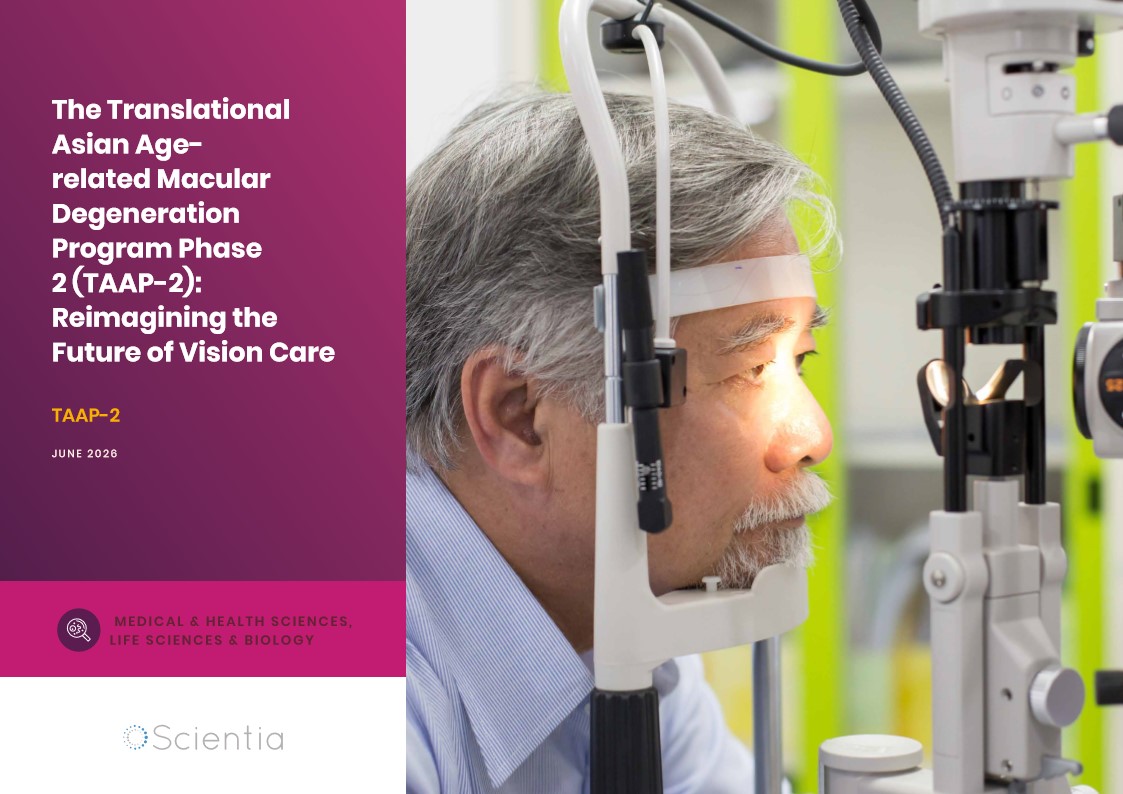
The Translational Asian Agerelated Macular Degeneration Program Phase 2 (TAAP-2): Reimagining the Future of Vision Care
Age-related macular degeneration, often abbreviated as AMD, is one of the leading causes of vision loss among older adults worldwide. In Asia, where populations are ageing rapidly, its impact is particularly profound. For many, the disease quietly erodes central vision, making everyday activities such as reading, driving, and recognising faces increasingly difficult. Against this backdrop, the Translational Asian Age-related Macular Degeneration Programme, or TAAP for short, has emerged as a bold and ambitious effort to confront the disease headon. Now in its second phase, TAAP-2 represents a significant evolution in both scientific scope and clinical ambition.

Ms. Aikaterini Dritsoula | Looking Beyond Snoring: How Hidden Airway Problems Shape Children’s Sleep
For many parents, a child’s snoring may seem harmless, even endearing. Yet in some cases, it signals something more serious. Obstructive sleep apnoea is a condition in which a child’s breathing is repeatedly disrupted during sleep. These interruptions can affect growth, behaviour, and learning. Children with this condition may toss and turn at night, struggle to concentrate during the day, or show signs of hyperactivity and fatigue. Traditionally, enlarged tonsils and adenoids have been seen as the main culprits. Surgery to remove them has long been considered the standard treatment. However, research led by Consultant ENT Surgeon Ms. Aikaterini Dritsoula of The Leeds Teaching Hospitals NHS Trust invites us to look deeper. Her work suggests that the story is often more complex, especially in very young children.