
Dr Vittaldas Prabhu | Driving Success by Engineering the Service Sector
A large percentage of many countries’ economies rely on the service sector. This is a broad sector of the economy, embracing industries including banking, healthcare, entertainment and retail. These industries vary greatly in what they offer, and suffer low productivity and quality as a result. By applying engineering concepts commonly found in manufacturing industries to service sector industries, Dr Vittaldas Prabhu and colleagues from Pennsylvania State University aim to improve the productivity and quality of systems that deliver services.
What is Service System Engineering?
When the word ‘engineering’ is first mentioned, our immediate thoughts likely turn to large-scale mechanical and structural projects. Engineers use scientific principles to design, build and maintain structures and devices, including buildings, infrastructure and vehicles. However, engineering ideas and principles can be applied in a remarkably diverse range of ways. For example, these principles can be applied to how a company is run, with the aim of increasing efficiency and productivity. This approach is directly relevant to the service sector.
As an important area of growth in many countries, the service sector industries supply goods to customers and provide non-material services – such as in healthcare or banking. Service System Engineering (SSE) uses mathematical and computational models and methods to improve efficiency and production in service sector industries. These models can benefit how these industries operate by improving the allocation of personnel and resources to tasks, ensuring that these personnel are properly equipped for the task they have, ensuring goods are properly stored and distributed, and ensuring high-quality services are delivered.
At the Marcus Department of Industrial and Manufacturing Engineering at Pennsylvania State University in the USA, Dr Vittaldas Prabhu and his colleagues are designing SSE programmes for a variety of needs within the service sector. Dr Prabhu and his colleagues noticed that many of their engineering graduates were ending up working in industries that had very little to do with good manufacturing. Identifying the benefits that engineers could have in non-manufacturing industries, Dr Prabhu and his colleagues began work to raise the profile of SSE amongst engineering students and to develop a curriculum that would properly prepare students in-depth for working with companies in the service sector. Dr Prabhu’s vision for SSE is to make it truly interdisciplinary and fully integrated with the service sector.

Building a Service System Engineering Programme
One of the algorithmic tools often part of an SSE programme is the Bayesian Network (BN) model. These models look at historical data and predict the likelihood of a future event. For instance, if a BN is trained on medical data, inputting a patient’s symptoms will result in a most likely diagnosis.
Dr Prabhu’s graduate student team worked with BNs to look at how to improve their capabilities in fault diagnosis using digital twins. These BNs use data from sensors and digital-twin simulations to build up a knowledge base from which to make predictions. Dr Prabhu found that these sensors often do not cover the whole network, leaving blind spots in the BN’s data. Additionally, historical maintenance data is often ignored by algorithms, as it is in natural language recorded by human maintenance workers, making it difficult for an algorithm to read.
Dr Prabhu’s team’s solution is to create two BNs, one looking at sensor data, and another to parse the historical maintenance reports. The challenge for the team was to create a BN capable of translating the text into usable data. Usually, a Natural Language Processor (NLP) could be used to achieve this, picking out key phrases from the text and removing the other words, identifying phrases like ‘power outage’ or ‘battery fault’. Dr Prabhu’s team had to customise their NLP, as the removal of words such as ‘no’ or ‘not’ completely changes how a piece of data would be presented. Additionally, they had to program the NLP to string together phrases, as often, one key phrase would lead to another. Without these changes, a sentence like ‘no power outage due to battery faults’ would return ‘power outage’ and ‘battery faults’, leading to an incorrect diagnostic. Dr Prabhu’s work in this area aims to make SSE programmes more robust in analysing data from human operators, and correctly applying it to the problem at hand.
Another algorithm used by Dr Prabhu in SSE programmes is the Markov Decision Process (MDP). These algorithms help make decisions in situations where not all the data are known. The development of a smart transportation system that could account for changing road conditions and incoming orders could reduce unnecessary travel and emissions while increasing revenue. Modelling this MDP method, Dr Prabhu’s team found that companies could see both increased revenue and decreased fuel consumption, although it did make the delivery time slots less accurate. He suggests that future models could account for different transportation modes to minimise fuel use over several vehicle changes.
Dr Prabhu has also investigated decision support systems. These models help with the planning level of an organisation, distributing personnel and equipment to where it is needed. Dr Prabhu tested these algorithms on landscaping businesses, as they require lots of manual labour, fully equipped with the right tools for the job.
Dr Prabhu’s initial tests suggested that they had a noticeable increase in the landscaping companies’ efficiency. The power of these algorithms will increase as more Internet of Things (IoT) enabled devices are developed and deployed. The IoT devices can gather data about weather, soil and plant health conditions to feed into the algorithm. This would allow the algorithm to make better decisions about how long a task will take, and what equipment and personnel are needed to complete it.
One of SSE’s primary applications is the analysis of current business practices and financial health. Looking at semiconductor companies, Dr Prabhu conducted a study looking at the flow of money up and down the supply chain. Dr Prabhu chose semiconductor companies for this study as their supply chains involve long wait times for goods, difficulty in sourcing raw materials, and require large amounts of money to start operating.
More specifically, Dr Prabhu investigated a phenomenon known as the ‘bullwhip effect’. This phenomenon occurs when retailers predict an increase in demand for a product and, thus, increase orders from a wholesaler. The wholesaler, who may not have all the information from the retailer, increases their orders from the manufacturer by more than what the retailer ordered. In turn, the manufacturer will start production on a much larger order than what is needed – this ripple gets amplified, causing overstock or understock in products. Dr Prabhu and his colleagues found that along with this bullwhip, there are corresponding amplified ripples in cashflows, which they call ‘cashflow bullwhip’. Understanding and mitigating cashflow bullwhip can help companies better manage their working capital and avoid financial crunch.

Service System Engineering in the Service Sector
The service sector contains many different industries and companies, with many opportunities for using SSE methods. Dr Prabhu has highlighted several applications he and his team have created for SSE programmes at Pennsylvania State University (Penn State).
A decision support system can allocate personnel to tasks and ensure they have the correct equipment. Dr Prabhu reports that the application to snow removal processes improved their productivity by around 25%. Dr Prabhu has also used SSE to great effect in stock management by analysing demand patterns to better estimate the amount of stock necessary to have at any one time. This reduces the storage costs of nonperishables, such as spare parts for vehicles and reduces the wastage of perishable items, such as food.
One classic engineering challenge is that of flow – how a material or fluid will move through a space. Dr Prabhu and his team designed SSE programmes to improve how people and vehicles move through an area. Examples are reducing bottlenecks as people move through a museum or guiding people to walk past concession stands in a sports stadium. Dr Prabhu suggests that these algorithms could also ensure office workers are safely separated in the case of working restrictions such as those imposed by COVID-19. Dr Prabhu and his colleagues have identified that a large proportion of congested vehicles are trying to find somewhere to park. A possible solution to this is to use drones to find empty spots, and alert drivers to their location. Dr Prabhu and his team suggest this could be particularly useful at concerts or sporting events.
SSE programmes are also useful in IT services. They could be used to design the Wi-Fi coverage of large events, such as conventions or campuses. By identifying where Wi-Fi usage is highest, full coverage can be achieved with as little overlap as possible. Here again, Bayesian Networks could also be used on large-scale IT systems to identify faults and relay this information to technicians.
With so many applications for SSE in the service sector and beyond, it is little wonder that Dr Prabhu has spent so much time investigating how to construct and deploy them to the best effect. Whilst many of these needs could be met by a dedicated human operator, the use of SSE makes them much more robust and less prone to error. As data collection technologies such as the IoT and drones become more widely used, the potential power of SSE increases. Although many of the algorithms need finetuning to ensure they meet specific requirements, Dr Prabhu’s programmes are already being used to increase efficiency and reduce waste.
SHARE

DOWNLOAD E-BOOK

REFERENCE
https://doi.org/10.33548/SCIENTIA1060
MEET THE RESEARCHER

Dr Vittaldas Prabhu
Marcus Department of Industrial and Manufacturing Engineering
Pennsylvania State University
Pennsylvania, PA
USA
Dr Vittaldas Prabhu gained his PhD in mechanical engineering from the University of Wisconsin Madison. He is Professor and Charles and Enid Schneider Faculty Chair in Service Enterprise Engineering at the Marcus Department of Industrial and Manufacturing Engineering at Pennsylvania State University. In this role, Dr Prabhu works on distributed control systems with a focus on manufacturing and service structures, aiming to create a unified mathematical model to help businesses make informed decisions. Additionally, Dr Prabhu teaches academic courses in control, manufacturing, retail and service systems. In 2022, his work in this area was awarded the Distinguished Recognition Award for Service Innovation from the International Society for Service Innovation Professionals.
CONTACT
E: vittal.prabhu@psu.edu
W: https://www.servicesystems.psu.edu/
FURTHER READING
KW Tien, V Prabhu, Phase-type distribution models for performance evaluation of condition-based maintenance, Production & Manufacturing Research, 2024, 12(1), 2380723. DOI: https://doi.org/10.1080/21693277.2024.2380723
C Patil, V Prabhu, Supply chain cash-flow bullwhip effect: An empirical investigation, International Journal of Production Economics, 2024, 267, 109065. DOI: https://doi.org/10.1016/j.ijpe.2023.109065
T Ademujimi, V Prabhu, Digital twin for training bayesian networks for fault diagnostics of manufacturing systems, Sensors, 2022, 22(4), 1430. DOI: https://doi.org/10.3390/s22041430
AR Ravindran, PM Griffin, VV Prabhu, Service Systems Engineering and Management, CRC Press, 2018. DOI: https://doi.org/10.1201/9781351054188
S Lee, Y Kang, VV Prabhu, Smart logistics: distributed control of green crowdsourced parcel services, International Journal of Production Research, 2016, 54(23), 6956–6968 DOI: http://dx.doi.org/10.1080/00207543.2015.1132856

REPUBLISH OUR ARTICLES
We encourage all formats of sharing and republishing of our articles. Whether you want to host on your website, publication or blog, we welcome this. Find out more
Creative Commons Licence (CC BY 4.0)
This work is licensed under a Creative Commons Attribution 4.0 International License. 
What does this mean?
Share: You can copy and redistribute the material in any medium or format
Adapt: You can change, and build upon the material for any purpose, even commercially.
Credit: You must give appropriate credit, provide a link to the license, and indicate if changes were made.
SUBSCRIBE NOW
Follow Us
MORE ARTICLES YOU MAY LIKE

Dr David Berry | Bridging the gap between Agriculture and Automation
As automation and controlled environments reshape modern farming, the need for technicians who understand both plant science and engineering is rapidly increasing. At Virginia Western Community College (VWCC) located in Roanoke, VA, Dr David Berry is leading a programme supported by the National Science Foundation (NSF) with the aim to merge agriculture with mechatronics, preparing students for the realities of emerging industries. A distinctive example of this approach is an automated hydroponics system designed by two industry-sponsored students, demonstrating how practical experience, interdisciplinary training and strong employer partnerships can create the skilled workforce required for the future of sustainable food production.

Dr Kenric Nelson | Modelling the Extreme: A New Technique for Training Risk-Aware Artificial Intelligence
Category 5 hurricanes, financial crashes, and global pandemics are just a few examples of rare events whose high risks necessitate understanding and mitigation. Developments in artificial intelligence (AI) could go a long way towards improving our ability to model and mitigate the impacts of such extreme events, but current training methods are often unable to deal effectively with outliers in data – which is exactly what extreme events are. If outliers are present in training data, they skew the AI’s expectations, but if they’re omitted entirely, models will wrongly assume they never occur. To address this shortcoming, the Photrek team, led by Dr Kenric Nelson, has developed a new training technique to design more robust AI systems that can cope with rare, extreme events.
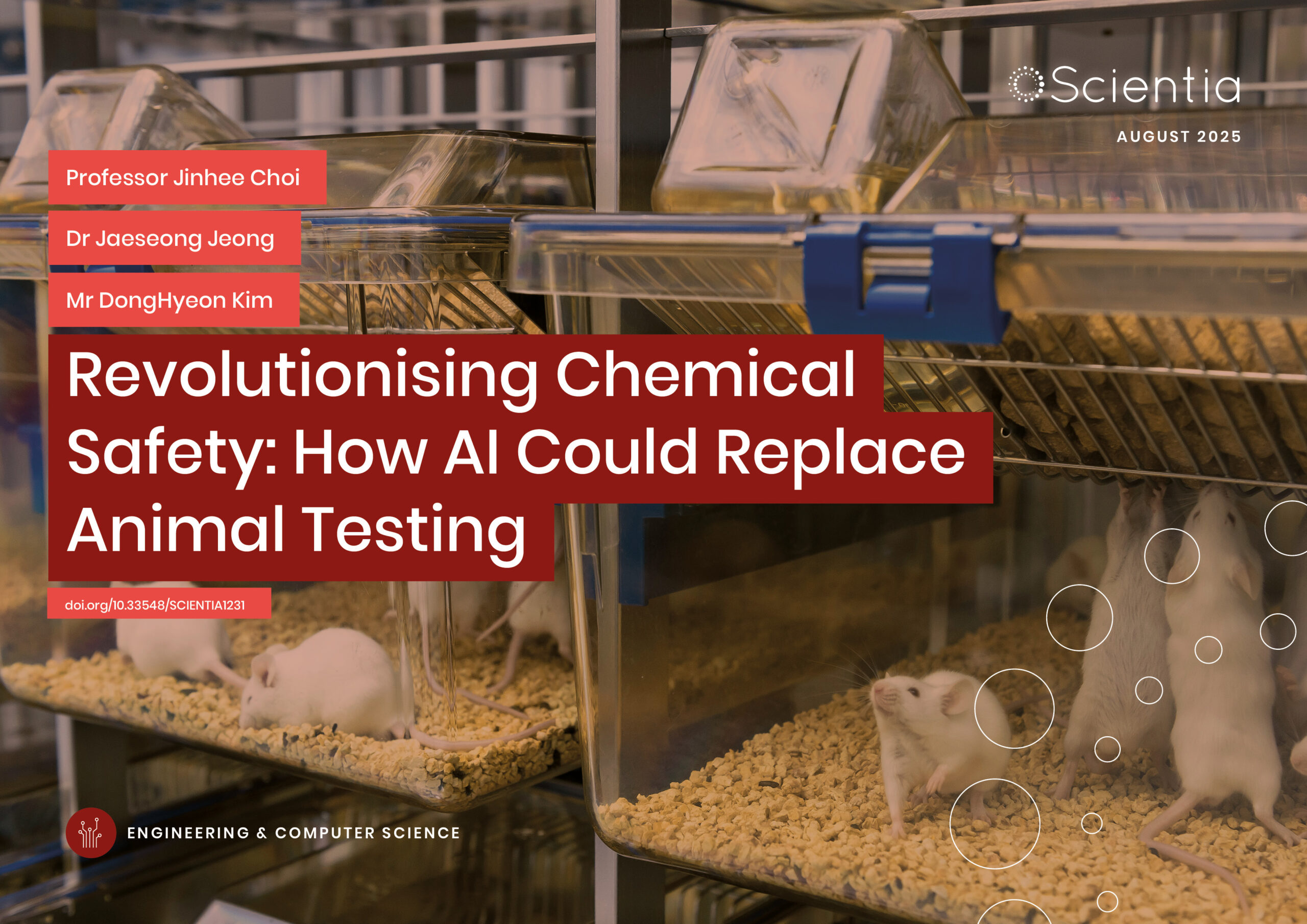
Revolutionising Chemical Safety: How AI Could Replace Animal Testing
Modern life exposes us to a staggering array of synthetic substances—over 350,000 chemicals are registered for use worldwide, found in products as diverse as pesticides, plastics, cosmetics, and pharmaceuticals. Ensuring the safety of all these compounds is a daunting task. Researchers led by Prof Jinhee Choi at University of Seoul are developing cutting-edge artificial intelligence models to predict the potential dangers toxicity of chemicals, with the aim of reducing the need for controversial animal experiments. By analysing vast toxicology databases and pioneering new AI techniques, Prof Choi’s team is working towards a future where the safety of everything from industrial compounds to household products can be assessed more quickly, cheaply, and humanely.
Dr Philipp Jordt | Finding the Best Way for Large Research Facilities to Handle All Their Data
As technology advances, physical experiments are performed by bigger, more powerful, and more sophisticated machines. Research conducted using these large-scale facilities (LSF) typically involves collaboration between the operating staff, instrument scientists, and external research groups, who propose specific experiments to be performed. With many people involved and such large volumes of data generated by each experiment, it has become challenging to make sure that results are collected, catalogued, stored, and distributed efficiently.
The German consortium DAPHNE4NFDI has been working to integrate Electronic Laboratory Notebooks (ELNs) into the Photon and Neutron (PaN) research community. One of their main goals has been to develop the decision-making process behind how research facilities, universities, and researchers can evaluate the range of ELNs available and decide on which solution to integrate into their operations.