
Novel Actinium and Radium Nanoconstructs Show Promise for Targeted Cancer Radiotherapy
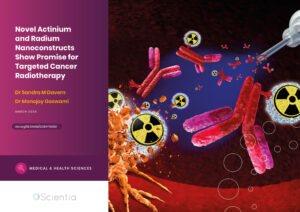
Targeted alpha-particle therapy is an emerging approach to treating cancer that aims to deliver radiation precisely to tumours while sparing healthy tissue. Dr Sandra Davern from Oak Ridge National Laboratory and her colleagues are at the forefront of developing new lanthanide vanadate nanoconstructs doped with alpha-emitting radionuclides for this application. Their recent work provides key insights into the structure and properties of these novel nanomaterials, paving the way for more effective radiotherapies.
The Promise and Challenge of Targeted Alpha Therapy
Cancer remains one of the most devastating and intractable diseases, responsible for millions of deaths worldwide each year. Despite significant advances in understanding cancer biology and developing new treatments, many patients still succumb to the disease or suffer debilitating side effects from therapy. Conventional treatments like chemotherapy and external beam radiation often fail to eradicate all tumour cells while damaging surrounding healthy tissues, underscoring the urgent need for more selective and effective approaches.
Targeted alpha-particle therapy has emerged as a promising strategy to overcome these limitations. The concept is elegant in its simplicity and specificity: deliver alpha-emitting radionuclides directly to cancer cells, where the high-energy alpha particles can deposit their cell-killing energy over a short range, on the order of a few cell diameters. This enables exquisitely precise tumour targeting with minimal collateral damage to adjacent normal tissues. The approach leverages the unique properties of alpha particles – their high linear energy transfer and short path length in tissue – to achieve potent and localised therapeutic effects.
However, realising the full potential of targeted alpha therapy in the clinic requires surmounting several formidable challenges. Chief among these is developing suitable carriers to safely and efficiently ferry the radionuclides to tumour sites. The carriers must exhibit high radionuclide loading capacity and stability, prevent premature leakage of the toxic payload, and retain the decay daughter products at the target site. They should also have favourable pharmacokinetic and biodistribution profiles, enabling rapid and specific tumour accumulation with minimal uptake in healthy organs. Biocompatibility and ease of manufacturing at clinical grade and scale are additional important considerations.
Inorganic nanoparticles, particularly lanthanide-based nanomaterials, have attracted significant attention as potential carriers for targeted alpha therapy. With their rich and tuneable physical and chemical properties, these nanomaterials offer unique opportunities for multifunctionality and optimisation. However, their successful application requires a deeper understanding of how therapeutic radionuclides interact with and incorporate into these nanoparticles, and how the resulting nanoconstructs behave in complex biological environments. Bridging this knowledge gap is critical for the rational design of safer and more efficacious targeted alpha therapies.
Pioneering Studies of Lanthanide Vanadate Nanoconstructs
The research group led by Dr Sandra Davern at Oak Ridge National Laboratory is at the forefront of efforts to elucidate these fundamental structure-property relationships. Dr Davern and her interdisciplinary team have been conducting pioneering studies on novel lanthanide vanadate nanoconstructs doped with therapeutic radionuclides, including actinium-225, radium-223, and barium-133 (as a surrogate for radium-223).
In their most recent work, published in the prestigious journal ACS Nano, the researchers synthesised a diverse library of lanthanum and europium vanadate nanoconstructs incorporating the radionuclides at various doping levels. To thoroughly characterise the nanoconstructs’ structure, composition, and morphology, they employed a powerful suite of advanced techniques spanning X-ray diffraction, Raman spectroscopy, fluorescence spectroscopy, and transmission electron microscopy. This multimodal approach provided complementary and comprehensive insights into the nanoconstructs’ properties across different length scales.
One key finding was that the nanoconstructs’ phase and size could be rationally controlled by fine-tuning the lanthanide composition and radionuclide doping level. This demonstrates the versatility and tunability of these nanomaterials and suggests that their properties can be optimised for specific therapeutic applications. Interestingly, the researchers also observed that actinium-225 doping induced characteristic changes in the nanoconstructs’ fluorescence emission spectra. They hypothesise that these changes arise from lattice defects created by the radioactive decay process, and could potentially serve as a useful optical signature to monitor radionuclide incorporation and nanoconstruct integrity.
These findings showcase the power of combining rational synthesis with multimodal characterisation to gain a holistic understanding of novel nanomaterials. By systematically varying the nanoconstruct composition and probing the resulting changes in properties, Dr Davern and her team are building a valuable knowledge base to guide the design of optimised radiotherapeutic nanocarriers.

Unravelling Atomic-Scale Interactions with Molecular Dynamics Simulations
To further illuminate the atomic-scale interactions governing the nanoconstructs’ behaviour, the researchers harnessed the power of large-scale molecular dynamics simulations. Using experimentally validated force field parameters, they constructed detailed computational models of the lanthanide vanadate nanoconstructs in explicit water, and simulated the dynamic interactions between the constituent ions over biologically relevant timescales.
The simulations revealed intriguing differences in the distribution of the actinium, radium, and barium dopants within the nanoconstructs. While actinium ions tended to incorporate into the core of the nanoparticles, radium and barium ions exhibited a stronger preference for the surface. This surface localisation of radium could potentially enhance the emitted alpha radiation dose to neighbouring tumour cells but may also increase the risk of daughter product escape from the nanocarrier.
These atomic-level insights, which are difficult or impossible to obtain through experiment alone, highlight the immense value of computational modelling in nanomedicine research. By synergistically integrating experiments and simulations, Dr Davern’s team is accelerating the development of optimised nanocarriers for targeted alpha therapy.
Advancing Understanding to Enable Translation
The experimental and computational results presented in this study represent a significant advance in our fundamental understanding of therapeutic radionuclide-doped lanthanide vanadate nanoconstructs. As Dr Davern notes, this level of atomic-scale insight into how the radionuclides’ properties and concentration influence the nanoparticles’ structure and stability is essential for the rational design of more effective targeted alpha therapies.
The study also powerfully demonstrates the benefits of a multidisciplinary and multimodal approach to investigating these complex nanosystems. By combining advanced characterisation techniques with state-of-the-art molecular simulations, the team was able to obtain a comprehensive and cohesive picture of the nanoconstructs’ behaviour that would be impossible with any single method. This synergistic integration of experiments and computation is likely to become increasingly important as the field of nanomedicine continues to evolve and mature.
Future Directions and Outlook
Building on this foundation, Dr Davern and her team are eager to further optimise and translate these promising nanoconstructs for targeted alpha therapy. Key next steps include evaluating the in vitro and in vivo stability, biodistribution, and therapeutic efficacy in relevant cancer models.
The researchers also plan to explore incorporating additional functional components, such as tumour-targeting ligands and imaging tracers, to create multifunctional theranostic agents. By enabling simultaneous tumour detection, treatment, and treatment monitoring, such agents could significantly advance precision oncology.
Ultimately, Dr Davern envisions that this work will lead to the clinical development of lanthanide vanadate nanoconstructs for targeted alpha therapy of a range of cancers. She emphasises the importance of collaboration, noting that taking nanomedicines from the lab to the clinic requires a multidisciplinary team effort involving chemists, cancer biologists, medical physicists, and clinicians. The team is excited to work together with the broader community to realise the transformative potential of targeted alpha therapy. As our fundamental understanding of therapeutic radionuclide-nanoparticle interactions continues to grow, we move closer to a future where ‘smart’ radiotherapies can precisely seek and destroy tumour cells while sparing patients from debilitating side effects.
SHARE

DOWNLOAD E-BOOK
REFERENCE
https://doi.org/10.33548/SCIENTIA1212
MEET THE RESEARCHERS

Dr Sandra M Davern
Radioisotope Science and Technology Division, Oak Ridge National Laboratory, Oak Ridge, TN, USA
Dr Sandra Davern leads the Radioisotope Research and Development Section at Oak Ridge National Laboratory (ORNL) and works with researchers involved in the production of radioisotopes for the Department of Energy Isotope Program. She is co-lead for a University of Tennessee Oak Ridge Innovation Institute convergent research initiative on radiopharmaceuticals, and leads the ARM and ARIA initiatives at Oak Ridge National Laboratory, bringing cross-disciplinary approaches to radiotherapeutics. Dr Davern has expertise in quality assurance for radioisotope production, microfluidics for radiochemistry and radiobiology, and targeted alpha therapy using nanoconstructs. Her work is establishing new scientific directions and capabilities for radiotherapeutic research and development at ORNL. Dr Davern actively mentors students and postdocs.
CONTACT
https://www.ornl.gov/staff-profile/sandra-m-davern
LinkedIn: https://www.linkedin.com/in/sandra-davern-14a17517/
https://www.linkedin.com/showcase/79417213/admin/dashboard/

Dr Monojoy Goswami
Department of Chemical Sciences, Oak Ridge National Laboratory, Oak Ridge, TN, USA
Dr Monojoy Goswami has 18 years of demonstrated experience in computational materials science for diverse applications from energy storage to drug delivery. He has extensive expertise in designing polymer materials, energy storage materials, polymer composites, and polymers for targeted cancer therapy using advanced computational techniques. Dr Goswami leads multiple computational projects at Oak Ridge National Laboratory, actively collaborating with experimental groups across the lab and with external scientists and industry partners. His work integrates supercomputing simulations and experiments to advance materials for energy and medical applications. Dr Goswami’s research has been featured in major scientific news outlets.
CONTACT
https://www.ornl.gov/staff-profile/monojoy-goswami
KEY COLLABORATORS
Dr Miguel Toro González, NorthStar Medical Radioisotopes LLC (formerly of ORNL)
Dr Jisue Braatz, Oak Ridge National Laboratory
FUNDING
This research was supported by the US Department of Energy’s (DOE’s) Oak Ridge National Laboratory Directed Research & Development (LDRD) Program. The isotopes used in this research were supplied by the US Department of Energy Isotope Program, managed by the Office of Isotope R&D and Production. The MD simulations used resources of the Oak Ridge Leadership Computing Facility at Oak Ridge National Laboratory, which is supported by the DOE Office of Science of the US DOE under Contract No. DE-AC05-00OR22725. Part of the MD simulations used resources of the National Energy Research Scientific Computing Center (NERSC), a DOE Office of Scientific User Facility supported by the DOE Office of Science under Contract No. DE-AC02-05CH11231. The authors thank Christopher Orosco from ORNL’s Creative Services Communications Division for designing the Supplementary Cover Image for this work.
FURTHER READING
M Goswami, M Toro-González, J Braatz, S Davern, Precision Atomistic Structures of Actinium/Radium/Barium – Doped Lanthanide Nanoconstructs for Radiotherapeutic Applications, ACS Nano, 2024, 18(26), 16577–16588. DOI: https://doi.org/10.1021/acsnano.3c13213
M Toro-González, N Akingbesote, A Bible, et al., Development of 225Ac-doped biocompatible nanoparticles for targeted alpha therapy, Journal of Nanobiotechnology, 2024, 22, 306. DOI: https://doi.org/10.1186/s12951-024-02520-6
M Toro-González, A Peacock, A Miskowiec, et al., Tailoring the Radionuclide Encapsulation and Surface Chemistry of La(223Ra)VO4 Nanoparticles for Targeted Alpha Therapy, Journal of Nanotheranostics, 2021, 2, 33–50. DOI: https://doi.org/10.3390/jnt2010003

REPUBLISH OUR ARTICLES
We encourage all formats of sharing and republishing of our articles. Whether you want to host on your website, publication or blog, we welcome this. Find out more
Creative Commons Licence (CC BY 4.0)
This work is licensed under a Creative Commons Attribution 4.0 International License. 
What does this mean?
Share: You can copy and redistribute the material in any medium or format
Adapt: You can change, and build upon the material for any purpose, even commercially.
Credit: You must give appropriate credit, provide a link to the license, and indicate if changes were made.
SUBSCRIBE NOW
Follow Us
MORE ARTICLES YOU MAY LIKE

Assoc Prof. Nicholas Brown | Rethinking Prostate Care: A New Frontier in Treating Benign Prostatic Hyperplasia
For millions of men, ageing brings with it a set of frustrating and often disruptive urinary symptoms. These symptoms, caused by benign prostatic hyperplasia, or BPH, can affect sleep, confidence, and overall quality of life. Traditionally, treatment follows a familiar path. Patients begin with medications, often for years, and may eventually progress to surgery if symptoms worsen. Yet this pathway is not without its drawbacks. Medications can cause side effects, while surgery carries risks and recovery time. In recent years, a minimally invasive interventional radiology procedure called prostate artery embolisation, or PAE, has begun to challenge this traditional model. At the forefront of this shift is a collaborative research group, led by Dr. Nicholas Brown of the University of Queensland, whose series of P-EASY studies has explored whether PAE could transform how BPH is treated, particularly at earlier stages.

Jean Lycke | Addressing Unmet Medical Needs in Mucosal Disease: A Close-to-Market Innovation Approach
Recurrent Aphthous Stomatitis (RAS) is an oral condition characterized by one or several painful mucosal ulcers. RAS affects a large proportion of the population and has a point prevalence of approximately 2–3%, daily. The etiology remains unknown, and there is currently no curative treatment. Most patients experience recurring episodes over time, with each episode typically lasting up to a week. Here, we describe the development of a mucoadhesive patch which, when applied over a RAS ulcer, provides rapid pain relief. The patch is easy for patients to apply when symptoms begin and has the potential to be used as an over-the-counter product. The development of the Mucocort mucoadhesive patch is an example of a Close-to-Market innovation strategy that embraces simplicity within a complex healthcare system. By simplifying the product concept, the team has reduced the number of regulatory steps required before market approval. This MedTech/Pharma innovation model, known as the “4R” framework – Re-purposing, Re-formulation, Re-positioning, and Re-patenting – has guided the program from concept to commercialization. In addition to the biodegradable mucoadhesive patch developed for RAS ulcers, the team is extending the innovation concept to a mucoadhesive gel formulation for the prevention and treatment of chemotherapy-induced mucositis. This gel-based program is being commercialized separately through MucoShield.

The Translational Asian Agerelated Macular Degeneration Program Phase 2 (TAAP-2): Reimagining the Future of Vision Care
Age-related macular degeneration, often abbreviated as AMD, is one of the leading causes of vision loss among older adults worldwide. In Asia, where populations are ageing rapidly, its impact is particularly profound. For many, the disease quietly erodes central vision, making everyday activities such as reading, driving, and recognising faces increasingly difficult. Against this backdrop, the Translational Asian Age-related Macular Degeneration Programme, or TAAP for short, has emerged as a bold and ambitious effort to confront the disease headon. Now in its second phase, TAAP-2 represents a significant evolution in both scientific scope and clinical ambition.

Ms. Aikaterini Dritsoula | Looking Beyond Snoring: How Hidden Airway Problems Shape Children’s Sleep
For many parents, a child’s snoring may seem harmless, even endearing. Yet in some cases, it signals something more serious. Obstructive sleep apnoea is a condition in which a child’s breathing is repeatedly disrupted during sleep. These interruptions can affect growth, behaviour, and learning. Children with this condition may toss and turn at night, struggle to concentrate during the day, or show signs of hyperactivity and fatigue. Traditionally, enlarged tonsils and adenoids have been seen as the main culprits. Surgery to remove them has long been considered the standard treatment. However, research led by Consultant ENT Surgeon Ms. Aikaterini Dritsoula of The Leeds Teaching Hospitals NHS Trust invites us to look deeper. Her work suggests that the story is often more complex, especially in very young children.