
Open Impact: Making Science Truly Accessible to All
Editorial by Nick Bagnall
But in practice, many journals have struggled to make the business of open access sustainable. It has led to the rise of predatory publishers, created confusion in the marketplace, and often failed to attract widespread uptake from individual researchers. As a result, some revert to selling access to universities on a subscription basis.
New models, such as Subscribe to Open, are emerging to keep research openly available through collective support from institutions. These are promising, but they do not address a deeper issue: even when research is technically open, it is still largely inaccessible in terms of understanding. The vast majority of papers remain impenetrable to non-specialists. Taxpayers—the very people funding most of this research—are still excluded from understanding the discoveries they are paying for.
That’s why we are introducing a new concept: Open Impact.

What is Open Impact?
We define Open Impact as the next step beyond open access: it’s about making science not only accessible, but also understandable and meaningful to society at large.
Open Impact means:
- Clarity: communicating research findings in plain language, free from unnecessary jargon.
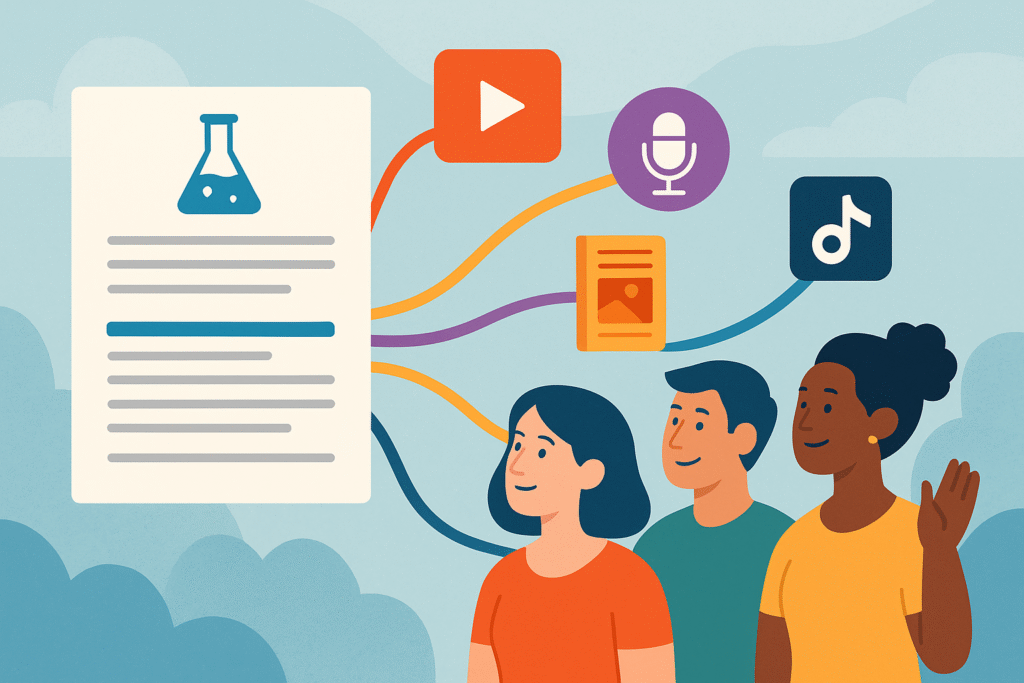
- Engagement: using formats that resonate with wider audiences—such as short-form magazine articles, podcasts, animations, videos, and social media.
- Relevance: framing discoveries within the context of everyday life and societal challenges.
- Equity: ensuring that the benefits of scientific progress are transparent and shared with the people who fund it.
- Usability: creating content that can be easily reused and shared across platforms—by researchers, universities, the media, and the public alike.
- Measurability: tracking how research communication performs—through views, shares, downloads, or altmetrics—so researchers and funders can see evidence of engagement and societal reach.

Why Open Impact Matters
- Taxpayer Accountability
Globally, around 70% of research is publicly funded. In the UK alone, this amounts to more than £14 billion every year—a scale of investment that deserves transparency and clear communication back to the public. Even where universities provide their own funding, much of it ultimately traces back to the public purse—through government block grants, or through students whose fees are often covered by state-backed loans. In many ways, taxpayers are funding research twice over. At the same time, science funding priorities often shift with each new government, which can define “what science matters most.” By helping the public understand and value research in all its diversity, Open Impact strengthens support for sustained investment—beyond the short-term agendas of politics.
- Public Trust in Science
When research is hidden behind paywalls or communicated in inaccessible ways, trust can erode. Clear, open communication strengthens the relationship between scientists and society. It also ensures that public backing for research remains steady, regardless of which political group is in power. If people see the value of science in their daily lives, they are more likely to support continued funding, even as governments change.
- Policy and Decision-Making
Policymakers, educators, healthcare professionals, and businesses often rely on research—but many lack the time or training to wade through technical papers. Open Impact provides them with digestible insights they can act on.
- Inspiring the Next Generation
Tomorrow’s researchers are not turning to journals; they’re turning to TikTok, YouTube, and Instagram. Presenting science in the formats young people already use ensures curiosity is sparked and future talent is nurtured.
From Open Science to Open Impact
Open Science has rightly focused on breaking down barriers to access. Open Impact is about breaking down barriers to understanding.
This is not about replacing scholarly publishing. Academic journals remain the essential record of discovery, the foundation on which science builds. Open Impact exists to support and complement publishing—by helping research reach beyond academia, into classrooms, policymaking, the media, and the public square.
Together, these principles ensure that research does not just sit in journals or databases, but actively informs, inspires, and benefits society.
How Do We Get There?
Achieving Open Impact requires a cultural shift:
- Researchers should be supported and incentivised to share their findings beyond academic audiences. Today, this is often seen as a “nice to have” rather than a “must have”—that mindset must change if science is to deliver true public value.
- Funding agencies should include public communication as part of impact requirements.
- Universities should provide tools, training, recognition, and funding for engaging storytelling. It is difficult to do everything in-house, so dedicated support and budgets are essential.
- Publishers and journals should publish not only technical abstracts but also clear, plain-language summaries—relatable, engaging pieces that anyone can understand and be inspired by. This makes their own published work more widely accessible, while also helping their authors achieve Open Impact.
- Science communicators—writers, animators, podcasters—must play a central role in bridging the gap between complex research and broad understanding. This represents a growing industry in its own right, offering meaningful careers for those who may not wish to stay in research, but want to remain close to science.
A Call to Action
The world faces unprecedented challenges—climate change, pandemics, food insecurity, and energy transitions, to name just a few. Solving them depends on public support for research and innovation.
Open Impact is our call for the next step in the open science movement.
It is a commitment to ensuring that science is not only open, but open to everyone.
Because when people understand research, they can value it, support it, and use it to create positive change.
SHARE

DOWNLOAD E-BOOK

REFERENCE
https://doi.org/10.33548/Issue155.1
NICK BAGNALL

Nick Bagnall founded Science Diffusion in 2015 with a clear mission: to make publicly funded research accessible to the taxpayers who support it. With a background in science communication and publishing, Nick saw first-hand how much valuable research—whether pioneering breakthroughs, or smaller but equally important studies—remained hidden within academic journals and out of reach to the wider public.
To change this, Science Diffusion launched Scientia, its flagship digital magazine. Scientia is dedicated to presenting research of all kinds in clear, engaging language that anyone can understand. Since then, the company has grown into a family of platforms, including SciTube (science animation) and SciPod (audio summaries).
This progress has been made possible by a skilled and diverse team—writers, editors, animators, designers, and technologists—all committed to helping researchers share their work, meet funder impact requirements, and connect with audiences beyond academia. At the heart of their mission is a simple belief: the public deserves to see, understand, and take pride in the science they fund.
REPUBLISH OUR ARTICLES
We encourage all formats of sharing and republishing of our articles. Whether you want to host on your website, publication or blog, we welcome this. Find out more
Creative Commons Licence (CC BY 4.0)
This work is licensed under a Creative Commons Attribution 4.0 International License. 
What does this mean?
Share: You can copy and redistribute the material in any medium or format
Adapt: You can change, and build upon the material for any purpose, even commercially.
Credit: You must give appropriate credit, provide a link to the license, and indicate if changes were made.
SUBSCRIBE NOW
Follow Us
MORE ARTICLES YOU MAY LIKE
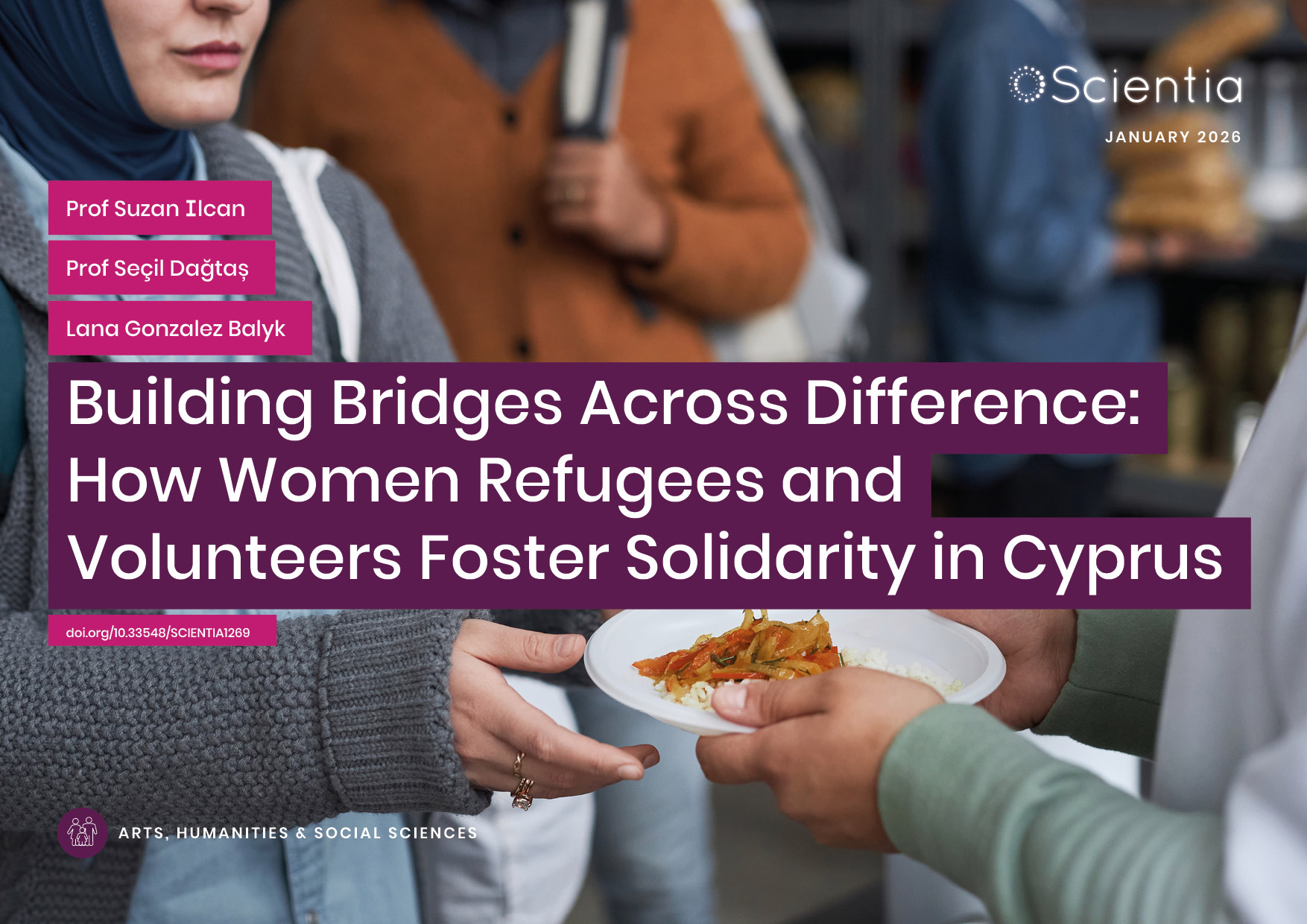
Dr Suzan Ilcan | Building Bridges Across Difference: How Women Refugees and Volunteers Foster Solidarity in Cyprus
Across Europe, refugees and asylum seekers often find themselves in precarious situations, facing limited access to housing, employment, education, and legal protection. While government responses have frequently proved inadequate, grass-roots movements have emerged to fill the gaps. These citizen-led initiatives represent more than simple charity; they embody new forms of political engagement where refugees and volunteers work together across differences to create useful change.
This issue is particularly pressing in the Republic of Cyprus (RoC), where the island’s own history of division and displacement shapes contemporary responses to newcomers. Since 2015, the RoC has experienced a dramatic increase in refugee arrivals, making it the EU member state with the highest number of asylum applications per capita in 2021. Yet despite – or perhaps because of – this pressure, women in the Cypriot city of Paphos have created remarkable spaces of collaboration and mutual support.
Scientia Issue #156 | Hacking the brain over our lifetime
Happy New Year from us at Scientia! We hope this time off
enabled you all to recharge your batteries and get ready for
new challenges. Getting time away from work and screens
reminded me of why we do this. Being aware of the bigger picture
is not always easy, in times where we all just try to do our best.
Considering what is best for ourselves and our mental health
inspired this issue.
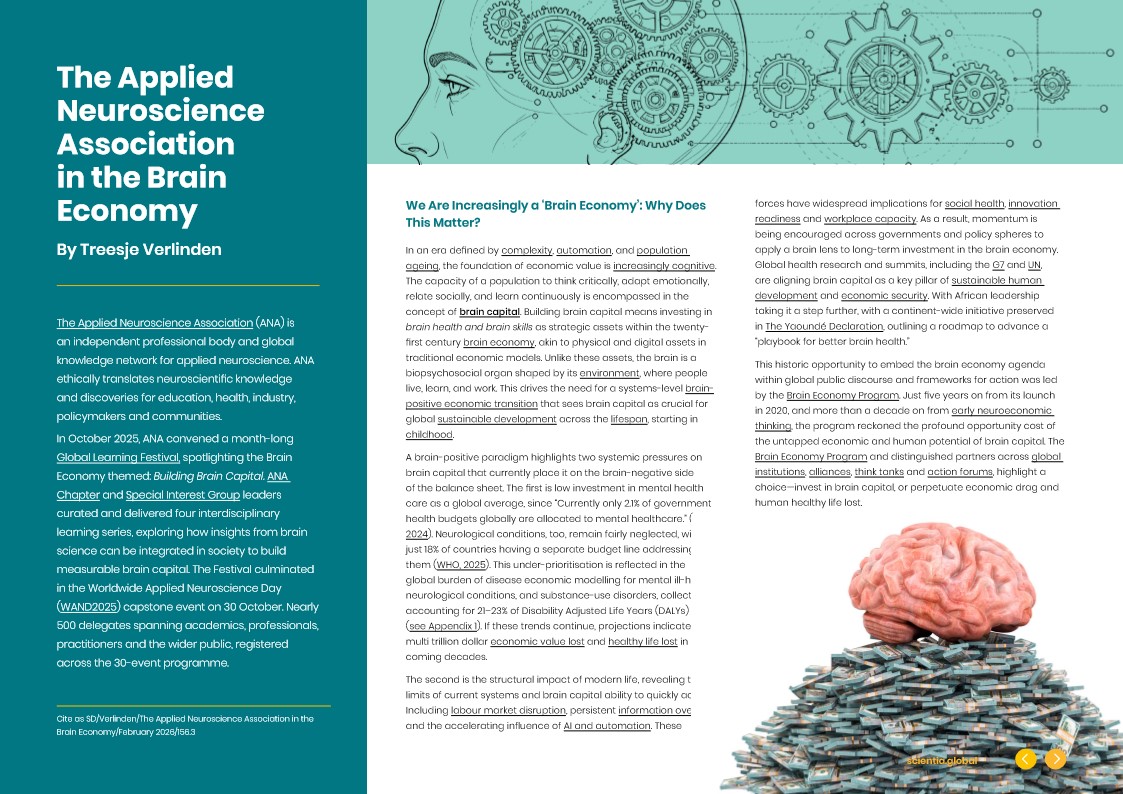
The Applied Neuroscience Association in the Brain Economy
The Applied Neuroscience Association (ANA) is an independent professional body and global knowledge network for applied neuroscience. ANA ethically translates neuroscientific knowledge and discoveries for education, health, industry, policymakers and communities.
In October 2025, ANA convened a month-long Global Learning Festival, spotlighting the Brain Economy themed: Building Brain Capital. ANA Chapter and Special Interest Group leaders curated and delivered four interdisciplinary learning series, exploring how insights from brain science can be integrated in society to build measurable brain capital. The Festival culminated in the Worldwide Applied Neuroscience Day (WAND2025) capstone event on 30 October. Nearly 500 delegates spanning academics, professionals, practitioners and the wider public, registered across the 30-event programme.

Minding our business
After explaining the concept of open impact in last issue’s editorial, we learnt about the aims of this publication.
Now, Nick answers some questions regarding the process and how we produce the articles published in Scientia.