
Professor Jaya Krishnan | Revolutionary Gene Therapy Helps Hearts Regenerate After Heart Attacks
Article written by Maria Tattaris, PhD
Myocardial infarction, commonly termed as a heart attack, is a major cause of death and poor health worldwide. Regenerating heart tissue is an exciting and promising concept that can have significant benefits in myocardial infarctions and related diseases, but this has not yet been achieved in real-life clinical treatments. In a collaboration between Goethe University Frankfurt and Goethe University Hospital, Professor Jaya Krishnan and colleagues address this by controlling pathologic genes involved in the development of heart failure that develops after heart attacks. The researchers demonstrate a new way of treating heart disease by aiding in the division and regrowth of heart cells after a heart attack.
The Problem of Heart Attack and the Challenges of Existing Therapies
Despite great advancements in modern medicine, heart failure remains a serious problem faced by people across the globe, causing not only death, but also drastically reducing quality of life. It is estimated to affect 64 million people worldwide. A key feature of heart failure is the loss of heart muscle cells, known as cardiomyocytes, which are needed for the healthy functioning of the heart. The rate of cardiomyocyte death in individuals with heart failure is approximately 25%, and can be caused by birth defects, aging, and stress. However, unlike other cells, cardiomyocytes cannot regenerate or repair themselves. Thus, when a large number of these cells are lost, the heart cannot function properly.
Cardiomyocytes generally stop dividing in mammals not long after birth. Recently, gene therapy —a medical approach used to treat or cure a disease by altering a person’s genes— has been applied to generate cardiomyocyte proliferation (cell growth and division). However, these attempts have several drawbacks, including complicated and invasive procedures (e.g., injections into the heart), increased risk of affecting other organs, and potential for tumour growth. Moreover, adult cardiomyocytes have a rigid structure, their natural energy state prevents them from dividing, and they often undergo incomplete cell division (endomitosis) rather than normal cell division (mitosis), all of which inhibit proliferation.
Therapies have been developed to reduce the detrimental effects of heart attack, but there is still a great need for novel approaches to facilitate the regeneration of lost cardiomyocytes.
Novel Approach: microRNAs in Heart Disease
MicroRNAs (miRNAs) are small molecules that can control the expression of genes in cells. Scientists have shown that they play a key role in heart failure, with the potential to regulate genes related to inflammation, cell and muscle growth, muscle movement, and energy usage by cardiomyocytes. Clinical trials have shown the potential of miRNAs in the treatment of heart diseases. Following a heart attack, expression of some miRNAs can increase making them more active, which can ‘turn off’ genes related to cell growth. However, it is unclear whether altering a single miRNA is sufficient to effectively induce proliferation of adult cardiomyocytes.

Combining miRNAs to Trigger Heart Cell Growth
To overcome this, Prof Jaya Krishnan and colleagues proposed a treatment that simultaneously employed multiple miRNAs to regulate key genes involved in cardiomyocyte repair and regeneration, targeting those in the heart that may be able to facilitate cell growth. Seventeen miRNAs were identified that could potentially fulfil this role (e.g., miRNA-1a, miRNA-15b, and miRNA-34a) using the microRNA Disease Database, which links miRNAs to diseases. According to the database, these miRNAs are linked to heart attacks and inhibit cardiomyocyte proliferation. Their expression is increased in the heart tissue of patients suffering from heart attack.
The researchers performed an experiment on cardiomyocytes from neonatal rats using molecules that block the functioning of miRNAs. Combinations of the 17 miRNAs were “turned off”, and five miRNAs were found to prevent the growth of cardiomyocytes (miRNA-1a, 15a, 15b, 27b, and 34c) when collectively inhibited. Combinations of these five miRNAs were further tested, identifying miRNA-1a and 15b (miRNA-1a/15b) as the optimal combination for the regrowth of heart cells. Professor Krishnan and colleagues confirmed that appropriate cell division (mitosis) occurred after these two miRNAs were blocked, rather than merely DNA copying, by checking for a particular marker (Aurora B) that only appears when cells truly divide.
Testing the Approach in Mice Models
Simultaneously blocking miRNA-1a and miRNA-15b facilitated the regrowth of cardiomyocytes when tested in older mice. This is a significant breakthrough, as heart cells typically stop growing a few days after birth. This treatment was administered to mice after they experienced a heart attack. The observed effects included increased cardiomyocyte growth and improved heart function, as well as reduced cell mortality and heart tissue scarring. Moreover, mice that did not receive the same treatment experienced greater damage to the heart and died more frequently from their condition. In other parts of the body (e.g., liver, lungs, kidneys, and spleen), miRNA-1a/15b treatment caused no significant abnormal cell growth, tumours, or changes, indicating that the treatment mainly affected the heart, as expected.

Human Cell Testing and Promising Results
To analyse the impact of miRNA-1a/15b treatment in humans, this formulation was tested on laboratory-grown human cardiomyocytes and three-dimensional heart-like tissues (organoids) made from human stem cells. The results were promising, including increased signs of cell growth and improved heart function. Blocking miRNA-1a or 15b alone did not affect many of the genes related to heart development, repair, and growth, suggesting that these two miRNAs work together to inhibit cardiomyocyte proliferation. This highlights the benefits of the novel approach used by Professor Krishnan and colleagues that tests the effects of blocking a combination of miRNAs, rather than the screening of individual miRNAs employed in previous research.
Simultaneously inhibiting both miRNA-1a and miRNA-15b facilitated adult heart cells to start dividing again, which reduced heart damage and enhanced heart function after a heart attack. The effects on other body parts were minimal, avoiding potential adverse consequences that current treatments can have on other organs. Moreover, the use of these two miRNAs makes treatment more effective and precise. The treatment was performed using special molecules designed to block the functioning of miRNAs. These molecules are widely used, safe, and proven to be effective in human studies. The inhibition of miR-1a and miR-15b for the treatment of heart disease will be further developed for clinical translation by Cardiogen Therapeutics, a Munich-based company co-founded by Prof Krishnan.

New outlook for Heart Failure Treatment
This approach may also be useful for other therapeutic targets, not just for the heart. However, more research and testing are required in humans before it becomes available. To fully develop the proposed approach, several issues must be addressed. Testing is at an early stage, with results based on animal models and human heart organoids. Thus, its safety in humans will be ascertained through clinical studies beginning in 2026. In addition, future work is required to test the method to account for the variation in patient responses due to genetics and disease progression.
The work by Prof Krishnan and colleagues presents an exciting new approach that can potentially aid in safe heart regeneration, overcoming the limitations of invasive therapies. Simultaneously inhibiting miR-1a and miR-15b unleashes the potential for new treatments that regrow heart muscle after damage, which is not possible with current therapies. The proposed treatment also avoids detrimental side effects, thus offering a promising strategy for the treatment of conditions that affect millions of people.
SHARE

DOWNLOAD E-BOOK

REFERENCE
https://doi.org/10.33548/SCIENTIA1304
MEET THE RESEARCHER

Professor Jaya Krishnan
Goethe University Frankfurt, Germany and Medizinische Klinik 3, Dept. of Cardiology, University Hospital Frankfurt
Professor Jaya Krishnan has had a successful career spanning over two decades in cardiovascular research and biotechnology entrepreneurship. He obtained his PhD in biochemistry with a specialization in molecular oncology at the Forschungszentrum Karlsruhe (now the Karlsruhe Institute of Technology) and the Imperial College London in 2003. Inspired by personal circumstances, he transitioned his research focus to heart disease and completed his postdoctoral research at the Institute of Cell Biology, ETH-Zürich, Switzerland (2004–2009), establishing expertise in cardiovascular biology and metabolism. This led to an assistant professor position at the Institute of Molecular Health Sciences, ETH-Zürich (2009–2012), focusing on cardiovascular disease metabolism. Professor Krishan then joined Imperial College London as a Senior Lecturer (2012–2015), coinciding with his role as a Group Head at the Medical Research Council. In his current role as a Professor of Molecular Cardiology at Goethe-Universität Frankfurt a. Main, Professor Krishnan leads the RNA Therapeutics research group. He also co-founded Genome Biologics, a biotechnology company specializing in state-of-the-art 3D human cardiac disease models for cardiovascular and cardiometabolic drug development and validation, and Cardiogen Therapeutics, a company involved in the clinical development of cardiac regenerative therapies. His experience in both academia and industry positions him as a key player in the modern scientist–entrepreneur model.
CONTACT
E: jaya@cardiogentx.com
X: https://uk.linkedin.com/in/jaya-krishnan
KEY COLLABORATORS
Cardiogen Therapeutics (www.cardiogentx.com)
Genome Biologics (www.genomebiologics.com)
Institute for Cardiovascular Regeneration, Goethe University Frankfurt
FUNDING
Messer Foundation
LOEWE Centre for Cell and Gene Therapy
European Innovation Council (GA: 822455)
SFB-TRR 267 (Non-coding RNA in the cardiovascular system)
China Scholarship Council (CSC)
FURTHER READING
T Yuan, M Wu, C Zhu, et al., Targeting miRNA-1a and miRNA-15b: A Novel Combinatorial Strategy to Drive Adult Cardiac Regeneration, Advanced Science, 2025, 12(21), 2414455. DOI: https://doi.org/10.1002/advs.202414455


REPUBLISH OUR ARTICLES
We encourage all formats of sharing and republishing of our articles. Whether you want to host on your website, publication or blog, we welcome this. Find out more
Creative Commons Licence (CC BY 4.0)
This work is licensed under a Creative Commons Attribution 4.0 International License. 
What does this mean?
Share: You can copy and redistribute the material in any medium or format
Adapt: You can change, and build upon the material for any purpose, even commercially.
Credit: You must give appropriate credit, provide a link to the license, and indicate if changes were made.
SUBSCRIBE NOW
Follow Us
MORE ARTICLES YOU MAY LIKE

Assoc Prof. Nicholas Brown | Rethinking Prostate Care: A New Frontier in Treating Benign Prostatic Hyperplasia
For millions of men, ageing brings with it a set of frustrating and often disruptive urinary symptoms. These symptoms, caused by benign prostatic hyperplasia, or BPH, can affect sleep, confidence, and overall quality of life. Traditionally, treatment follows a familiar path. Patients begin with medications, often for years, and may eventually progress to surgery if symptoms worsen. Yet this pathway is not without its drawbacks. Medications can cause side effects, while surgery carries risks and recovery time. In recent years, a minimally invasive interventional radiology procedure called prostate artery embolisation, or PAE, has begun to challenge this traditional model. At the forefront of this shift is a collaborative research group, led by Dr. Nicholas Brown of the University of Queensland, whose series of P-EASY studies has explored whether PAE could transform how BPH is treated, particularly at earlier stages.

Jean Lycke | Addressing Unmet Medical Needs in Mucosal Disease: A Close-to-Market Innovation Approach
Recurrent Aphthous Stomatitis (RAS) is an oral condition characterized by one or several painful mucosal ulcers. RAS affects a large proportion of the population and has a point prevalence of approximately 2–3%, daily. The etiology remains unknown, and there is currently no curative treatment. Most patients experience recurring episodes over time, with each episode typically lasting up to a week. Here, we describe the development of a mucoadhesive patch which, when applied over a RAS ulcer, provides rapid pain relief. The patch is easy for patients to apply when symptoms begin and has the potential to be used as an over-the-counter product. The development of the Mucocort mucoadhesive patch is an example of a Close-to-Market innovation strategy that embraces simplicity within a complex healthcare system. By simplifying the product concept, the team has reduced the number of regulatory steps required before market approval. This MedTech/Pharma innovation model, known as the “4R” framework – Re-purposing, Re-formulation, Re-positioning, and Re-patenting – has guided the program from concept to commercialization. In addition to the biodegradable mucoadhesive patch developed for RAS ulcers, the team is extending the innovation concept to a mucoadhesive gel formulation for the prevention and treatment of chemotherapy-induced mucositis. This gel-based program is being commercialized separately through MucoShield.
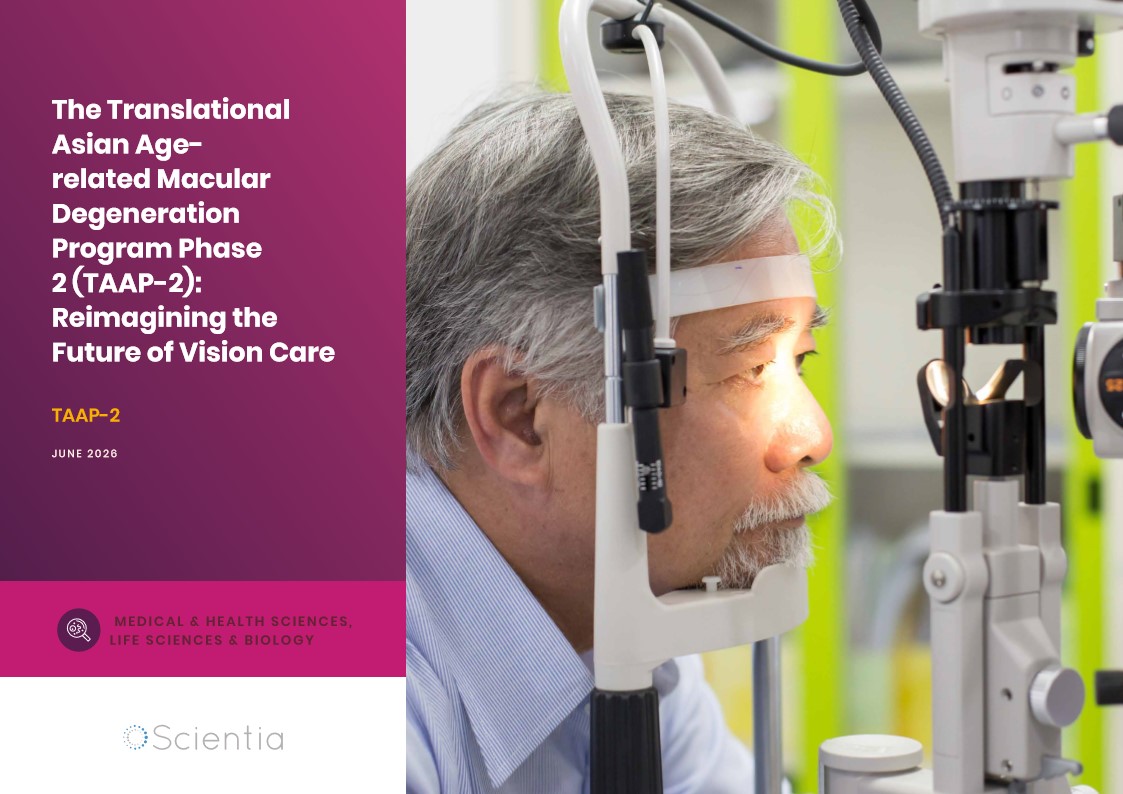
The Translational Asian Agerelated Macular Degeneration Program Phase 2 (TAAP-2): Reimagining the Future of Vision Care
Age-related macular degeneration, often abbreviated as AMD, is one of the leading causes of vision loss among older adults worldwide. In Asia, where populations are ageing rapidly, its impact is particularly profound. For many, the disease quietly erodes central vision, making everyday activities such as reading, driving, and recognising faces increasingly difficult. Against this backdrop, the Translational Asian Age-related Macular Degeneration Programme, or TAAP for short, has emerged as a bold and ambitious effort to confront the disease headon. Now in its second phase, TAAP-2 represents a significant evolution in both scientific scope and clinical ambition.

Ms. Aikaterini Dritsoula | Looking Beyond Snoring: How Hidden Airway Problems Shape Children’s Sleep
For many parents, a child’s snoring may seem harmless, even endearing. Yet in some cases, it signals something more serious. Obstructive sleep apnoea is a condition in which a child’s breathing is repeatedly disrupted during sleep. These interruptions can affect growth, behaviour, and learning. Children with this condition may toss and turn at night, struggle to concentrate during the day, or show signs of hyperactivity and fatigue. Traditionally, enlarged tonsils and adenoids have been seen as the main culprits. Surgery to remove them has long been considered the standard treatment. However, research led by Consultant ENT Surgeon Ms. Aikaterini Dritsoula of The Leeds Teaching Hospitals NHS Trust invites us to look deeper. Her work suggests that the story is often more complex, especially in very young children.