
Professor JoAnne S. Richards | Revealing the Secrets of the Ovary
Professor JoAnne S. Richards conducts her vital research at the Baylor College of Medicine in Houston, Texas, in the USA. For decades she has investigated how certain hormones regulate ovarian function at particular stages of the menstrual cycle, as well as developing new ways to study ovarian cancer. Her work also helps shed new light on common female reproductive health disorders that can affect fertility.
A Delicate Balance of Hormones
The human menstrual cycle takes about 28 days, during which the lining of the womb (uterus) grows thicker in preparation for pregnancy, whilst the ovaries undergo changes to produce a mature egg/oocyte. If a pregnancy does not occur, then the uterine lining is shed, and menstruation occurs. Each ovary contains thousands of primordial and small growing follicles, each of which contains an immature egg, one that has not yet fully matured. At mid-cycle, when a preovulatory follicle develops, and the enclosed egg has matured, the egg surrounded by specialised cumulus cells is then released and attached to the surface of the ovary, where it can be collected by the fallopian tube (also known as an oviduct) where it could potentially be fertilised by sperm (if there is any present).
Several hormones work in a delicate balance to achieve ovulation every month, with each hormone having its own particular role. Follicle-stimulating hormone (FSH) causes small follicles and the contained egg in the ovary to mature, whilst luteinising hormone (LH) triggers ovulation, the release of a mature egg. Oestrogen and progesterone help maintain the uterine lining for implantation and pregnancy; they also regulate pituitary function to control the release of FSH and LH.
Professor JoAnne S. Richards works at Baylor College of Medicine, a leading centre for molecular biology and gene cloning science. Her decades of research have advanced our understanding of the molecular and cellular mechanisms that control ovulation, ovarian follicular development, and, importantly, ovarian cancer. According to the Centres for Disease Control and Prevention in the USA, ovarian cancer is the second most common gynaecological cancer in the USA and causes more deaths than any other cancer of the female reproductive system. Professor Richard’s work not only opens up new avenues for potential therapies for this disease but also other female reproductive health conditions, like polycystic ovary syndrome (PCOS) and premature ovarian failure, which can affect fertility as well as cause a myriad of unpleasant symptoms.

The Mutant Mouse
Professor Richard’s early research highlighted that there is a lot more happening during ovarian follicular development than was first thought. It’s not a simple case of FSH stimulating follicle growth and the egg suddenly maturing – there are many intricate steps involved. She has reviewed studies that indicate other signalling cascades occurring within the ovary itself that can affect follicular development, as well as how the various hormones interact at the different stages of follicular development and ovulation.
Signalling cascades (pathways) are complex, multi-step processes that occur within cells in which a group of molecules, such as proteins and enzymes, work together to control a particular outcome, in this case, the development of the follicle. These cascades start when a signal, like a hormone from the environment, reaches the cell, binding to a specific receptor on the cell surface or within the cell. They also cause specific genes to be turned on or off in order to control the production of various protein molecules involved in specific pathways.
Mutant mouse models (transgenic mice) allow the study of particular genes. Transgenic mice are genetically modified and are commonly used to help understand the role of certain genes in animal models of diseases or conditions found in humans. Looking at mutant mouse models coupled with clinical evidence, Professor Richards identified some of the most powerful regulators of follicular development within the ovary, being the RAS/ERK1/2 signalling pathways and the FOXO1/FOXL2 transcription factors.
Professor Richards and her team also developed novel mouse models of the granulosa cell (follicular cell) and ovarian surface epithelial (OSE) cancer – the ‘OSE mutant mouse’. Using the OSE mutant mouse allowed for a better understanding of this disease, paving the way for new therapies. Her work also resulted in the identification of genes and signalling pathways that regulate certain stages of ovarian follicular development and ovulation, specifically the roles of ADAMTS1, TNFAIP6 and PTGS2.

Investigating Polycystic Ovary Syndrome
PCOS is a very common condition which affects how the ovaries work. It is thought to affect as many as 1 in 10 women, although not all show symptoms. Sufferers can experience difficulty getting pregnant, irregular periods, excessive hair growth in unwanted places but hair thinning or loss on the head, as well as weight gain. It’s also associated with an increased risk of type 2 diabetes in later life. Ovaries are enlarged with many fluid-filled follicles (not cysts as implied by the name of the condition), and often the eggs are underdeveloped, and the follicles do not release them because ovulation fails to occur. Sufferers are characterised by producing an excess of ovarian theca cell-derived androgens, or ‘male’ hormones.
In 2016, Professor Richards and her team investigated this condition which is also linked to systemic low-level inflammation. They carried out gene profiling and examined granulosa-lutein cells from women undergoing in vitro fertilisation, a process to help women who are having fertility problems conceive. They studied women both with and without PCOS and also compared cytokines and other inflammatory markers. Professor Richards concluded that within the follicles, androgens and cytokines create a regulatory loop that affects how the granulosa-lutein cells in the follicles produce other cytokines and chemokines (molecules that usually attract white blood cells of the immune system to infection sites). Professor Richards concluded that androgen excess is a major contributor to PCOS and went on to further explore this condition.

Exploring the Role of Theca Cells
The following year, Professor Richards reviewed studies pertaining to follicular development in PCOS and also premature ovarian failure to present a comprehensive summary of the findings. She focused on theca cells, which have a diverse number of roles during the formation of follicles, from synthesising androgens and vital growth factors to providing structural support and protection for the growing follicle. In particular, she reviewed the mutant mouse models used to investigate various signalling pathways and a variety of factors that impact theca cell development and function. She integrated all the current data from both PCOS and non-PCOS sufferers to understand what pathways and factors contribute to follicle growth as well as to the abnormal function of theca cells.
Since ovarian theca cells have such a critical role in follicular development but also have a role to play in the dysfunction of the ovaries in PCOS, premature ovarian failure and other conditions such as ovarian hyperthecosis, Professor Richards stepped up to advance the research into theca cells. She already knew that theca cell androgen production in the ovaries is regulated by LH and various factors within the follicle. She argued that the enhanced production of androgens by the theca cells contributes to PCOS. However, she noted that the consequences of high levels of androgen in the ovaries remained poorly understood.
In 2019, Professor Richards carried out a ground-breaking study documenting the molecular events that are changed in the theca and stromal (structural support) cells of mice that are exposed to high levels of androgens, using a non-metabolisable form of testosterone, called dihydrotestosterone (DHT) that cannot be converted to oestrogens. She found changes in ovarian morphology (structure and form) as well as function within the follicles and also the areas outside. In the study, after treating female mice with DHT for a set time, Professor Richards analysed the activity or expression of particular genes and, in turn, the production of various proteins and other molecules involved in cell signalling pathways.
In particular, she found increased specific expression of VCAM1 (vascular cell adhesion molecule 1) in the theca cells (and not the granulosa cells, which many previous studies focused on) of developing follicles of the DHT-treated mice. These findings indicated new functions of VCAM1 in the reproductive organs, deepening our understanding of how high levels of androgens impact ovarian functions.

Polyploid giant cancer cell. Credit JoAnne Richards
A New Hope for Tackling Ovarian Cancer
The American Cancer Society estimates that close to 20,000 women will be diagnosed with ovarian cancer in 2023 in the USA, with about 13,000 dying as a result. Professor Richards and her team have documented that the disruption of particular genes and signalling pathways, FOXO1, FOXO3 and PTEN, of granulosa cells in the ovaries leads to the formation of tumours. Using their unique OSE mutant mouse model, Professor Richards and her team have shown that the genetically altered, or mutant status, of a particular tumour protein, p53, changes the way the tumour responds to hormones. They are using their model to further investigate the p53 alleles (parts of genes) in human ovarian cancer growth and response to hormones.
Professor Richards is also exploring potential new avenues for treatments. She states that the first-line treatment for patients with a certain form of ovarian cancer, high-grade serous ovarian cancer (HGSOC), involves using cytotoxic drugs. However, tumours frequently recur and with increased resistance to the drugs used to treat them, resulting in poor survival rates. She is examining data surrounding particular markers of cell division and polyploidy giant cancer cells (PGCC), a type of cell found in HGSOC which appear to play a key role in producing more drug-resistant cells, thereby assisting the progression of the tumour. She argues that developing drugs to target PGCC could be a new approach to reducing the occurrence of drug-resistant tumours, bringing new hopes for tackling this devastating disease.
SHARE

DOWNLOAD E-BOOK

REFERENCE
https://doi.org/10.33548/SCIENTIA1155
MEET THE RESEARCHER

Professor JoAnne S. Richards
Department of Molecular and Cellular Biology
Baylor College of Medicine
Houston, TX
USA
Professor JoAnne S. Richards has had a long and decorated career. Over the years, she has made many significant contributions to the field of reproductive biology, including developing a novel animal model to enable the study of ovarian cancer, identifying new pathways that regulate ovulation and the role of androgens in theca cells, as well as discovering a new cyclooxygenase gene. Professor Richards achieved an AB in Biology in 1967 at Oberlin College, Ohio, and went on to study at Brown University in 1968, where she received an MA in Arts and Teaching. In 1970, she completed her PhD in Physiological Chemistry at Brown University, and in 1973, she received a postdoctoral position in Reproductive Endocrinology at the University of Michigan. Her academic progression included positions at the University of North Dakota and the University of Michigan before being appointed Associate Professor at Baylor College of Medicine in 1981 and then Professor in 1988, where she remains to this day.
CONTACT
E: joanner@bcm.edu
W: https://www.bcm.edu/people-search/joanne-richards-29427
KEY COLLABORATORS
Dr Nicholes Candelaria, Postdoctoral Fellow, Baylor College of Medicine
FUNDING
National Institutes of Health
FURTHER READING
NR Candelaria, JS Richards, Targeted deletion of NR2F2 and VCAM1 in theca cells impacts ovarian follicular development: insights into polycystic ovary syndrome? Biology of Reproduction, 2024, 110(4), 782–797. DOI: https://doi.org/10.1093/biolre/ioae010
JS Richards, NR Candelaria, RB Lanz, Polyploid Giant Cells and Ovarian Cancer: New Insights into Mitotic Regulators and Polyploidy, Biology of Reproduction, 2021, 105(2), 305–316. DOI: https://doi.org/10.1093/biolre/ioab102
NR Candelaria, A. Padmanabham, F Stossi, et al., VCAM1 Expression is Induced in Ovarian Theca and Interstitial Cells in a Mouse Model of Androgen Excess, Endocrinology, 2019, 160(6), 1377–1393. DOI: https://doi.org/10.1210/en.2018-00731
JS Richards, Theca Cells, Encyclopedia of Reproduction (Second Edition), 2018, 2, 14–20. DOI: https://doi.org/10.1016/B978-0-12-801238-3.64624-X
JS Richards, YA Ren, N Candelaria, et al., Ovarian Follicular Theca Cell Recruitment, Differentiation, and Impact on Fertility: 2017 Update, Endocrine Reviews, 2017, 39(1), 1-20. DOI: https://doi.org/10.1210/er.2017-00164
J Adams, Z Liu, YA Ren, et al., Enhanced Inflammatory Transcriptome in the Granulosa Cells of Women with Polycystic Ovarian Syndrome, The Journal of Clinical Endocrinology and Metabolism, 2016, 101(9), 3459–3468. DOI: https://doi.org/10.1210/jc.2015-4275

REPUBLISH OUR ARTICLES
We encourage all formats of sharing and republishing of our articles. Whether you want to host on your website, publication or blog, we welcome this. Find out more
Creative Commons Licence (CC BY 4.0)
This work is licensed under a Creative Commons Attribution 4.0 International License. 
What does this mean?
Share: You can copy and redistribute the material in any medium or format
Adapt: You can change, and build upon the material for any purpose, even commercially.
Credit: You must give appropriate credit, provide a link to the license, and indicate if changes were made.
SUBSCRIBE NOW
Follow Us
MORE ARTICLES YOU MAY LIKE

Assoc Prof. Nicholas Brown | Rethinking Prostate Care: A New Frontier in Treating Benign Prostatic Hyperplasia
For millions of men, ageing brings with it a set of frustrating and often disruptive urinary symptoms. These symptoms, caused by benign prostatic hyperplasia, or BPH, can affect sleep, confidence, and overall quality of life. Traditionally, treatment follows a familiar path. Patients begin with medications, often for years, and may eventually progress to surgery if symptoms worsen. Yet this pathway is not without its drawbacks. Medications can cause side effects, while surgery carries risks and recovery time. In recent years, a minimally invasive interventional radiology procedure called prostate artery embolisation, or PAE, has begun to challenge this traditional model. At the forefront of this shift is a collaborative research group, led by Dr. Nicholas Brown of the University of Queensland, whose series of P-EASY studies has explored whether PAE could transform how BPH is treated, particularly at earlier stages.

Jean Lycke | Addressing Unmet Medical Needs in Mucosal Disease: A Close-to-Market Innovation Approach
Recurrent Aphthous Stomatitis (RAS) is an oral condition characterized by one or several painful mucosal ulcers. RAS affects a large proportion of the population and has a point prevalence of approximately 2–3%, daily. The etiology remains unknown, and there is currently no curative treatment. Most patients experience recurring episodes over time, with each episode typically lasting up to a week. Here, we describe the development of a mucoadhesive patch which, when applied over a RAS ulcer, provides rapid pain relief. The patch is easy for patients to apply when symptoms begin and has the potential to be used as an over-the-counter product. The development of the Mucocort mucoadhesive patch is an example of a Close-to-Market innovation strategy that embraces simplicity within a complex healthcare system. By simplifying the product concept, the team has reduced the number of regulatory steps required before market approval. This MedTech/Pharma innovation model, known as the “4R” framework – Re-purposing, Re-formulation, Re-positioning, and Re-patenting – has guided the program from concept to commercialization. In addition to the biodegradable mucoadhesive patch developed for RAS ulcers, the team is extending the innovation concept to a mucoadhesive gel formulation for the prevention and treatment of chemotherapy-induced mucositis. This gel-based program is being commercialized separately through MucoShield.
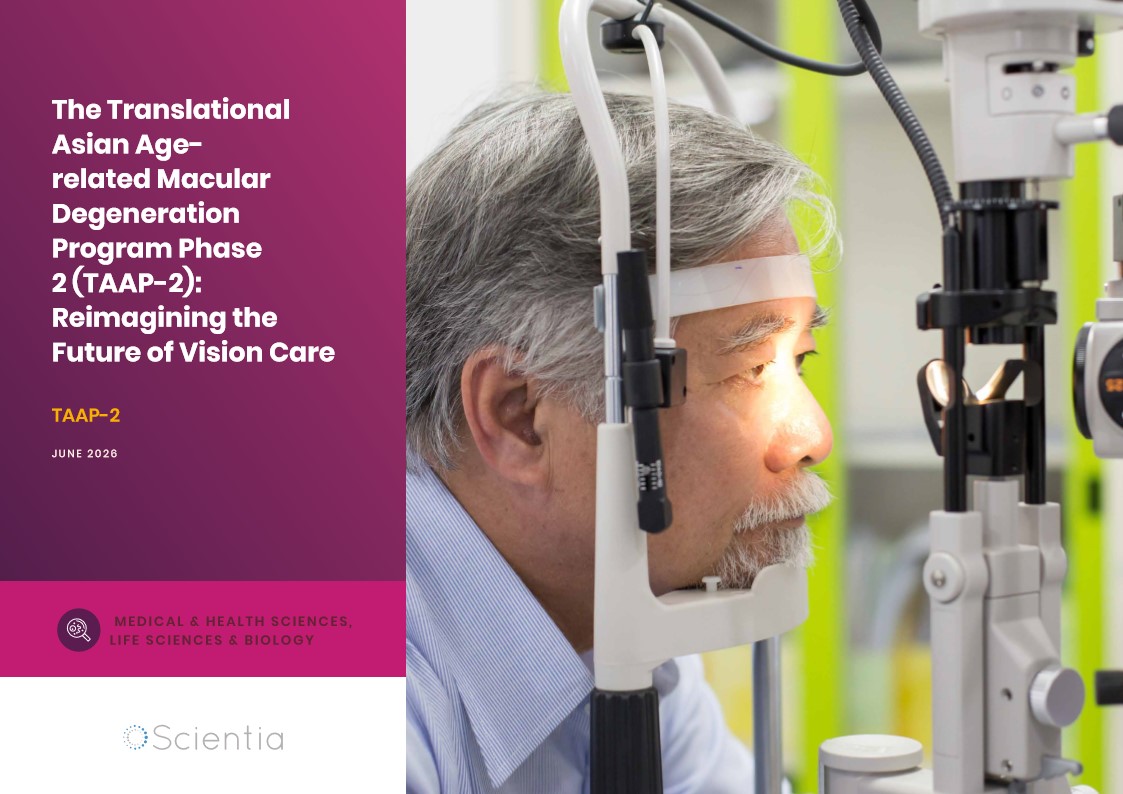
The Translational Asian Agerelated Macular Degeneration Program Phase 2 (TAAP-2): Reimagining the Future of Vision Care
Age-related macular degeneration, often abbreviated as AMD, is one of the leading causes of vision loss among older adults worldwide. In Asia, where populations are ageing rapidly, its impact is particularly profound. For many, the disease quietly erodes central vision, making everyday activities such as reading, driving, and recognising faces increasingly difficult. Against this backdrop, the Translational Asian Age-related Macular Degeneration Programme, or TAAP for short, has emerged as a bold and ambitious effort to confront the disease headon. Now in its second phase, TAAP-2 represents a significant evolution in both scientific scope and clinical ambition.

Ms. Aikaterini Dritsoula | Looking Beyond Snoring: How Hidden Airway Problems Shape Children’s Sleep
For many parents, a child’s snoring may seem harmless, even endearing. Yet in some cases, it signals something more serious. Obstructive sleep apnoea is a condition in which a child’s breathing is repeatedly disrupted during sleep. These interruptions can affect growth, behaviour, and learning. Children with this condition may toss and turn at night, struggle to concentrate during the day, or show signs of hyperactivity and fatigue. Traditionally, enlarged tonsils and adenoids have been seen as the main culprits. Surgery to remove them has long been considered the standard treatment. However, research led by Consultant ENT Surgeon Ms. Aikaterini Dritsoula of The Leeds Teaching Hospitals NHS Trust invites us to look deeper. Her work suggests that the story is often more complex, especially in very young children.