
Parkinson’s disease is the most rapidly growing neurological disease worldwide. At present, there are no treatments that can prevent or reverse the damage caused by this disease. Therefore, there is a demand for therapies that ease and manage symptoms. Professor Rebecca States of Hofstra University collaborated with colleagues from Long Island University to evaluate the effects of exercise on the balance and postural control of individuals with Parkinson’s disease. The outcomes shed light on how exercise should be used for healthcare practitioners and researchers working with Parkinson’s disease.
Understanding Parkinson’s and Balance Challenges
A key problem faced by people with Parkinson’s is loss of balance, which can affect walking, standing, and many day-to-day activities, reducing quality of life. Unfortunately, there are no treatments available that effectively stop or reverse the balance deficits and neurologic progression of Parkinson’s disease. For this reason, complementary approaches are essential, and regular exercise has been reported to help people manage symptoms, maintain function, and improve overall well-being.
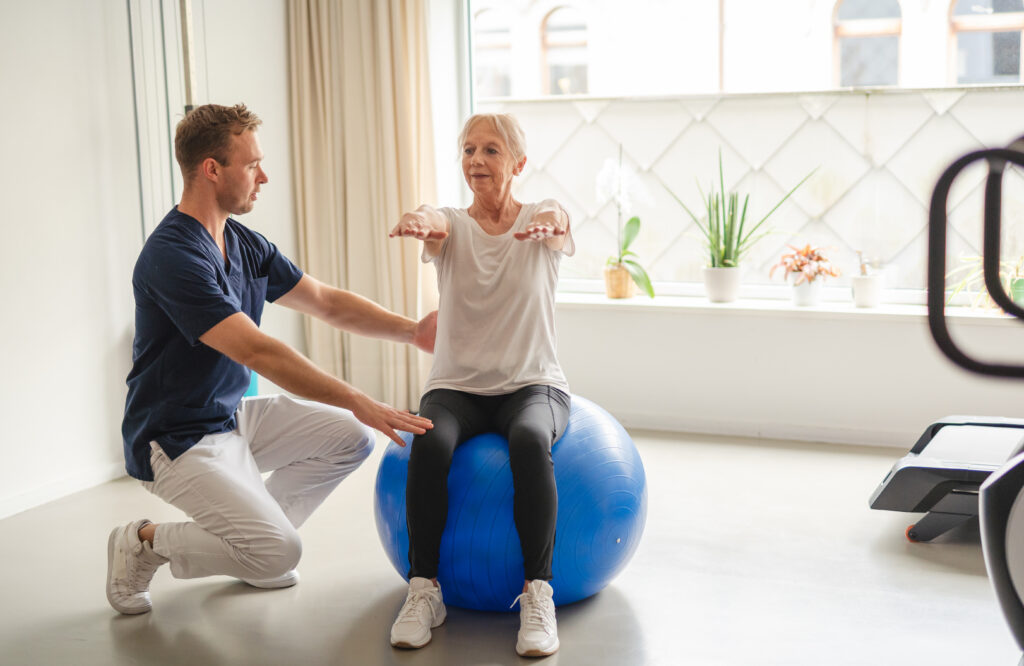
Numerous types of exercises address balance, including tai chi, dance, cardio, and resistance training. Research demonstrates that regular participation in these activities can reduce impairments of postural control, improve dynamic and static balance, and enhance quality of life. Balance-focused exercise programs offered to people with Parkinson’s include group-based exercises, rehabilitation services, and home exercise routines. Although the benefits of exercise for people with Parkinson’s disease are well established, the influence of the exercise setting and format remains unclear. In particular, does training in a group setting provide the same benefits as one-on-one guidance from a therapist, or is one format superior? Understanding the effectiveness of these delivery formats is key to helping people with Parkinson’s choose exercise options that maximize benefits.

How Group and Individual Exercise Were Compared
To explore this question, Prof Rebecca States and colleagues conducted a review of studies that tested exercise programs designed for people with Parkinson’s disease. Focus was placed on studies where exercise performed in groups was compared to exercise performed individually, or to no exercise at all. The exercise programs included one or more types of exercise such as resistance or cardio training, balance exercise, dance, tai chi, yoga, etc.
The relevant studies were selected from major research databases. Information was collected on who took part (number of participants, their ages, disease stage), the type of exercise, how the exercise was delivered (group, individual, therapist, instructor), and how balance was measured. Testing methods for balance included measuring the time it took to stand up, walk, and sit down, evaluating the performance of daily tasks such as reaching, standing, and turning, and querying participants about their confidence with balance activities. Prof States and colleagues identified patterns that might not be visible in a single study by performing statistical analysis to identify trends. Approximately 30 studies were included, covering close to 1,200 participants.
What the Evidence Shows About Balance
When group exercise was compared with no structured exercise at all, participants in the group classes showed significant improvements in terms of balance. For participants with mild to moderate Parkinson’s, engaging in consistent group exercise improved both their ability to perform balance tasks and their confidence in doing so.
When group exercise was compared directly with one-on-one training, no significant differences were found. Both group and individual formats led to similar improvements across the key measures of balance. This finding is particularly important for people with Parkinson’s, their caregivers, and medical practitioners. It suggests that individuals can choose the exercise format that best fits their lifestyle, resources, and personal preferences.

Why Exercise Format Matters Beyond Balance
The research by Prof States and colleagues shows that group and individual exercise programs produce similar improvements in balance for people with Parkinson’s disease. Individual sessions can provide close supervision and tailored progression to suit each patient. However, they can be hard to maintain due to high costs, transportation difficulties, and the requirement of specialized staff. Group classes, in contrast, can be more affordable, widely available, socially engaging, and create a sense of community, although they cannot be individually customized to the same extent. Analysis showed no significant differences between the two formats on key balance measures.
Studies using the same exercise program in both formats were limited, and their results were mixed: one revealed a better performance in individual exercise, while the other found no differences between the two formats. The study also notes that the type of exercise and the level of challenge may influence the results. A specific form of exercise may create different challenges for each individual and impact how well it improves balance. Overall, both group and individual formats are useful, but people may benefit differently depending on their preferences, needs, and access to programs.

What This Means for Parkinson’s Research and Next Steps
Exercise has emerged as a critical complementary therapy to traditional treatments used to slow down or stop the progression of Parkinson’s disease. This study presents a key insight—the delivery format of exercise, whether in groups or individually, does not limit its benefit. This allows researchers and medical practitioners to focus on determining which types of exercise, intensities, and session designs produce the most substantial improvements in balance. How can exercise programs be adapted to individual capabilities while still being scalable and widely accessible? How can programs ensure sustained participation over months and years?
Importantly, the findings from Prof States and colleagues highlight the need for broader access to both group and individual programs. Making exercise widely available in both formats ensures that more people with Parkinson’s can participate and maintain a routine. Future research can also explore which combinations of balance challenges, cognitive tasks, and sensory feedback might maximize outcomes, providing an improved understanding of how to optimize exercise routines.
One challenge of this work is that most studies used in the analysis were small, with fewer than 40 participants, and many meta-analyses included only three or four trials. Larger, high-quality studies are needed to confirm the findings and to reduce uncertainty. In addition, the results showed high variation, especially when group exercise was compared to no exercise. This may be linked to differences in the type of exercise, how long the programs lasted, the frequency of exercise, how much they challenged balance, and the training of the instructors. Thus, future work should focus on understanding how different types of exercise programs affect balance.
The message from this research is straightforward: exercise helps, whether it is done in a group or individually. People with Parkinson’s should feel empowered to choose the format that feels most accessible, enjoyable, and sustainable for them.
SHARE

DOWNLOAD E-BOOK

REFERENCE
https://doi.org/10.33548/SCIENTIA1327
MEET THE RESEARCHER
Professor Rebecca States
Department of Allied Health & Kinesiology, Hofstra University, Hempstead, New York, USA
Rebecca States is a Full Professor of Physical Therapy at Hofstra University, New York. Professor States earned her bachelor’s in Psychology from Barnard College in 1983, a master’s in Motor Control from Teachers College, New York, in 1986, and a PhD in Psychology (Motor Control) from Columbia University, New York, in 1994. Following the completion of her PhD, Professor States held assistant professor positions at Texas A&M University (1994–1997) and Long Island University, New York (1998–2003). Her time at Long Island University led to tenure and Full Professor (2012–2023) in Physical Therapy.
Professor States is a founding director of Wellness & Exercise for Parkinson’s Disease at Hofstra University, and co-founder of Fitness for PD at Long Island University. Together, these programs have provided exercise classes for individuals with PD since 2008. Professor States conducts quantitative and qualitative research exploring long-term group exercise for people with Parkinson’s Disease. She has published numerous clinical studies, qualitative studies, systematic reviews, and a clinical practice guideline, and has completed research on health promotion programs for older urban adults.
CONTACT
E: rebecca.states@hofstra.edu
W: https://www.hofstra.edu/faculty-profile/?id=10246
https://orcid.org/0000-0002-9014-212X
https://www.researchgate.net/profile/Rebecca-States?ev=hdr_xprf
KEY COLLABORATORS
Yasser Salem, State University of New York – Downstate
Amerigo Rossi, New York Institute of Technology
FUNDING
Parkinson’s Foundation Community Grant, 2024-2025.
FURTHER READING
RA States, B Dewan, P Lynam, N Mensah & O Pottorf (2025) Group exercise for balance in people with Parkinson’s disease: a systematic review with meta-analysis, Physiotherapy Theory and Practice, 41(4): 872–889. DOI: 10.1080/09593985.2024.2374063
A Rossi, R Torres-Panchame, PM Gallo, AR Marcus & RA States (2018) What makes a group fitness program for people with Parkinson’s disease endure? A mixed-methods study of multiple stakeholders. Complementary Therapies in Medicine, 41: 320–327. https://doi.org/10.1016/j.ctim.2018.08.012
RA States, TL Sweeny, A Rossi, DK Spierer & Y Salem (2017) Physical Functioning After 1, 3, and 5 Years of Exercise Among People with Parkinson’s Disease: A Longitudinal Observational Study, J Geriatr Phys Ther, 40: 127-134. DOI: 10.1519/JPT.0000000000000084


REPUBLISH OUR ARTICLES
We encourage all formats of sharing and republishing of our articles. Whether you want to host on your website, publication or blog, we welcome this. Find out more
Creative Commons Licence (CC BY 4.0)
This work is licensed under a Creative Commons Attribution 4.0 International License. 
What does this mean?
Share: You can copy and redistribute the material in any medium or format
Adapt: You can change, and build upon the material for any purpose, even commercially.
Credit: You must give appropriate credit, provide a link to the license, and indicate if changes were made.
SUBSCRIBE NOW
Follow Us
MORE ARTICLES YOU MAY LIKE

Assoc Prof. Nicholas Brown | Rethinking Prostate Care: A New Frontier in Treating Benign Prostatic Hyperplasia
For millions of men, ageing brings with it a set of frustrating and often disruptive urinary symptoms. These symptoms, caused by benign prostatic hyperplasia, or BPH, can affect sleep, confidence, and overall quality of life. Traditionally, treatment follows a familiar path. Patients begin with medications, often for years, and may eventually progress to surgery if symptoms worsen. Yet this pathway is not without its drawbacks. Medications can cause side effects, while surgery carries risks and recovery time. In recent years, a minimally invasive interventional radiology procedure called prostate artery embolisation, or PAE, has begun to challenge this traditional model. At the forefront of this shift is a collaborative research group, led by Dr. Nicholas Brown of the University of Queensland, whose series of P-EASY studies has explored whether PAE could transform how BPH is treated, particularly at earlier stages.

Jean Lycke | Addressing Unmet Medical Needs in Mucosal Disease: A Close-to-Market Innovation Approach
Recurrent Aphthous Stomatitis (RAS) is an oral condition characterized by one or several painful mucosal ulcers. RAS affects a large proportion of the population and has a point prevalence of approximately 2–3%, daily. The etiology remains unknown, and there is currently no curative treatment. Most patients experience recurring episodes over time, with each episode typically lasting up to a week. Here, we describe the development of a mucoadhesive patch which, when applied over a RAS ulcer, provides rapid pain relief. The patch is easy for patients to apply when symptoms begin and has the potential to be used as an over-the-counter product. The development of the Mucocort mucoadhesive patch is an example of a Close-to-Market innovation strategy that embraces simplicity within a complex healthcare system. By simplifying the product concept, the team has reduced the number of regulatory steps required before market approval. This MedTech/Pharma innovation model, known as the “4R” framework – Re-purposing, Re-formulation, Re-positioning, and Re-patenting – has guided the program from concept to commercialization. In addition to the biodegradable mucoadhesive patch developed for RAS ulcers, the team is extending the innovation concept to a mucoadhesive gel formulation for the prevention and treatment of chemotherapy-induced mucositis. This gel-based program is being commercialized separately through MucoShield.

The Translational Asian Agerelated Macular Degeneration Program Phase 2 (TAAP-2): Reimagining the Future of Vision Care
Age-related macular degeneration, often abbreviated as AMD, is one of the leading causes of vision loss among older adults worldwide. In Asia, where populations are ageing rapidly, its impact is particularly profound. For many, the disease quietly erodes central vision, making everyday activities such as reading, driving, and recognising faces increasingly difficult. Against this backdrop, the Translational Asian Age-related Macular Degeneration Programme, or TAAP for short, has emerged as a bold and ambitious effort to confront the disease headon. Now in its second phase, TAAP-2 represents a significant evolution in both scientific scope and clinical ambition.

Ms. Aikaterini Dritsoula | Looking Beyond Snoring: How Hidden Airway Problems Shape Children’s Sleep
For many parents, a child’s snoring may seem harmless, even endearing. Yet in some cases, it signals something more serious. Obstructive sleep apnoea is a condition in which a child’s breathing is repeatedly disrupted during sleep. These interruptions can affect growth, behaviour, and learning. Children with this condition may toss and turn at night, struggle to concentrate during the day, or show signs of hyperactivity and fatigue. Traditionally, enlarged tonsils and adenoids have been seen as the main culprits. Surgery to remove them has long been considered the standard treatment. However, research led by Consultant ENT Surgeon Ms. Aikaterini Dritsoula of The Leeds Teaching Hospitals NHS Trust invites us to look deeper. Her work suggests that the story is often more complex, especially in very young children.