
DOI: doi.org/10.33548/SCIENTIA1210
MORE ARTICLES YOU MAY LIKE
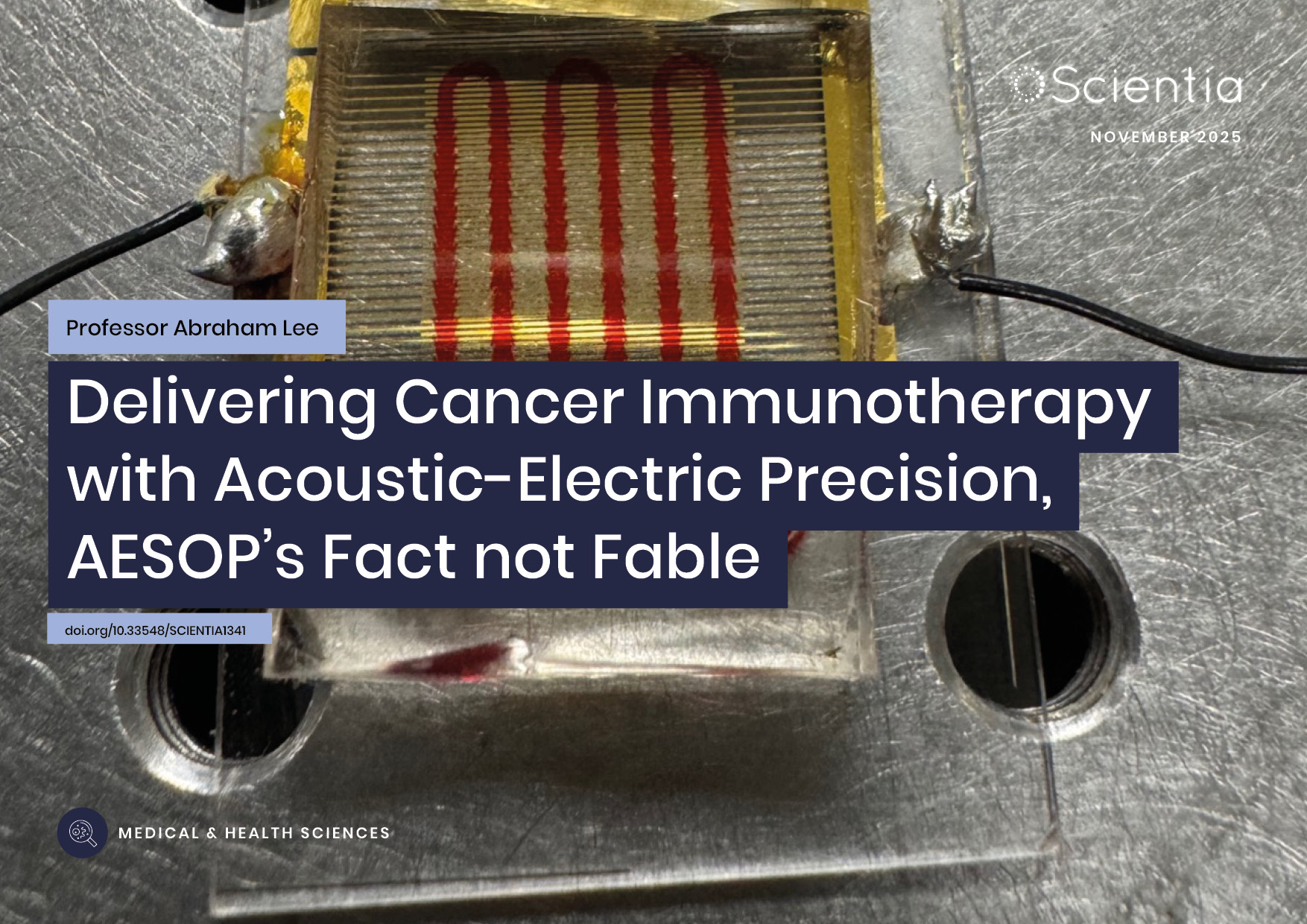
Professor Abraham P. Lee | Delivering Cancer Immunotherapy with Acoustic-Electric Precision, AESOP’s Fact not Fable
Chimeric Antigen Receptor (CAR) T-cell therapy offers life-saving potential, particularly against blood cancers, but severe side effects such as cytokine release syndrome (CRS) limit its safety. These toxicities are linked to uncontrolled CAR expression levels on the T-cell surface. Led by Professor Abraham P. Lee, researchers at the University of California, Irvine, have developed an advanced microfluidic system, called the Acoustic-Electric Shear Orbiting Poration (AESOP) platform, to precisely control the dose of genetic material delivered into primary T cells. This innovation promises safer, more homogeneous, and highly effective cellular immunotherapies.

Dr Ray Stewart | Barriers to Dental Care for People with Special Needs: A Crisis of Neglect and Inaction
For people with special healthcare needs, something as basic as visiting a dentist can be nearly impossible. A ground-breaking paper by researchers at the University of California, San Francisco (UCSF) exposes the scale of this crisis. By outlining potential paths forward, Dr Ray Stewart and Dr Ben Meisel offer hope for significant improvements in access to essential dental care.
Dr Liisa Laakso | Lighting the Way: Exploring Photobiomodulation to Ease MELAS
MELAS is a rare and serious genetic condition that affects how the body’s cells produce energy, leading to extreme fatigue, muscle weakness, and a range of other symptoms. With no cure currently available, treatment focuses only on managing complications.
A team of researchers led by Dr Liisa Laakso at the Mater Research Institute-University of Queensland, Australia, is exploring an innovative, non-drug therapy called photobiomodulation, which uses light to stimulate mitochondria to work more efficiently. This pioneering study will provide intial evidence on whether PBM can safely reduce fatigue and improve quality of life for people living with MELAS, paving the way for future clinical trials.

Professor John Paul Pezacki, PhD, FRSC (UK) | Engineering Proteins for the Prevention of Disease Progression
The way in which viruses invade and replicate within their hosts involves a multilayered system of protein-based interactions, and understanding the mechanisms at play is crucial when developing potential treatments. Utilising new techniques such as genetic code expansion, Professor John Paul Pezacki and his team of researchers at the University of Ottawa in Canada have designed a novel, highly specific artificial protein complex which can halt the progression of viral infections in human cells. They have identified and described a novel approach to wider preventative and restorative therapeutics in human disease.