
Professor Toni Miles | Why Understanding Bereavement Matters
Professor Toni Miles has dedicated her research efforts to measuring bereavement and its impact on population health. Individual experience with bereavement is commonplace, but we know little about its impact on society when there is an instantaneous experience by a large number of individuals, i.e., mass bereavement. To measure its occurrence, her research with colleagues first confirmed that bereavement can be effectively measured in population surveys. Professor Miles argues that we should use such approaches to deliver interventions aiming to reduce the negative consequences of bereavement on individuals. By measuring bereavement in communities, these data become a cost-effective way to increase resilience, reduce demands on healthcare systems, and enhance public safety.
What We Know – And What We Don’t Know – About Bereavement
Bereavement is the occurrence of the death of a loved one. The ‘bereaved’ is a term used to define an individual with a loss. Grief is not synonymous with bereavement. Rather, it is an umbrella term to encompass the emotional reaction to the loss. Emotions associated with grief are myriad. They fluctuate over time and are wide-ranging, including sorrow, sadness, and anger. While a single individual can experience multiple deaths, each one is a single bereavement occurrence.
Bereavement is an incredibly difficult but universal human experience. Here is one example. In our increasingly ageing society, the shared life between children and their parents can often span 50 or more years. This means that many of us inevitably lose our parents during our adult life stage. When parents die, an adult typically frames the experience in terms of the injury to emotional bonds. However, broader studies of the health of adults after the death of a spouse, sibling, or parent provide evidence that bereavement is an established risk factor for severe illness and premature mortality.
Professor Toni Miles’ earliest work on health and bereavement focused on a cohort of adults aged 50 years and older after the death of a parent, spouse, or sibling. In this study, bereavement was associated with a 2–5-fold increased mortality risk over 10 years. This evidence led to the idea of public health engagement. However, the proportion of adults in the total population who are bereaved, i.e., the prevalence of bereavement, was not known.
Prevalence is the approach to measuring bereavement and its impact on population health. Prevalence is a collective metric. Its ascertainment occurs within a standardised timeframe. All other items in public health surveillance surveys are matched to a specific period – e.g., one week, 30 days, or 24 months. Before the research of Professor Miles, bereavement was not asked about in these surveys. Population health is traditionally discussed using metrics such as mortality rates, healthcare utilisation rates, and prevalence of poor mental health. Again, these are always placed within a period.
Some members of the public health community are concerned that individuals responding to a survey would be reluctant to report on recent bereavements. In 2019, under the leadership of Professor Miles, the US state of Georgia included a three-item module on bereavement. It started with the question, ‘Have you experienced the death of a family member or close friend in the years 2018 or 2019?’. More than 70% of survey participants were willing to answer this question. It was a breakthrough finding that the topic of bereavement was not viewed as taboo among the adults aged 18 and older who participated in the survey. Participation rates are fundamental to accurate surveillance data.
A Near-universal Experience with Significant Consequences
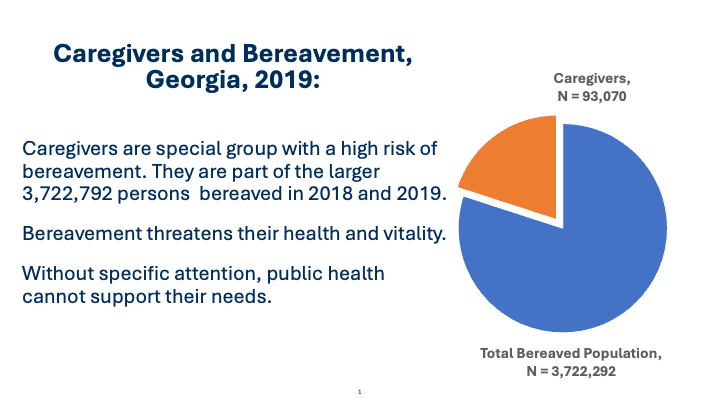
Currently, Professor Miles leads the study of bereavement and its impact on caregiver health for the Rosalynn Carter Institute for Caregivers. There are an estimated 53 million adult family caregivers in the US, and many more are present across the globe. The research team has confirmed that bereavement is a near-universal experience after caregiving, which can extend for 25 or more years.
The team has also identified that the death of a parent, spouse, sibling, or child increases the risk of hospitalisation two-fold for the surviving family member. Although the increase in risk was small, it was independent of other factors such as age, gender, health status, and health behaviours. Resistance to these negative effects is associated with health mastery and the ability to navigate healthcare systems. The Rosalynn Carter Institute provides evidence that resilience to these negative health effects can be taught with targeted training.
Looking at the Bigger Picture
Professor Miles and her colleagues expanded the surveillance data for public health and bereavement by including an assessment of bereavement in the 2019 fielding of the Georgia Behavioral Risk Factor Surveillance System (BRFSS). BRFSS is a national, annual survey designed to identify trends in the public’s health and inform public health planning. Each state has the flexibility to add items of interest.
The Georgia BRFSS started with the simple question, ‘Have you experienced the death of a family member or close friend in the years 2018 or 2019?’. Georgia public health officials were astonished to find that 45% of adults aged 18 and over were bereaved. In a population of 8.1 million adults, this means that 3.7 million persons are bereaved with the attendant health risks. Among African Americans, bereavement prevalence was 56%. The 2019 BRFSS predates the COVID pandemic. Work is underway to replicate this survey and measure post-pandemic bereavement among adults in the US state of Georgia. Caregivers are a special focus of the 2022 Georgia BRFSS.
Further research is needed to look at the potential for measuring bereavement among adolescents and children. These initial findings confirmed that it is possible to effectively measure bereavement in well-designed, population-based surveys. These data have also provided evidence directly linking bereavement and associated health-risk behaviours.
Bereavement and Health-risk Behaviours
Anecdotally, bereaved individuals often experience changes in their sleeping and eating patterns. They may also engage in risky behaviours, such as drinking to excess. With the 2019 BRFSS in hand, Professor Miles focused on binge drinking – defined as four or more drinks for women and five or more drinks for men in a 2–4-hour period. This resulted in new observations for public health research surrounding binge drinking and bereavement. While the detrimental effects of binge drinking and heavy drinking are well established, this is the first report to clearly link the population prevalence of binge drinking with the prevalence of bereavement.
A second finding is the population of bereaved adults aged 18 to 35 years are significantly more likely to report binge drinking. Bereavement, particularly among young adults aged 18 to 30 years, increases the risk of being a binge drinker more than two-fold.
Bereavement and Health-related Quality of Life
In ongoing work, Professor Miles and her colleagues are looking at the impact of bereavement on health-related quality of life – a four-item summary assessment of personal well-being. Responses reflect well-being over the previous 30 days. Mental health is one of the items. It is well established that bereaved individuals report poor mental health for most days in a month. But can we assess the quality of life of bereaved individuals at the population level? In the team’s analysis, bereavement was associated with an increased prevalence of poor mental health.
In current analyses, the researchers are looking closely at the relationship between bereavement, health-related quality of life, and behaviours such as smoking or obesity. In these studies, the sample is designed to generate population-level numbers. With this sample, Professor Miles and her colleagues are now unpacking the complex patterns that make bereavement a public health concern when millions of persons are experiencing mental illness and engaging in behaviours that injure health.
An Evolving Public Health Perspective
The vital work of Professor Miles and her colleagues confirms that bereavement is a significant problem for society due to the sheer number of affected individuals. Having demonstrated that bereavement and its impacts can be effectively measured, the foundations for seeing and responding to mass bereavement are now laid. For example, one of the United Nations Sustainable Development Goals is to strengthen treatment for harmful use of alcohol (SDG 3.5). Measuring the prevalence of bereavement can support efforts to reduce binge drinking among young adults. However, interventions can only be offered if a problem is brought to light. Responding to widespread bereavement requires acknowledging its prevalence and impact in the first place.
So, let’s talk more about bereavement and measure its impact. Professor Miles has built bridges between our understanding of population health and how we think about bereavement. By taking a proactive approach, Professor Miles is confident that we can better protect both individual and societal health as we all confront the harsh but inevitable reality of the cycle of life and death.
Caregiving: An Important Public Health Issue
53 million Americans currently serve as family caregivers to someone who is ageing, ill, or disabled.
‘There are only four kinds of people in the world: those who have been caregivers, those who are caregivers, those who will be caregivers, and those who need them.’ Rosalynn Carter.
Rosalynn Carter Institute for Caregivers
Former First Lady Rosalynn Carter founded the Rosalynn Carter Institute for Caregivers in 1987. Today, the institute continues her vital work promoting the health, strength, and resilience of caregivers. They achieve this by building cross-sector partnerships, leading research projects and strategic initiatives, developing and implementing evidence-based programs, and advocating for public policy.
SHARE

DOWNLOAD E-BOOK

REFERENCE
https://doi.org/10.33548/SCIENTIA1025
MEET THE RESEARCHER
Professor Toni P Miles
Pope Eminent Scholar
Rosalynn Carter Institute for Caregivers
and
Professor Emeritus
University of Georgia
USA
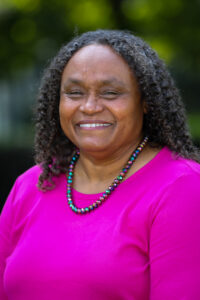
Professor Toni Miles, MD, PhD, FGSA, FAPHA, is dedicated to understanding and alleviating the public health impacts of grief. To this end, she works extensively with public health professionals and researchers across the USA and in other countries. She has published more than 200 articles on public health, bereavement, and chronic disease. Professor Miles works closely with the Rosalynn Carter Institute for Caregivers with the shared aim of promoting caregivers’ health, strength, and resilience.
CONTACT
E: ugamiles@gmail.com
W: https://rosalynncarter.org/rci-welcomes-visiting-scholar-dr-toni-miles/
X: @TMILES2054
ResearchGate: https://www.researchgate.net/profile/Toni-Miles
LinkedIn: https://www.linkedin.com/in/tonimiles/
KEY COLLABORATORS
Rosalynn Carter Institute for Caregivers, USA
Georgia Institute of Technology, USA
Alliant Health Solutions, Technical Expert Panel, Behavioral Health in Nursing Facilities, USA
The Georgia Department of Public Health, Epidemiology Branch, USA
Department of Health Policy and Management, College of Public Health, University of Georgia, USA
School of Health Management, Fujian Medical University, China
FUNDING
John and Betty Pope, who established the John and Betty Pope Caregivers Fellowship/Scholarship and Eminent Scholar Program
RRF Foundation for Aging (https://www.rrf.org/)
Centers for Medicare and Medicaid Services, Civil Monetary Penalty Reinvestment Fund
FURTHER READING
C Li, TP Miles, Y Shen, et al., Measuring bereavement prevalence in a complex sampling survey: The 2019 Georgia Behavioral Risk Factor Surveillance System (BRFSS), BMC Medical Research Methodology, 2023, 23, 138. DOI: https://doi.org/10.1186/s12874-023-01917-5
TP Miles, C Li, MM Khan, et al., Estimating Prevalence of Bereavement, Its Contribution to Risk for Binge Drinking, and Other High-Risk Health States in a State Population Survey, 2019 Georgia Behavioral Risk Factor Surveillance Survey, International Journal of Environmental Research and Public Health, 2023, 20(10), 5837. DOI: https://doi.org/10.3390/ijerph20105837
TP Miles, JC Allegra, A Ezeamama, et al., In a Longevity Society, Loss and Grief Are Emerging Risk Factors for Health Care Use: Findings From the Health and Retirement Survey Cohort Aged 50 to 70 Years, The American Journal of Hospice & Palliative Care, 2016, 33(1), 41–46. DOI: https://doi.org/10.1177/1049909114552125

REPUBLISH OUR ARTICLES
We encourage all formats of sharing and republishing of our articles. Whether you want to host on your website, publication or blog, we welcome this. Find out more
Creative Commons Licence (CC BY 4.0)
This work is licensed under a Creative Commons Attribution 4.0 International License. 
What does this mean?
Share: You can copy and redistribute the material in any medium or format
Adapt: You can change, and build upon the material for any purpose, even commercially.
Credit: You must give appropriate credit, provide a link to the license, and indicate if changes were made.
SUBSCRIBE NOW
Follow Us
MORE ARTICLES YOU MAY LIKE

Jean Lycke | Addressing Unmet Medical Needs in Mucosal Disease: A Close-to-Market Innovation Approach
Recurrent Aphthous Stomatitis (RAS) is an oral condition characterized by one or several painful mucosal ulcers. RAS affects a large proportion of the population and has a point prevalence of approximately 2–3%, daily. The etiology remains unknown, and there is currently no curative treatment. Most patients experience recurring episodes over time, with each episode typically lasting up to a week. Here, we describe the development of a mucoadhesive patch which, when applied over a RAS ulcer, provides rapid pain relief. The patch is easy for patients to apply when symptoms begin and has the potential to be used as an over-the-counter product. The development of the Mucocort mucoadhesive patch is an example of a Close-to-Market innovation strategy that embraces simplicity within a complex healthcare system. By simplifying the product concept, the team has reduced the number of regulatory steps required before market approval. This MedTech/Pharma innovation model, known as the “4R” framework – Re-purposing, Re-formulation, Re-positioning, and Re-patenting – has guided the program from concept to commercialization. In addition to the biodegradable mucoadhesive patch developed for RAS ulcers, the team is extending the innovation concept to a mucoadhesive gel formulation for the prevention and treatment of chemotherapy-induced mucositis. This gel-based program is being commercialized separately through MucoShield.
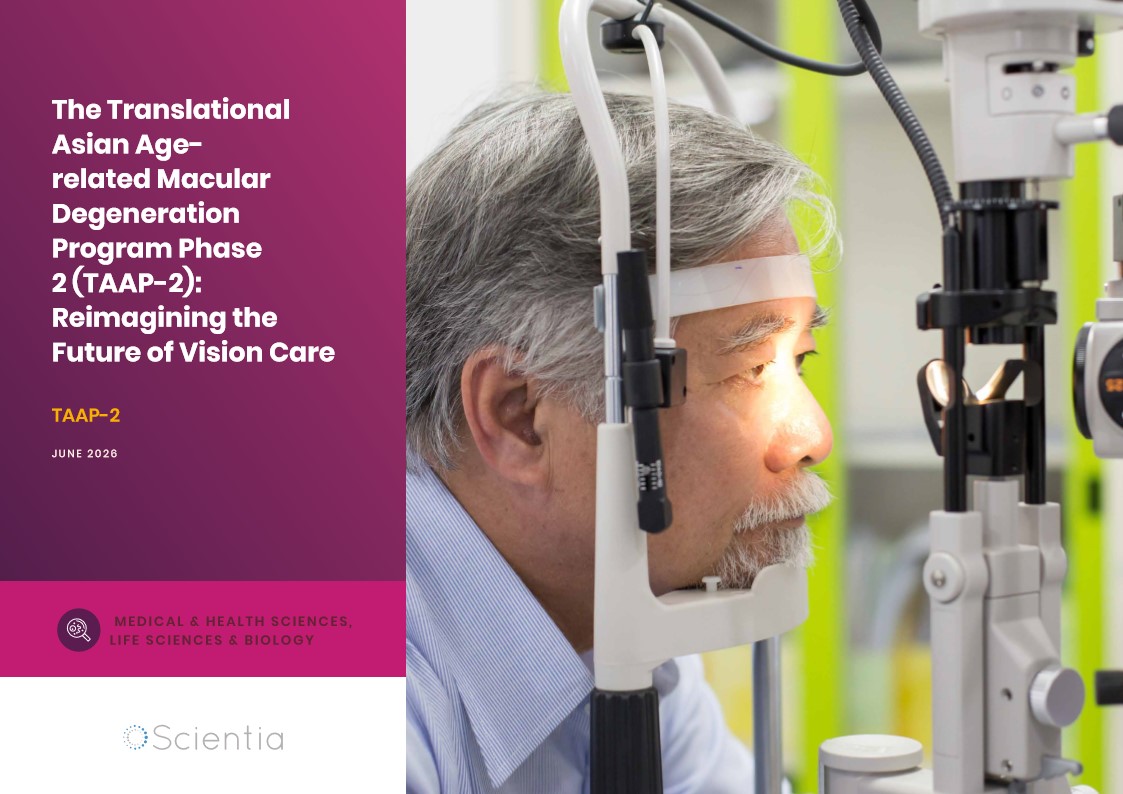
The Translational Asian Agerelated Macular Degeneration Program Phase 2 (TAAP-2): Reimagining the Future of Vision Care
Age-related macular degeneration, often abbreviated as AMD, is one of the leading causes of vision loss among older adults worldwide. In Asia, where populations are ageing rapidly, its impact is particularly profound. For many, the disease quietly erodes central vision, making everyday activities such as reading, driving, and recognising faces increasingly difficult. Against this backdrop, the Translational Asian Age-related Macular Degeneration Programme, or TAAP for short, has emerged as a bold and ambitious effort to confront the disease headon. Now in its second phase, TAAP-2 represents a significant evolution in both scientific scope and clinical ambition.
Ms. Aikaterini Dritsoula | Looking Beyond Snoring: How Hidden Airway Problems Shape Children’s Sleep
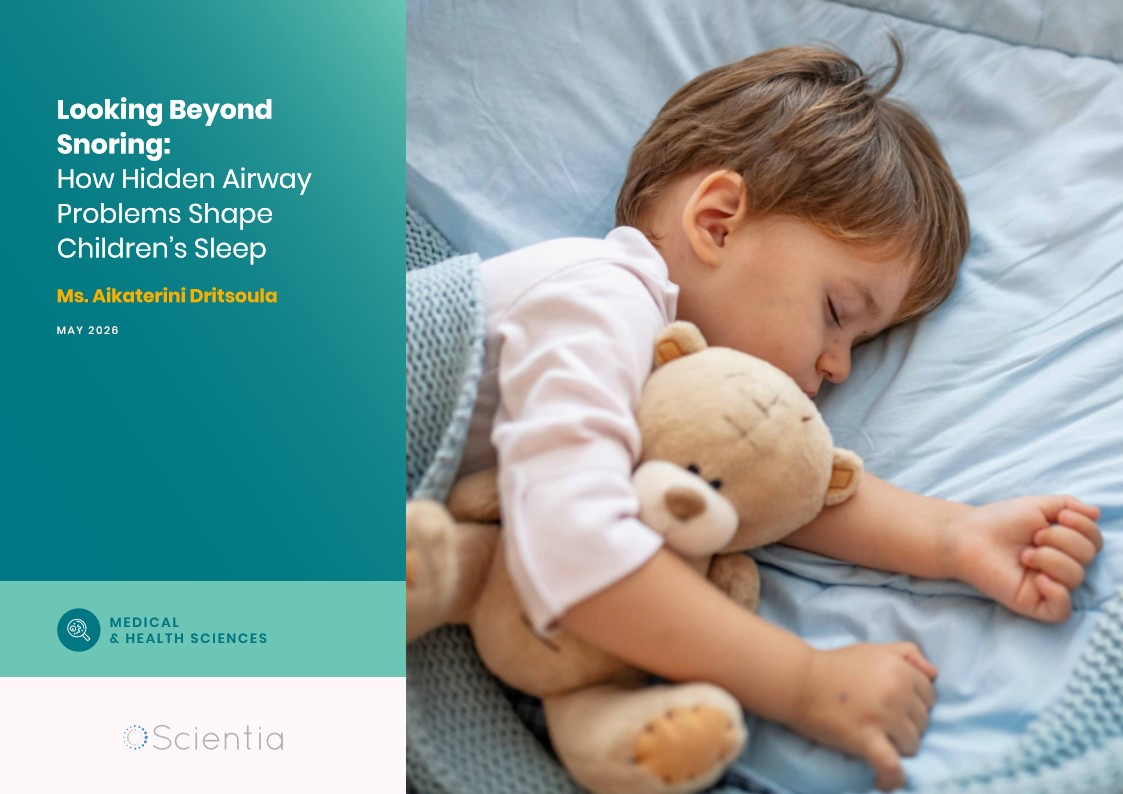
For many parents, a child’s snoring may seem harmless, even endearing. Yet in some cases, it signals something more serious. Obstructive sleep apnoea is a condition in which a child’s breathing is repeatedly disrupted during sleep. These interruptions can affect growth, behaviour, and learning. Children with this condition may toss and turn at night, struggle to concentrate during the day, or show signs of hyperactivity and fatigue. Traditionally, enlarged tonsils and adenoids have been seen as the main culprits. Surgery to remove them has long been considered the standard treatment. However, research led by Consultant ENT Surgeon Ms. Aikaterini Dritsoula of The Leeds Teaching Hospitals NHS Trust invites us to look deeper. Her work suggests that the story is often more complex, especially in very young children.
Professor Neil Coffee – Professor Vincent Versace | Mapping Health Access: Using Address-Level Intelligence for Smarter Services
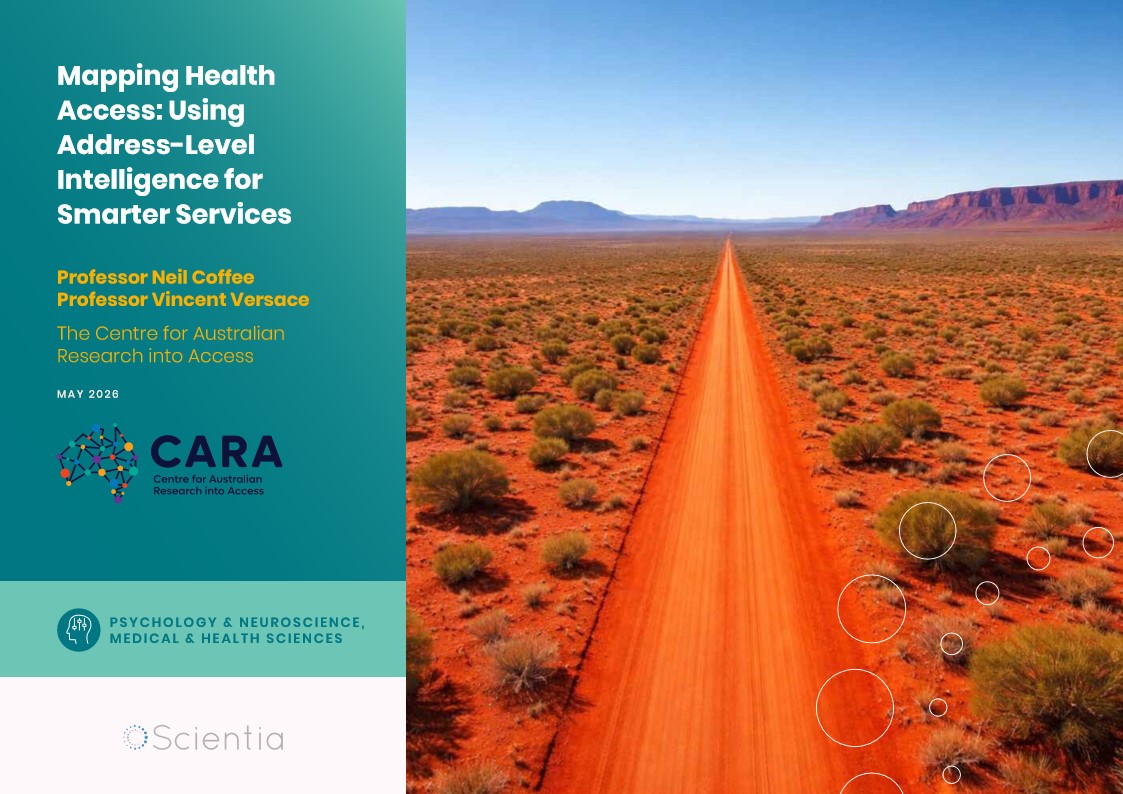
Accessing healthcare is a serious challenge for people living in rural and remote Australia. Large distances, sparse populations, and limited services can prevent residents from receiving care when they need it. Professors Neil Coffee and Vincent Versace at Deakin University’s Centre for Australian Research into Access (CARA) are leading research to model healthcare service access across the country, to provide new insights that can guide health planning and policy, as well as other services such as education. This work combines the curation of detailed address level residential dwellings and road network data to calculate access to service metrics (time and distance). These metrics are applied to the simulated residential dwelling population, to quantify the population with poor access to health services.