
Dr Xu Hannah Zhang | p38γ – It’s More than Just a Kinase
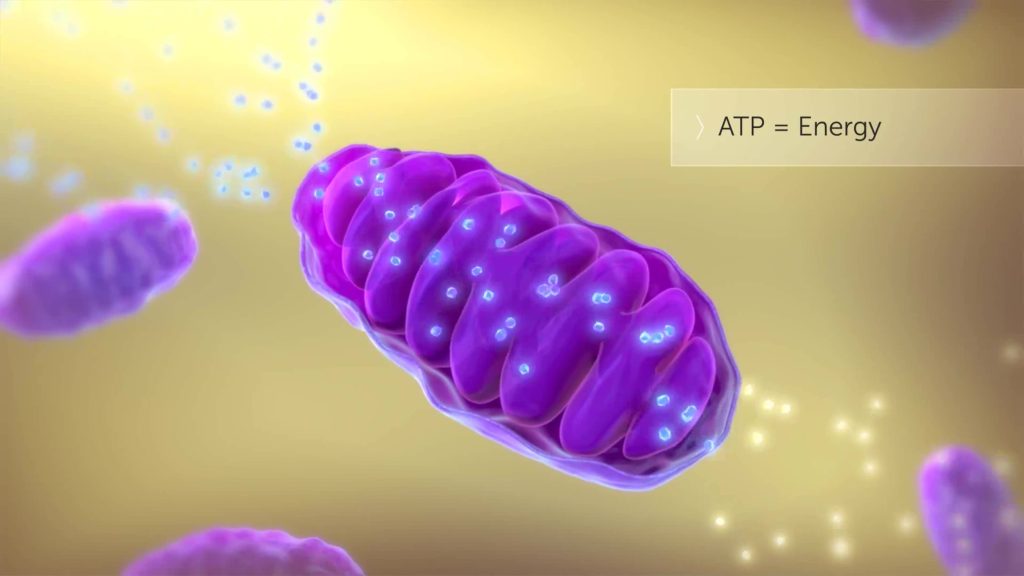
Kinases take energy from adenosine triphosphate molecules to fuel other molecules in performing vital biological processes. Dr Xu Hannah Zhang at City of Hope, Los Angeles, has worked with colleagues to better understand the p38 family of kinases, and in particular, how the p38γ isoform plays a role in cancer. Her work has shown – for the first time – that p38γ is much more than just a kinase, and her recent studies point to new avenues in the search for cutaneous T-cell lymphoma therapeutics.
The Vital Work of Kinases
Vital biological processes such as cell growth and division (cell proliferation) and cell death (apoptosis) are fueled by chemical energy. In our bodies, adenosine triphosphate (ATP) carries chemical energy from the food we eat. Kinases then transfer this energy in the form of phosphates from the ATP molecules and add it to other molecules (such as sugars and other proteins) in a process known as phosphorylation.
In humans, the p38 mitogen-activated protein kinases (MAPK) family of kinases consists of four isoforms (also known as variants): p38α, p38β, p38γ and p38δ. Each isoform performs unique functions at different developmental stages in the lifespan, and while p38α and p38β are found throughout the body, p38γ and p38δ are only found in specific tissues.
Links to Cancer
Our understanding of p38γ and p38δ is much less extensive than that of p38α and p38β. However, we do know that p38γ is associated with the spread of a diverse range of cancers (including colon, prostate, oesophagal, breast and liver cancers) and also cutaneous T-cell lymphoma, a rare form of cancer that begins in the white blood cells known as T cells and affects the skin, the body’s largest organ.
Dr Xu Hannah Zhang at City of Hope and her colleagues, under the leadership of Dr Steven T Rosen, Provost and Chief Scientific Officer of the institute, recently explored the role of p38γ in cutaneous T-cell lymphoma – and uncovered some novel and important findings in the process.
To Bind or Not to Bind?
Binding sites (so-called ‘pockets’) are the parts of a protein that allow them to accommodate via affinity the smaller, incoming molecules. As p38γ shares its ATP-binding site with other kinases, Dr Zhang and her colleagues also studied a non-ATP-binding site to help them to identify any specific effects of p38γ. They were particularly interested in a hydrophobic (water-repelling) non-ATP site capable of attracting lipid-like small molecules, such as those required to target p38γ for the cure of the diseases such as cutaneous T-cell lymphoma.
In the field of bioinformatics, molecular docking is one of the most commonly used virtual screening methods supporting drug discovery and can be used to investigate interactions between small molecules and proteins. This is the approach used by Dr Zhang and her colleagues to examine all 270,000 compounds currently available in the National Institute of Cancer Development Therapeutics Program library and assess the extent to which each would bind to the non-ATP site.
The 80 drugs identified as most effective in binding to the non-ATP site were investigated further using virtual screening to determine their potential toxicity to cutaneous T-cell lymphoma cells. Of these, Dr Zhang and her colleagues selected two small molecules: CSH71 and CSH18 (note that CSH18CN is a modified form of CSH18 to increase more specific binding). The researchers then confirmed the effects of both small molecules in the laboratory, using real samples.
As expected, both CSH71 and CSH18CN were toxic to cutaneous T-cell lymphoma cells. The effects of small molecule CSH71 were dose-dependent, but critically, at higher doses, CSH71 was found to bind to the ATP-binding site of p38γ and also the non-ATP site. This observation lead Dr Zhang and her colleagues to make the novel report that p38γ also functions as a non-kinase in T malignant cells, serving to drive cell proliferation. In contrast, normal healthy blood cells were spared because their p38γ is silent (not expressed).

Therapeutic and Other Implications
Dr Zhang and her colleagues propose that these new insights into how drugs can bind to the ATP-binding site and non-ATP binding site of p38γ will lead to treatment innovation in cutaneous T-cell lymphoma. Specifically, she proposes that targeting the non-ATP binding site will be a particularly fruitful avenue of exploration. It is also worth noting that her findings also validate the use of relatively new computational screening techniques in drug discovery with nuclear magnetic resonance Spectroscopy.
An Intriguing Idea
As a final aside, Dr Zhang notes that CSH71 treatment impacts olfactory receptors, which give rise to our sense of smell. The compound CSH18, as also studied by the researchers, impacts olfactory receptors but in a different collection to CSH71. This currently unpublished data from Dr Zhang lends support to the intriguing idea that each compound may trigger a unique ‘fingerprint’ for T cells to react to chemotaxis as part of its immune defence mechanism. She suggests that our current understanding of olfactory receptors may require revision, and further work to unpick how olfactory receptors interact with other cells and are regulated is now warranted.
SHARE

DOWNLOAD E-BOOK
REFERENCE
https://doi.org/10.33548/SCIENTIA884
MEET THE RESEARCHER
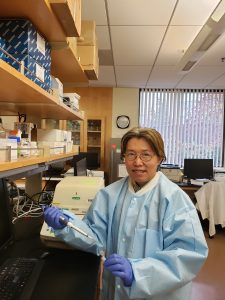 Dr Xu Hannah Zhang
Department of Hematology & Hematologic Cell Transplantation
City of Hope
Los Angeles, CA
USA
Dr Hannah Zhang completed her PhD in Biochemistry and Molecular Biology at Peking Union Medical College in China and then completed postdoctoral fellowships at Mount Sinai Hospital and Albert Einstein School of Medicine. She remained in New York to take up research appointments at Mount Sinai Hospital and Weill Cornell Medical College and was later appointed Assistant Research Professor at the prestigious City of Hope in Los Angeles. In 2022, Dr Zhang was appointed to her current position of Associate Research Professor. Her academic record of publications and funding is testimony to her extensive research experience and expertise in molecular biology, cell biology and immunology, and also her thorough knowledge of the molecular mechanisms of human disease.
CONTACT
E: xzhang51@jhmi.edu; xuzhang@coh.org
KEY COLLABORATORS
Hongzhi Li, PhD, City of Hope
Chih-Hong Chen, PhD, City of Hope
Xiwei Wu, PhD, City of Hope
David Horne, PhD, City of Hope
Sangkil Nam, PhD, City of Hope
Steven T. Rosen, MD, City of Hope
FUNDING
National Institutes of Health (National Cancer Institute)
Leukemia and Lymphoma Society
FURTHER READING
XH Zhang, CH Chen, H Li, et al., Targeting the non-ATP-binding pocket of the MAP kinase p38γ mediates a novel mechanism of cytotoxicity in cutaneous T-cell lymphoma (CTCL), FEBS Letters, 595(20), 2570–2592. DOI: https://doi.org/10.1002/1873-3468.14186

REPUBLISH OUR ARTICLES
We encourage all formats of sharing and republishing of our articles. Whether you want to host on your website, publication or blog, we welcome this. Find out more
Creative Commons Licence (CC BY 4.0)
This work is licensed under a Creative Commons Attribution 4.0 International License. 
What does this mean?
Share: You can copy and redistribute the material in any medium or format
Adapt: You can change, and build upon the material for any purpose, even commercially.
Credit: You must give appropriate credit, provide a link to the license, and indicate if changes were made.
SUBSCRIBE NOW
Follow Us
MORE ARTICLES YOU MAY LIKE
Professor Neil Coffee – Professor Vincent Versace | Mapping Health Access: Using Address-Level Intelligence for Smarter Services
Accessing healthcare is a serious challenge for people living in rural and remote Australia. Large distances, sparse populations, and limited services can prevent residents from receiving care when they need it. Professors Neil Coffee and Vincent Versace at Deakin University’s Centre for Australian Research into Access (CARA) are leading research to model healthcare service access across the country, to provide new insights that can guide health planning and policy, as well as other services such as education. This work combines the curation of detailed address level residential dwellings and road network data to calculate access to service metrics (time and distance). These metrics are applied to the simulated residential dwelling population, to quantify the population with poor access to health services.

Prof Candis M. Morello – Prof Jan D. Hirsch | Recent innovations in pharmacy education
A pioneering research team from the Skaggs School of Pharmacy and Pharmaceutical Sciences, University of California, San Diego, United States, has been instrumental in developing innovative techniques for teaching pharmacy students. The Next Generation of Pharmacist Educators (NextGen-RxEd) programme is a new method of training the next generation of pharmacist educators and academics. To help pharmacists and pharmacy students visualise the complex issues experienced by their patients, the team led by Professors Candis Morello and Jan Hirsch developed an innovative educational tool, called the Medication Therapy Management (MTM) Spider Web.

Identifying Nutritional Risk in Early Childhood: Insights from NutriSTEP®
Early childhood is a critical period for growth and development, yet many young children face nutritionrelated risks that can go unnoticed. Professor Janis Randall Simpson and colleagues have developed NutriSTEP®, validated and reliable screening tools that help identify potential nutritional concerns in toddlers and preschoolers. Their large-scale analysis of Canadian data reveals patterns in diet, behaviour, and food access that could help guide early interventions and support healthy development.

Dr Lynn George | A New Link Between Elongator Dysfunction and TDP-43 Loss in ALS
At Montana State University Billings, Dr Lynn George and her team are investigating the cellular mechanisms underlying amyotrophic lateral sclerosis (ALS). Using a new mouse model, their research reveals that disruption of the Elongator complex leads to nucleolar stress and the loss of the protein TDP-43 from motor neurons. These findings connect two major hallmarks of ALS and offer new insight into how the disease develops.