
Grandmothers: Innovation Through Tradition
Grandmother Project – Change through Culture (GMP) is an organisation dedicated to documenting the role of grandmothers and demonstrating the effectiveness of grandmother-inclusive strategies in improving the health and well-being of women, children, and adolescents. GMP’s groundbreaking work challenges conventional wisdom to transform community-based interventions in Africa and beyond, harnessing a powerful but often overlooked resource: the wisdom and influence of grandmothers.
Grandmothers as Guardians of Cultural Knowledge
In virtually all African and other non-Western cultures, grandmothers play a central role in the lives of women and children. As experienced and respected family members, grandmothers function as culturally designated advisors and caregivers across the life cycle. Grandmother Project – Change through Culture (GMP) is shining light on the powerful influence of grandmothers on the health and development of the younger generations, especially in societies in the Global South.
GMP executive director and co-founder, Dr Judi Aubel, is a leading public health anthropologist. In a recent literature review, Dr Aubel presents evidence on grandmothers’ roles and influence extending across the life cycle of women and children, from pregnancy and newborns to older children and adolescents. She examined research from 50 countries in Africa, Asia, Latin America, and Indigenous societies in Canada and Australia. She found that ‘across non-Western cultures, grandmothers play similar core roles in family systems related to the health and well-being of women, children and adolescents’. While there is increasing global health research on grandmothers’ roles with mothers and young children, the central role they play in socialising adolescent girls is consistently overlooked.
Research by evolutionary anthropologists tells us that grandmothers have played a central role within family systems since the earliest days of human life, promoting the development of younger generations (see the work of Evolutionary Behavioural Scientist, Professor Rebecca Sear). Despite their significant influence, grandmothers are consistently overlooked in research and interventions promoting women’s and children’s well-being. Dr Aubel attributes this oversight to several factors, including sexist and ageist biases that assume grandmothers are entrenched in tradition and resistant to change, and to the prevailing Eurocentric focus on the nuclear family in the social sciences and public health.
The use of the Western nuclear family model to orient both research and community interventions has contributed to a superficial and inadequate understanding of the social and cultural dynamics in non-Western societies where extended families and collectivist values shape women’s and children’s lives. In family systems in those cultures, strategies to support younger generations are influenced not only by parents but by various family members, including grandmothers. Many health and development interventions have failed to achieve their desired impact due to their inadequate understanding of family structure and power dynamics in societies in the Global South and their failure to recognise and involve crucial influencers within families and communities related to women and children’s well-being – the grandmothers.
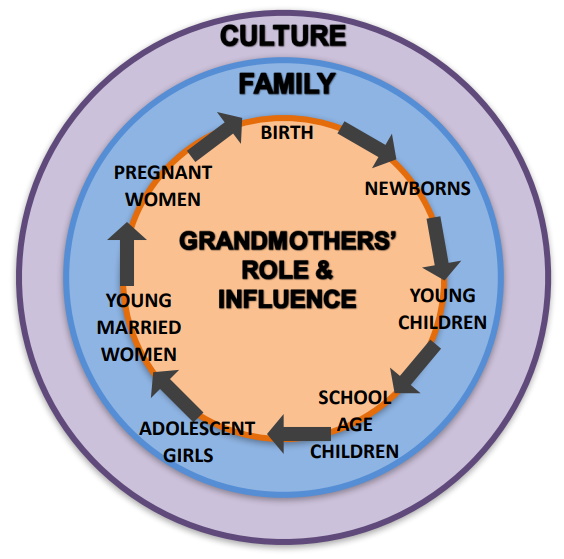
© 2013, Grandmother Project
Grandmothers as Catalysts for Change
It is often said that grandmothers are resistant to new ideas and to changing their practices. Dr Aubel contends, ‘The assumption that grandmothers are unwilling to change is not supported by evidence. Our research shows that when engaged respectfully and provided with new information, grandmothers are open to learning and adapting their practices to promote the well-being of their families’.
Dr Aubel and her GMP colleagues have developed several grandmother-inclusive community programmes in West Africa to improve the health and well-being of women, children, and adolescents. In each case, programme evaluations showed that the guardians of tradition are not averse to change.
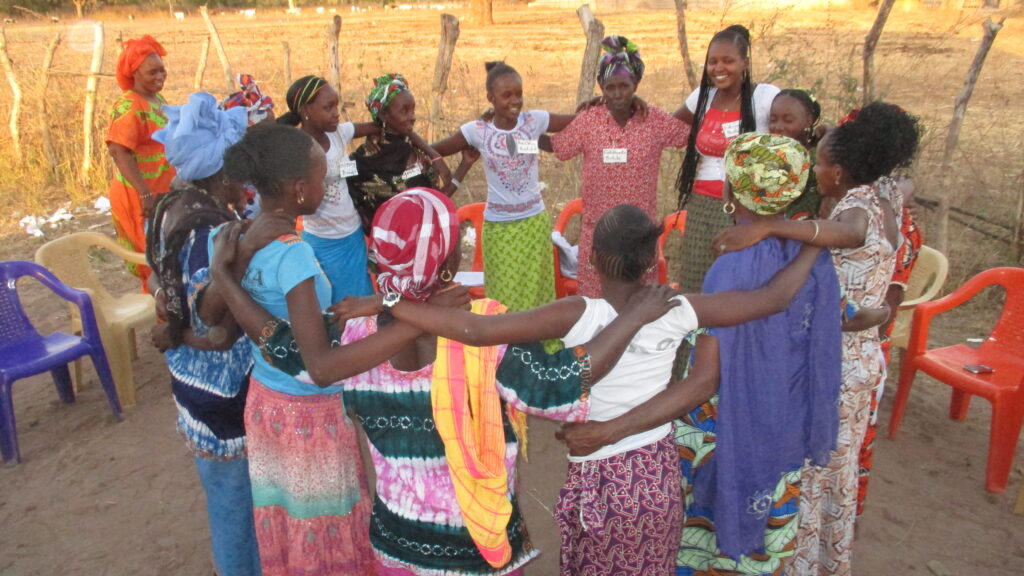
In Senegal, the innovative Girls’ Holistic Development (GHD) Programme has demonstrated the effectiveness of involving grandmothers to address girls’ education, child marriage, teen pregnancy, and female genital mutilation (FGM). The programme employs an intergenerational approach that recognises grandmothers’ cultural authority and respects their established role as advisors to girls and families. GHD engages grandmothers in participatory activities, including intergenerational forums, leadership training, and dialogue sessions with girls and mothers. These activities provide a platform for grandmothers to learn about the health and social issues affecting girls, share their experiences and perspectives, and collectively develop strategies to promote girls’ well-being.
The results of the GHD programme are striking. Grandmothers participating in the intervention showed increased knowledge, confidence, and openness to change regarding the targeted issues. They have also become active change agents in their communities by fostering dialogue between generations and advocating for girls’ rights and well-being, including encouraging the abandonment of harmful practices such as child marriage and FGM. Girls in intervention communities report stronger relationships with their grandmothers, who provide support and guidance as they navigate the challenges of adolescence.
An adolescent girl from an intervention community shared, ‘The grandmothers have changed. Now they speak softly and listen to us’. This shift in communication style has fostered more open and trusting relationships between generations, enabling grandmothers to better support and guide girls through the challenges they face. One grandmother leader involved in the programme, Egge, asserted, ‘Now I can stand on top of the roof and say what I think without trembling or crying. We have reinforced the solidarity and communication between us, and we have a common objective – to support our girls’.
An extensive evaluation of the GHD grandmother-inclusive programme by Georgetown University researchers (2020–2021) found significant shifts in social norms and practices related to girls’ rights and development. In communities where grandmothers were involved, rates of school dropout, early marriage, and FGM decreased, while girls’ school performance improved.
By recognising and leveraging the cultural authority of grandmothers, the GHD programme has contributed to shifting deeply entrenched social norms and practices that have long hindered girls’ well-being. For example, in communities where grandmothers were involved, only 18% of parents planned to cut future baby girls; in control communities, without grandmother involvement, many more parents (44%) said they intended to do so. Similarly, grandmothers’ influence on family decision-making to prevent child marriage was much greater in GHD communities where they were involved (42%) compared with only 7% in communities without the grandmother-inclusive strategy.
In Sierra Leone, GMP supported the implementation of a participatory grandmother-inclusive strategy in World Vision’s maternal and child nutrition project (2013–2016). A final evaluation by Emory University found significant improvements in diet during pregnancy, increased birth weights, and improved feeding practices with young children (compared to areas where the grandmother-inclusive strategy was not used).
GMP provided technical support to a nutrition project in Mali with Helen Keller International (2004–2005) to improve family nutrition practices with pregnant women and newborns. The final project evaluation compared communities with and without the grandmother-inclusive strategy. In communities with grandmother involvement, the evaluation showed that pregnant women made a significantly greater number of prenatal visits, had better diets, and had more time to rest during the day. There was also greater adoption of recommended exclusive breastfeeding practices with newborns. All these changes were associated with grandmothers’ improved advice to young mothers.
Use of the Grandmother Resource in Other Contexts
There are still relatively few programmes in the Global South addressing issues affecting women and children that explicitly and actively involve grandmothers. However, some examples from various cultural contexts provide additional evidence for the positive impact of grandmother-inclusive strategies. In Malawi, grandmother involvement has been shown to decrease teen pregnancy and HIV/AIDS transmission; in Australia, it has improved family practices with pregnant women and newborns in Aboriginal communities; in Kyrgyzstan, it has helped combat child marriage; and in Zimbabwe, it has been shown to provide support to individuals suffering from moderate mental health issues.
Lessons for Research and Practice
Grandmother Project – Change through Culture highlights the need for culturally grounded and inclusive approaches to address health and development issues affecting women and children. It provides evidence for moving beyond Western and superficial assumptions about family structures and roles, especially in non-Western settings. It shows the importance of understanding the specificities of wider and more collectivist family systems. Researchers and practitioners must engage with communities as partners, using participatory and ethnographic methods to ensure cultural relevance, build trust, and foster ownership.
In contrast to a widely used approach that focuses on deficits, GMP’s work exemplifies an assets-based approach that identifies community social resources and builds on them. Growing evidence shows that grandmothers are an abundant but underutilised cultural resource for promoting deep and sustained change in communities. GMP continues to conduct rigorous research and develop grandmother-inclusive interventions in various cultural contexts. As the world grapples with persistent challenges in maternal and child health, adolescent well-being, and gender equity, GMP or the organisation offers a promising path forward, harnessing the wisdom and influence of grandmothers to build culturally responsive, effective, and sustainable solutions.
Dr Aubel emphasises the importance of listening to communities and valuing their cultural resources: ‘We need to shift our mindset from seeing communities as recipients of interventions to recognising them as partners in the change process. By engaging grandmothers and other key influencers, we can develop more effective and sustainable solutions that build on the strengths and wisdom of communities themselves’.
Realising the full potential of this approach requires a fundamental shift in thinking about how to best promote change. It challenges assumptions and prioritises the structure, voices, and values of communities. Many assume that new technologies can catalyse widespread change. Based on the work of GMP, recognising, respecting and engaging grandmothers can unlock the potential for transformative and sustainable change. The positive outcomes of grandmother-inclusive interventions are a testament to the resourcefulness and resilience of communities themselves. GMP’s work is a testament to the power of Innovation through Tradition.
SHARE

DOWNLOAD E-BOOK

REFERENCE
https://doi.org/10.33548/SCIENTIA1052
MEET THE RESEARCHER
Grandmother Project – Change through Culture
Organisation Headquarters
Senegal
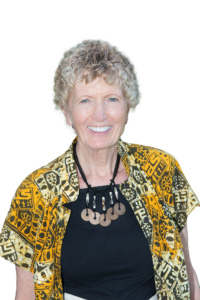
Grandmother Project is an American and Senegalese non-profit organisation dedicated to improving the lives of women, children and families by building on cultural context and the vital role of grandmothers. Co-founder and executive director Dr Judi Aubel, PhD, MPH, MA, is a public health anthropologist with extensive experience working in different cultural contexts in Africa, Asia and Latin America over many years. Her observations and insights into the power and influence of grandmothers underpin her pioneering work. In recognition of her contributions, Dr Aubel received the Hero Award from Trust Women, a joint venture between the Thomas Reuters Foundation and the International Herald Tribune. In 2012, Dr Aubel was appointed as an Ashoka Fellow, and in 2016, she was appointed a BBC 100 Women laureate.
CONTACT
E: judiaubel@grandmotherproject.org
W: https://grandmotherproject.org/
X: @TheGM_Project
F: https://www.facebook.com/GrandmotherProjectChangeThroughCulture
FURTHER READING AND RESOURCES
Grannies Fixing the World (BBC documentary)
10 Lives, 10 Stories, One Message: Grandmother Project-Change through Culture (Youtube video)
J Aubel, Grandmothers – a cultural resource for women and children’s health and well-being across the life cycle, Global Health Promotion, 2023;0(0). DOI: https://doi.org/10.1177/17579759231191494
J Aubel, D Chibanda, The neglect of culture in global health research and practice, BMJ Global Health, 2022, 7, e009914. DOI: https://doi.org/10.1136/bmjgh-2022-009914
J Aubel, SL Martin, K Cunningham, Introduction: A family systems approach to promote maternal, child and adolescent nutrition, Maternal & Child Nutrition, 2021, 17(1), e13228. DOI: https://doi.org/10.1111/mcn.13228
J Aubel, Grandmothers – a neglected family resource for saving newborn lives, BMJ Global Health, 2021, 6(2), e003808. DOI: https://doi.org/10.1136/bmjgh-2020-003808
J Aubel, The role and influence of grandmothers on child nutrition: culturally designated advisors and caregivers, Maternal & Child Nutrition, 2012, 8(1), 19–35. DOI: https://doi.org/10.1111/j.1740-8709.2011.00333.x
Catalyzing Change for Girls: Grandmothers Support Girls’ Holistic Development, 2021. Grandmother Project – Change through Culture.
REPUBLISH OUR ARTICLES
We encourage all formats of sharing and republishing of our articles. Whether you want to host on your website, publication or blog, we welcome this. Find out more
Creative Commons Licence (CC BY 4.0)
This work is licensed under a Creative Commons Attribution 4.0 International License. 
What does this mean?
Share: You can copy and redistribute the material in any medium or format
Adapt: You can change, and build upon the material for any purpose, even commercially.
Credit: You must give appropriate credit, provide a link to the license, and indicate if changes were made.
SUBSCRIBE NOW
Follow Us
MORE ARTICLES YOU MAY LIKE

Dr David Hansen – Abhishek Juneja | Coming of Age: Active Balancing in Adolescence
Adolescence, the transitional stage between childhood and adulthood, comes with challenges as well opportunities for growth and learning.

Professor Deanna Sellnow | How Strategic Communication Can Save Lives When Crisis Hits
Professor Deanna Sellnow from Clemson University argues that crisis and risk communication research must evolve beyond simply describing and deconstructing problems to actively empowering people protect themselves and their communities. In an era of increasing globalisation, she proposes that researchers adopt learner- and learning-centered approaches to ensure communication does not simply inform people about dangers, but also teaches them how to respond effectively (e.g., to reduce risks, mitigate harms, improve safety, save lives) and why.
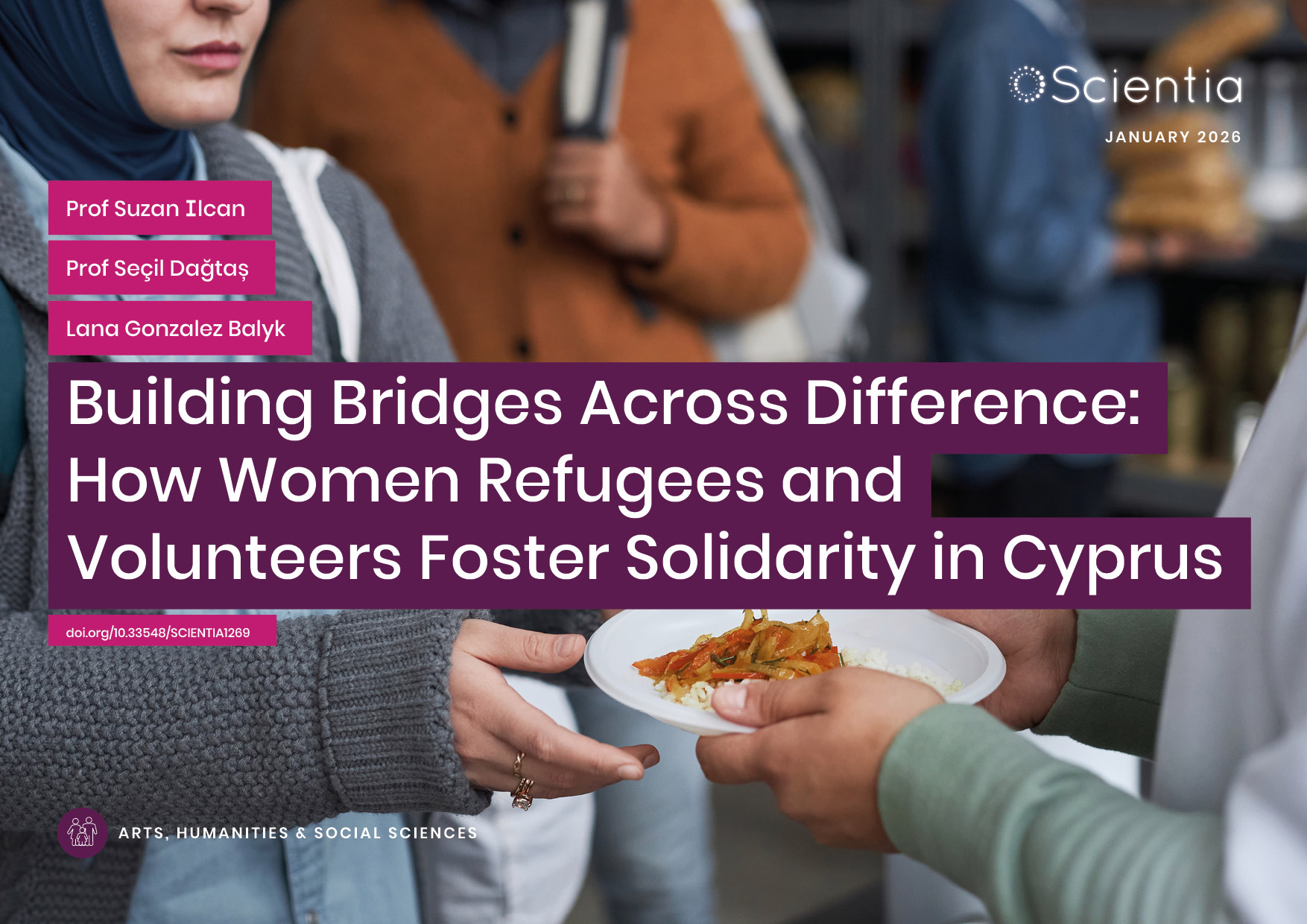
Dr Suzan Ilcan | Building Bridges Across Difference: How Women Refugees and Volunteers Foster Solidarity in Cyprus
Across Europe, refugees and asylum seekers often find themselves in precarious situations, facing limited access to housing, employment, education, and legal protection. While government responses have frequently proved inadequate, grass-roots movements have emerged to fill the gaps. These citizen-led initiatives represent more than simple charity; they embody new forms of political engagement where refugees and volunteers work together across differences to create useful change.
This issue is particularly pressing in the Republic of Cyprus (RoC), where the island’s own history of division and displacement shapes contemporary responses to newcomers. Since 2015, the RoC has experienced a dramatic increase in refugee arrivals, making it the EU member state with the highest number of asylum applications per capita in 2021. Yet despite – or perhaps because of – this pressure, women in the Cypriot city of Paphos have created remarkable spaces of collaboration and mutual support.

Prof Han Lamers | How Early Modern Scholars Used Ancient Greek to Shape Their National Identities
In early modern Europe, ancient Greek was far more than a scholarly pursuit. Intellectuals from many regions discovered that demonstrating resemblance of their native languages to Greek could elevate their cultural status, support claims of superiority over rival languages, and even advance religious and political causes. Sometimes called ‘Hellenising’, this phenomenon saw scholars from Italy to France, Germany, and the Netherlands, deliberately revealing —and often inventing— Greek features in their mother tongues.
Understanding how this worked requires examining specific cases where scholars used Greek to reshape their languages and advance their own agendas.