
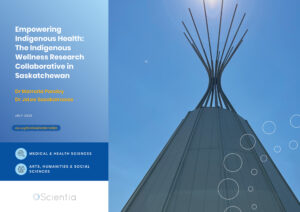
Dr JoLee Sasakamoose – Dr Mamata Pandey | Empowering Indigenous Health: The Indigenous Wellness Research Collaborative in Saskatchewan
The Indigenous Wellness Research Collaborative is a transformative alliance dedicated to advancing health systems and service delivery for Indigenous communities across Saskatchewan. Founded a decade ago and co-led by Dr Mamata Pandey, a research scientist at the Saskatchewan Health Authority, and Dr JoLee Sasakamoose (M’Chigeeng First Nation), Canadian Institute of Health Research Chair in Indigenous Wellness and Health Equity at the University of Regina, their team’s work is rooted in a commitment to Indigenous leadership and community-defined wellness goals. Guided by the Cultural Responsiveness Framework, the Collaborative prioritises creating ethical spaces that serve as a middle ground for respect, reciprocity, and authentic partnerships. The team employs a strengths-based approach to health research, centering Indigenous methodologies that respect the interconnectedness of spiritual, mental, emotional, and physical well-being.
Collaborative Approach
Health research agendas are shaped through collaborative discussions with Indigenous communities, academic partners, and health authority representatives from multiple disciplines and sectors. Drs Pandey and Sasakamoose engage with diverse stakeholders, leveraging the existing health infrastructure and resources within communities and the health authority to co-develop and implement interventions to address community-identified health priorities. The unique partnership between academics, clinicians, and community partners has enhanced research, clinical capacity, and broadened the team’s funding eligibility.
The research results provide insights into the effectiveness of the interventions and create opportunities for the upscale and advocacy of practical, community-driven solutions. Research is a tool to identify community health priorities, develop collaboration with multi-disciplinary teams, access funding, and leverage research results for sustainable funding. Guided by the Federation of Sovereign Indigenous Nations Knowledge Keeper Council and the Western Region III Métis Nation-Saskatchewan, the research team fosters community-driven, culturally responsive health research that centres Indigenous knowledge and priorities.
Building Community Capacity and Self-Determination
The team extends its work beyond research by restoring Indigenous capacity with tools and training to support self-determined healthcare. Through training programs, local clinical teams gain skills in program auditing, data stewardship, and culturally safe care. These investments strengthen community resilience and enable independent monitoring, adaptation, and advocacy for local health needs.
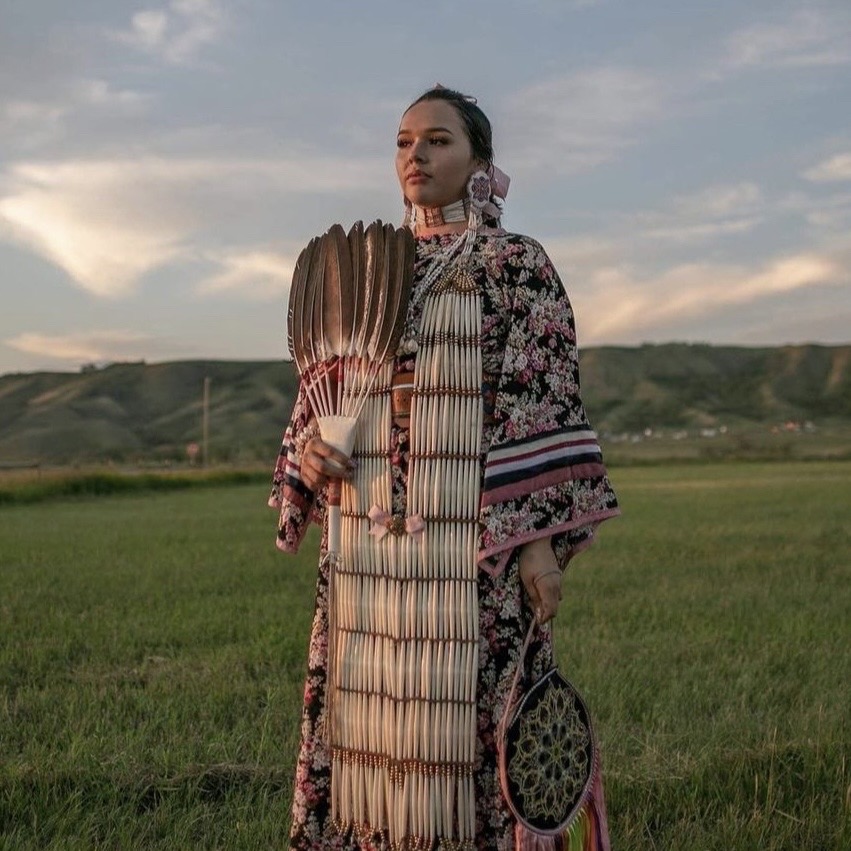
Photo by Jayda Delorme.
Real-World Impact at Multiple Levels
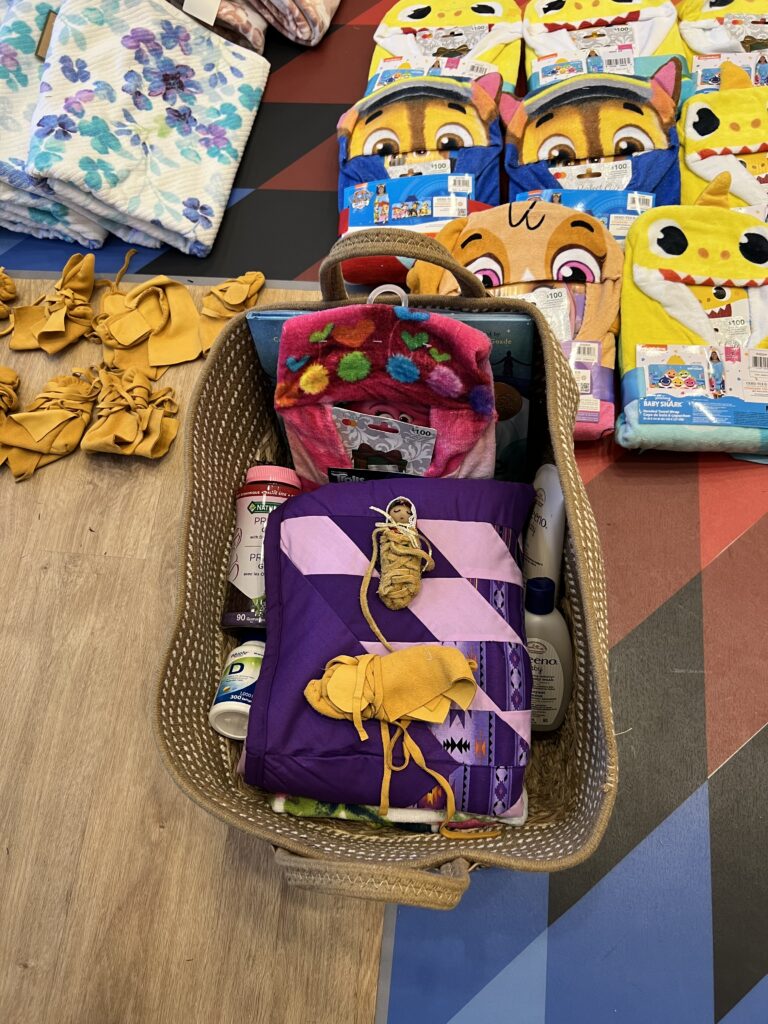
Over the past decade, the team has led several collaborative projects across key areas of health. Initiatives such as Okawimaw Kanosimowin, the Mother’s Bundle, highlight the integration of traditional knowledge with Western science in culturally grounded maternal care and harm reduction initiatives. This holistic approach was recently recognised when the project was shortlisted for a prestigious Nature Award, honouring its innovative blend of Indigenous knowledge and clinical practices to improve maternal and child health outcomes. The team’s work has delivered measurable, positive impacts at multiple levels:
- Community Level: These projects elevate Indigenous leadership in setting health research priorities, aligning with cultural values. Community health teams have strengthened their capacity to manage chronic conditions and advocate for infrastructure improvements, laying the groundwork for self-sustaining wellness. Their achievements have drawn national and international recognition, showcasing community resilience and success.
- Health System Level: The work has fostered stronger collaboration between Indigenous communities and clinical teams, leading to low-barrier, destigmatized approaches to care. By integrating culturally relevant practices into both care delivery and administration, healthcare systems have become more accessible, equitable, and responsive to Indigenous needs.
- Academic Level: By blending Indigenous and Western methodologies, the team is redefining health research standards. This approach advances Indigenous health scholarship and inspires a new generation of researchers while encouraging institutions to adopt culturally grounded frameworks.
- Individual Level: Projects deliver tangible health benefits, improving access, continuity of care, and treatment outcomes. Many participants go on to become health advocates—sharing knowledge, supporting peers, and helping to drive a broader movement for Indigenous wellness.
Future Directions and Scaling Impact
Looking ahead, the team is committed to deepening its impact by expanding partnerships with Indigenous communities, elevating the voices of youth and Knowledge Keepers, and advancing new initiatives in food sovereignty, Eldercare, youth diabetes prevention, and land-based healing. Guided by community-defined priorities and key performance indicators, the team’s research will continue to drive sustained, transformative change across health systems. The team is working to scale successful projects beyond Saskatchewan. By sharing outcomes nationally and shaping policy, they have secured funding for Indigenous-led health initiatives that serve as models for culturally responsive health research across Canada and internationally. Policymakers, researchers, and community leaders are invited to join in advancing a future where Indigenous knowledge and modern healthcare systems grow in partnership.
A Vision for Culturally Grounded, Resilient Health Systems
The Indigenous Wellness Research Collaborative is transforming health research and service delivery to be inclusive, community-driven, and resilient. Its projects show how research-informed programming can meet the specific needs of Indigenous populations while supporting the health system in becoming more agile and responsive. By addressing systemic barriers and guiding innovation in infrastructure and resources, the Collaborative offers strategies to strengthen equitable healthcare access for Indigenous communities. Grounded in Indigenous leadership and cultural values, it lays the foundation for sustainable wellness. As the Collaborative grows, we call on institutions and policymakers to adopt Indigenous-led research models and help build a health system that honours the strengths and aspirations of all communities.
SHARE

DOWNLOAD E-BOOK
REFERENCE
https://doi.org/10.33548/SCIENTIA1190
MEET THE RESEARCHERS

Dr JoLee Sasakamoose
Faculty of Education, University of Regina, Saskatchewan, Canada
Dr JoLee Sasakamoose, a member of M’Chigeeng First Nation in Ontario, is a Full Professor in the Faculty of Education, Department of Educational Psychology and Counselling, at the University of Regina, where she has served since 2011. She was Department Chair from 2020 to 2024. She holds the CIHR Research Chair in Applied Public Health – Indigenous Wellness and Health Equity, leading nationally recognised, community-engaged research focused on Indigenous health equity and the decolonisation of mental health systems.
Dr Sasakamoose earned her PhD from Michigan State University and is a leading expert in culturally responsive, trauma-informed, and strengths-based approaches to Indigenous mental health and maternal wellness. In partnership with Dr. Mamata Pandey of the Saskatchewan Health Authority, she co-leads transformative research on improving maternity care for Indigenous women by bridging Western clinical practices and First Nations birthing knowledge. Their work has garnered millions in competitive funding and has been widely published in peer-reviewed journals and edited volumes.
In recognition of their impact, Dr Sasakamoose and Dr Pandey were nominated for the 2023 Children’s Healthcare Canada Award for Leadership in Family and Person-Centred Care.
CONTACT
E: Jolee.sasakamoose@uregina.ca
W: https://www.uregina.ca/education/faculty-staff/faculty/sasakamoose-jolee.html

Dr Mamata Pandey
Saskatchewan Health Authority, Saskatchewan, Canada
Dr Mamata Pandey is a research scientist at Saskatchewan Health Authority in Saskatoon, Saskatchewan, a province in Western Canada. Originally trained as a clinical psychologist in India, Dr. Mamata Pandey completed her second Master’s and PhD in Experimental and Applied Psychology from the University of Regina in 2013 and a Post-Doctoral Fellowship at the Indigenous Peoples’ Health Research Center, Regina, Canada in 2014. Having lived and worked in three different countries (India, Switzerland, and Canada), she has knowledge of diverse healthcare systems and services. Her expertise lies in engaging Indigenous people, refugees, and immigrants in health research. Taking a patient-centered approach, she employs health research to identify innovative solutions to improve the quality of care delivered. In the past decade, working in collaboration with multi-disciplinary and multi-sectoral teams, she utilised research results to inform health programming, advocate for vulnerable populations, and address emerging healthcare needs.
CONTACT
E: mamata.pandey@saskhealthauthority.ca
https://reginaiwc.ca/mamata-pandey
FUNDING
SHRF Jim Pattison Hospital Foundation (Grant #6093)
Canadian Institutes of Health Research (Grant #12851241)
FURTHER READING
J Sasakamoose, S Pete, F O’Soup, T Wolfe, From trauma to resilience: advancing cultural responsiveness and equity in the Muskowekwan First Nation’s healing journey, Frontiers in Public Health, 2024, 1419250. DOI: https://doi.org/10.3389/fpubh.2024.1419250
M Pandey, L Smith, N MacZek, et al., Indigenous birth support worker (IBSW) program evaluation: a qualitative analysis of program workers and clients’ perspectives, BMC Pregnancy and Childbirth, 2023, 23, 367. DOI: https://doi.org/10.1186/s12884-023-05695-2
M Pandey, M Clark, E Beresh, et al., Wellness Wheel Clinics: A First Nation community-partnered care model improving healthcare access; healthcare providers’ perspectives, Health Promotion International, 2023, 38(4), daad079. DOI: https://doi.org/10.1093/heapro/daad079
M Pandey, N Reed, S Konrad, et al., Hepatitis C Care and Elimination in Ahtahkakoop Cree Nation: An Indigenous Community-Led Model, Clinical Liver Disease, 2021, 17(4), 320–325. DOI: https://doi.org/10.1002/cld.1117
J Sasakamoose, G Brace, Indigenous Cultural Responsiveness Theory (ICRT): A New Tool for Improving Health Outcomes for FNMI (First Nations, Metis and Inuit) Peoples. Published by Indigenous Wellness Research Community Network & Wellness Wheel Medical Clinic, Regina, Saskatchewan, Canada, 2018.


REPUBLISH OUR ARTICLES
We encourage all formats of sharing and republishing of our articles. Whether you want to host on your website, publication or blog, we welcome this. Find out more
Creative Commons Licence (CC BY 4.0)
This work is licensed under a Creative Commons Attribution 4.0 International License. 
What does this mean?
Share: You can copy and redistribute the material in any medium or format
Adapt: You can change, and build upon the material for any purpose, even commercially.
Credit: You must give appropriate credit, provide a link to the license, and indicate if changes were made.
SUBSCRIBE NOW
Follow Us
MORE ARTICLES YOU MAY LIKE

Assoc Prof. Nicholas Brown | Rethinking Prostate Care: A New Frontier in Treating Benign Prostatic Hyperplasia
For millions of men, ageing brings with it a set of frustrating and often disruptive urinary symptoms. These symptoms, caused by benign prostatic hyperplasia, or BPH, can affect sleep, confidence, and overall quality of life. Traditionally, treatment follows a familiar path. Patients begin with medications, often for years, and may eventually progress to surgery if symptoms worsen. Yet this pathway is not without its drawbacks. Medications can cause side effects, while surgery carries risks and recovery time. In recent years, a minimally invasive interventional radiology procedure called prostate artery embolisation, or PAE, has begun to challenge this traditional model. At the forefront of this shift is a collaborative research group, led by Dr. Nicholas Brown of the University of Queensland, whose series of P-EASY studies has explored whether PAE could transform how BPH is treated, particularly at earlier stages.

Jean Lycke | Addressing Unmet Medical Needs in Mucosal Disease: A Close-to-Market Innovation Approach
Recurrent Aphthous Stomatitis (RAS) is an oral condition characterized by one or several painful mucosal ulcers. RAS affects a large proportion of the population and has a point prevalence of approximately 2–3%, daily. The etiology remains unknown, and there is currently no curative treatment. Most patients experience recurring episodes over time, with each episode typically lasting up to a week. Here, we describe the development of a mucoadhesive patch which, when applied over a RAS ulcer, provides rapid pain relief. The patch is easy for patients to apply when symptoms begin and has the potential to be used as an over-the-counter product. The development of the Mucocort mucoadhesive patch is an example of a Close-to-Market innovation strategy that embraces simplicity within a complex healthcare system. By simplifying the product concept, the team has reduced the number of regulatory steps required before market approval. This MedTech/Pharma innovation model, known as the “4R” framework – Re-purposing, Re-formulation, Re-positioning, and Re-patenting – has guided the program from concept to commercialization. In addition to the biodegradable mucoadhesive patch developed for RAS ulcers, the team is extending the innovation concept to a mucoadhesive gel formulation for the prevention and treatment of chemotherapy-induced mucositis. This gel-based program is being commercialized separately through MucoShield.
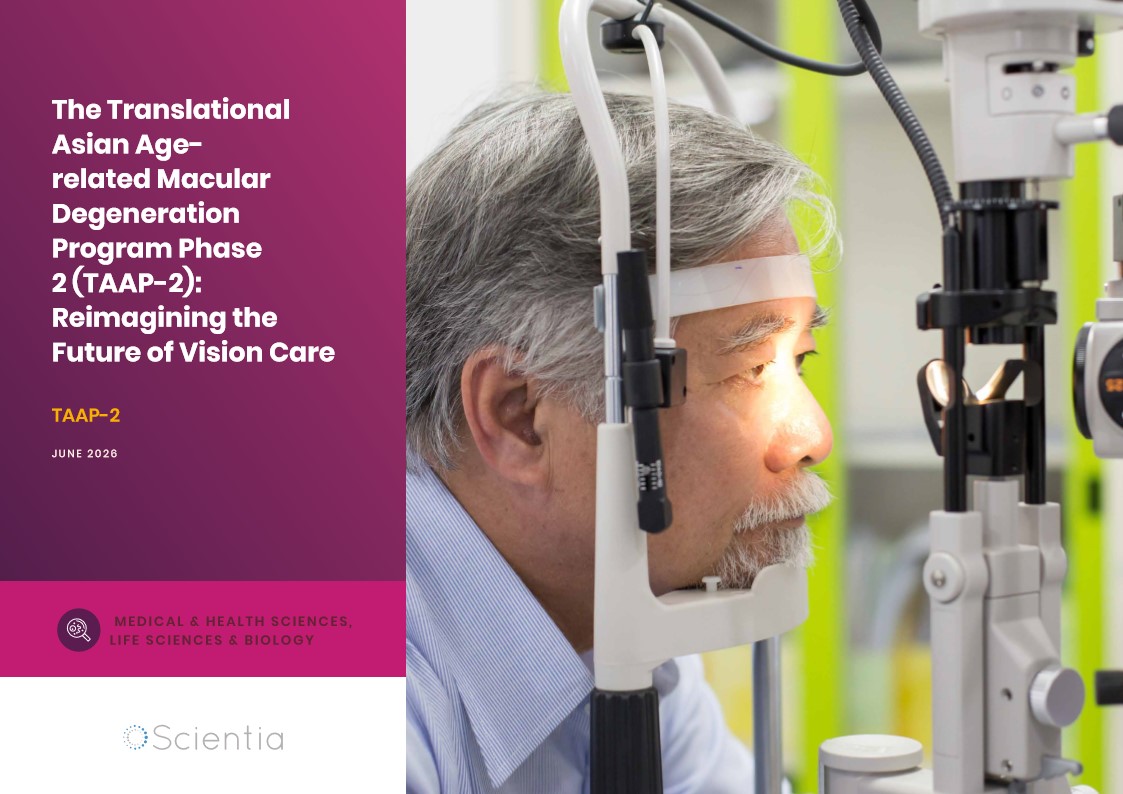
The Translational Asian Agerelated Macular Degeneration Program Phase 2 (TAAP-2): Reimagining the Future of Vision Care
Age-related macular degeneration, often abbreviated as AMD, is one of the leading causes of vision loss among older adults worldwide. In Asia, where populations are ageing rapidly, its impact is particularly profound. For many, the disease quietly erodes central vision, making everyday activities such as reading, driving, and recognising faces increasingly difficult. Against this backdrop, the Translational Asian Age-related Macular Degeneration Programme, or TAAP for short, has emerged as a bold and ambitious effort to confront the disease headon. Now in its second phase, TAAP-2 represents a significant evolution in both scientific scope and clinical ambition.
Ms. Aikaterini Dritsoula | Looking Beyond Snoring: How Hidden Airway Problems Shape Children’s Sleep
For many parents, a child’s snoring may seem harmless, even endearing. Yet in some cases, it signals something more serious. Obstructive sleep apnoea is a condition in which a child’s breathing is repeatedly disrupted during sleep. These interruptions can affect growth, behaviour, and learning. Children with this condition may toss and turn at night, struggle to concentrate during the day, or show signs of hyperactivity and fatigue. Traditionally, enlarged tonsils and adenoids have been seen as the main culprits. Surgery to remove them has long been considered the standard treatment. However, research led by Consultant ENT Surgeon Ms. Aikaterini Dritsoula of The Leeds Teaching Hospitals NHS Trust invites us to look deeper. Her work suggests that the story is often more complex, especially in very young children.