
Dr Nadine Abi-Jaoudeh | New Hope for the Improvement of Liver Cancer Treatment: A Novel Platform for Drug Delivery
Dr Nadine Abi-Jaoudeh and Dr David Imagawa of the University of California Irvine are working with a team of researchers dedicated to improving treatment options and outcomes in hepatocellular carcinoma – a serious form of cancer associated with long-term liver diseases. Their early-stage research offers important hope that in the future, effective drugs such as sorafenib and regorafenib may be utilised in trans-arterial chemoembolisation thanks to their development of a novel platform for drug delivery.
Treating Hepatocellular Carcinoma
Hepatocellular carcinoma (HCC), more commonly known as liver cancer, is the fifth cause of cancer death worldwide. This serious form of cancer is most frequently found in individuals with underlying conditions and its incidence is increasing. As with all cancers, positive outcomes are most likely when the cancer is detected early and treatment commences rapidly.
An approach known as trans-arterial chemoembolisation (TACE) is recommended by several clinical guidelines for the treatment of intermediate HCC (defined as the presence of multiple lesions in the liver but with preserved liver function and absence of cancer-related symptoms). TACE is a minimally invasive procedure involving the delivery of chemotherapy directly to the tumour alongside embolic agents to block the blood supply from the branches of arteries that feed the tumour.
Despite being a recommended first-line approach for intermediate HCC, a standard methodology for TACE has not been established. In other words, the specific treatments that patients may receive can vary widely, with the upshot that outcomes can likewise vary considerably.
Dr Nadine Abi-Jaoudeh, Dr Imagawa of the University of California Irvine, and the dedicated team of researchers at Bruin Biosciences considered the evidence in support of the efficacy of TACE. They noted that several clinical trials have not demonstrated an added benefit by the addition of chemotherapy to the embolic agents in TACE. They were also concerned to note that the drugs used for chemotherapy as part of TACE (such as doxorubicin) are already known to be ineffective in the treatment of HCC.

Credit: https://bruinbio.com
How Can Outcomes be Improved?
The use of drugs with established efficacy in HCC would likely improve the treatment outcomes of TACE – if they can be safely incorporated into the intervention. Drugs that can inhibit the growth of new blood vessels (known as anti-angiogenic agents) effectively impair tumour growth by preventing the tumour from recruiting and growing blood supply. However, to be used during TACE, drugs need to be water-soluble, positively charged, and able to be loaded onto the tiny beads (microspheres) that block the arteries and slowly release from the microspheres over time into the tissue (elution process). For example, sorafenib and regorafenib are two drugs that can be very useful in the treatment of HCC, but due to their lipophilic nature and neutral charge, they cannot currently be loaded or eluted on the microspheres and are not part of TACE.
A Novel Platform
To overcome this critical challenge to effective HCC treatment, the Bruin Biosciences team developed and patented a platform specifically designed to allow the loading and elution of lipophilic and/or neutral drugs such as sorafenib and regorafenib on microspheres for use in TACE. In 2023, they published a study in which they used the established VX2 rabbit tumour model to test the delivery of the targeted therapies loaded onto the beads.
The outcomes were highly promising. First, the researchers confirmed that their idea of delivering lipophilic drugs via microspheres was achievable. Second, analyses confirmed that both sorafenib and regorafenib were effectively delivered directly to the tumours with minimal escape into the blood circulation.

Excitingly, the improvement of TACE through the use of lipophilic drugs may allow for better outcomes for patients with larger or more persistent tumours. Furthermore, the more targeted delivery of drugs such as sorafenib via TACE as opposed to oral or intravenous systemic administration will likely reduce the often significant side effects associated with these treatments. Of course, when side effects are reduced, the risk of dose reductions, interruptions, and poor patient compliance is also reduced.
Future research will need to expand the testing and validation of the platform in further animal and, eventually, human studies before the intervention can be offered as standard of care. Nonetheless, this early-stage work provides important hope that the treatment of HCC can be dramatically improved.
SHARE

DOWNLOAD E-BOOK

REFERENCE
https://doi.org/10.33548/SCIENTIA1103
MEET THE RESEARCHER

Dr Nadine Abi-Jaoudeh
Department of Radiological Sciences, University of California Irvine, Orange, CA, USA
Dr Nadine Abi-Jaoudeh is an American and Canadian board-certified vascular and interventional radiologist at the University of California Irvine. Dr Abi-Jaoudeh completed her medical degree at the University of Montreal, then took up an internship and residency at the University of Laval in Québec, and a fellowship in interventional radiology at the University of Virginia in Charlottesville. She then joined the National Institutes of Health, where she was a principal and associate investigator on several human trials. She also completed multiple animal and translational studies. In 2015, Dr Abi-Jaoudeh joined the University of California Irvine where she has progressed the research program. In 2018, she became the director of clinical research in the Department of Radiology. In late 2020, she became section chief of interventional radiology. She served as the inaugural chair of the diversity and inclusion committee of radiology from 2021–2024. She is principal investigator on multiple phase I, II and III trials as well as pre-clinical studies.
CONTACT
E: nadine@hs.uci.edu
W: https://faculty.uci.edu/profile/?facultyId=6155
LinkedIn: https://www.linkedin.com/in/nadine-abi-jaoudeh-55681066
KEY COLLABORATORS
Dr Ben Sadeghi, Department of Radiological Sciences, University of California Irvine, Orange, CA, USA
Dr Hanna Javan, Department of Radiological Sciences, University of California Irvine, Orange, CA, USA
Dr Jim Na, Cullgen, Inc., San Diego, CA, USA
Dr Graham Beaton, Epigen Biosciences, San Diego, CA, USA
Dr Fabio Tucci, Epigen Biosciences, San Diego, CA, USA
Dr Satheesh Ravula, Epigen Biosciences, San Diego, CA, USA
Dr David K Imagawa, Department of Surgery, University of California Irvine, Orange, CA, USA
FUNDING
Funding for this work was provided by Dr David KImagawa, a seed grant from the Department of Radiological Sciences.
FURTHER READING
N Abi-Jaoudeh, et al., Drug-Eluting Embolic Loaded with Tyrosine Kinase Inhibitor Targeted Therapies for Transarterial Chemoembolization in a VX2 Model, Cancers, 2023 15(12), 3236. DOI: https://doi.org/10.3390/cancers15123236
REPUBLISH OUR ARTICLES
We encourage all formats of sharing and republishing of our articles. Whether you want to host on your website, publication or blog, we welcome this. Find out more
Creative Commons Licence (CC BY 4.0)
This work is licensed under a Creative Commons Attribution 4.0 International License. 
What does this mean?
Share: You can copy and redistribute the material in any medium or format
Adapt: You can change, and build upon the material for any purpose, even commercially.
Credit: You must give appropriate credit, provide a link to the license, and indicate if changes were made.
SUBSCRIBE NOW
Follow Us
MORE ARTICLES YOU MAY LIKE

Assoc Prof. Nicholas Brown | Rethinking Prostate Care: A New Frontier in Treating Benign Prostatic Hyperplasia
For millions of men, ageing brings with it a set of frustrating and often disruptive urinary symptoms. These symptoms, caused by benign prostatic hyperplasia, or BPH, can affect sleep, confidence, and overall quality of life. Traditionally, treatment follows a familiar path. Patients begin with medications, often for years, and may eventually progress to surgery if symptoms worsen. Yet this pathway is not without its drawbacks. Medications can cause side effects, while surgery carries risks and recovery time. In recent years, a minimally invasive interventional radiology procedure called prostate artery embolisation, or PAE, has begun to challenge this traditional model. At the forefront of this shift is a collaborative research group, led by Dr. Nicholas Brown of the University of Queensland, whose series of P-EASY studies has explored whether PAE could transform how BPH is treated, particularly at earlier stages.

Jean Lycke | Addressing Unmet Medical Needs in Mucosal Disease: A Close-to-Market Innovation Approach
Recurrent Aphthous Stomatitis (RAS) is an oral condition characterized by one or several painful mucosal ulcers. RAS affects a large proportion of the population and has a point prevalence of approximately 2–3%, daily. The etiology remains unknown, and there is currently no curative treatment. Most patients experience recurring episodes over time, with each episode typically lasting up to a week. Here, we describe the development of a mucoadhesive patch which, when applied over a RAS ulcer, provides rapid pain relief. The patch is easy for patients to apply when symptoms begin and has the potential to be used as an over-the-counter product. The development of the Mucocort mucoadhesive patch is an example of a Close-to-Market innovation strategy that embraces simplicity within a complex healthcare system. By simplifying the product concept, the team has reduced the number of regulatory steps required before market approval. This MedTech/Pharma innovation model, known as the “4R” framework – Re-purposing, Re-formulation, Re-positioning, and Re-patenting – has guided the program from concept to commercialization. In addition to the biodegradable mucoadhesive patch developed for RAS ulcers, the team is extending the innovation concept to a mucoadhesive gel formulation for the prevention and treatment of chemotherapy-induced mucositis. This gel-based program is being commercialized separately through MucoShield.
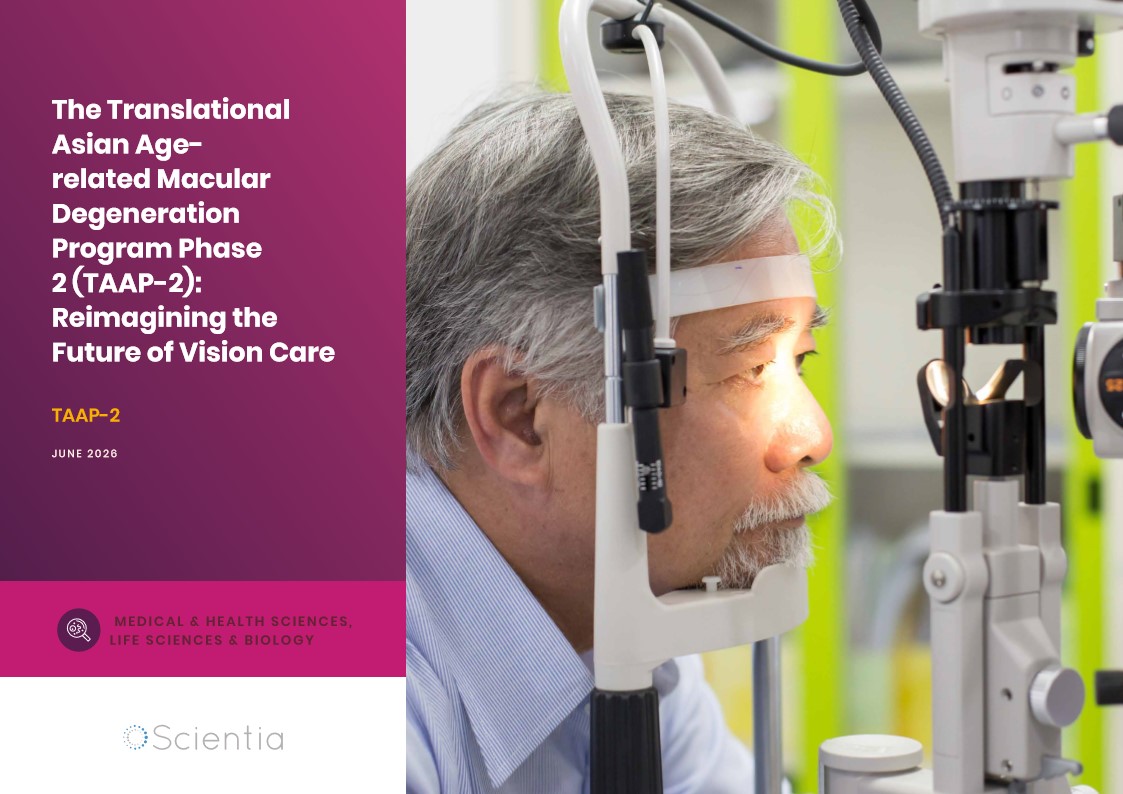
The Translational Asian Agerelated Macular Degeneration Program Phase 2 (TAAP-2): Reimagining the Future of Vision Care
Age-related macular degeneration, often abbreviated as AMD, is one of the leading causes of vision loss among older adults worldwide. In Asia, where populations are ageing rapidly, its impact is particularly profound. For many, the disease quietly erodes central vision, making everyday activities such as reading, driving, and recognising faces increasingly difficult. Against this backdrop, the Translational Asian Age-related Macular Degeneration Programme, or TAAP for short, has emerged as a bold and ambitious effort to confront the disease headon. Now in its second phase, TAAP-2 represents a significant evolution in both scientific scope and clinical ambition.

Ms. Aikaterini Dritsoula | Looking Beyond Snoring: How Hidden Airway Problems Shape Children’s Sleep
For many parents, a child’s snoring may seem harmless, even endearing. Yet in some cases, it signals something more serious. Obstructive sleep apnoea is a condition in which a child’s breathing is repeatedly disrupted during sleep. These interruptions can affect growth, behaviour, and learning. Children with this condition may toss and turn at night, struggle to concentrate during the day, or show signs of hyperactivity and fatigue. Traditionally, enlarged tonsils and adenoids have been seen as the main culprits. Surgery to remove them has long been considered the standard treatment. However, research led by Consultant ENT Surgeon Ms. Aikaterini Dritsoula of The Leeds Teaching Hospitals NHS Trust invites us to look deeper. Her work suggests that the story is often more complex, especially in very young children.