
The SHAPE STEM program at Siena Heights University is transforming how students engage with science, tackling urgent environmental challenges in Michigan while preparing the next generation of problem-solvers. Led by Professor Jun Tsuji and Professor Steven Wathen, the program combines research, mentorship, and financial support to help low-income and underrepresented students thrive in STEM, with outcomes that ripple far beyond the classroom.
Michigan’s Environmental Challenges and Workforce Gaps
When people think of Michigan, they often picture its lakes, rivers, and vast natural resources. But behind the beauty lies a series of environmental crises that have drawn national and international attention. The lead-contaminated water in Flint, toxic air pollution in Detroit, agricultural runoff fuelling algae blooms in Lake Erie, and the oil-soaked soil of the Kalamazoo River are all reminders that clean water and safe environments are not guaranteed.
Beyond these high-profile cases, the state is dotted with EPA Superfund sites. These areas are so polluted that they require long-term cleanup efforts. These environmental threats carry serious consequences for public health, local economies, and ecosystems. At the same time, they highlight the need for a workforce trained in science, technology, engineering, and mathematics (STEM)—fields essential for monitoring, understanding, and solving these issues.
The demand for such expertise is high. In southeast Michigan alone, nearly 300,000 environmental jobs already exist, with more than 23,000 openings projected annually over the next decade. Meeting these needs requires not just more graduates, but graduates who are motivated, skilled, and representative of the diverse communities they serve.
Introducing SHAPE STEM
Recognizing both the environmental and workforce challenges facing Michigan, Siena Heights University (SHU) in Adrian launched the SHAPE STEM program in 2018. SHAPE STEM is an acronym for Siena Heights: Applying Psychological Constructs and Student Supports to Improve the Education of Students in STEM—a holistic model designed to help students succeed.
The program was seeded with funding from the National Science Foundation’s (NSF) Scholarships in STEM (S-STEM) initiative. At its heart, SHAPE STEM seeks to close the retention and graduation gaps that disproportionately affect low-income and first-generation students in science majors.
Dr Jun Tsuji, Professor of Biology and Dean of STEM and Health Sciences, serves as the program’s principal investigator, together with Dr Steven Wathen, Professor of Chemistry and co-principal investigator. Alongside them is a team of faculty mentors who work closely with students to provide the academic, personal, and financial support they need to thrive.
Closing the Opportunity Gap
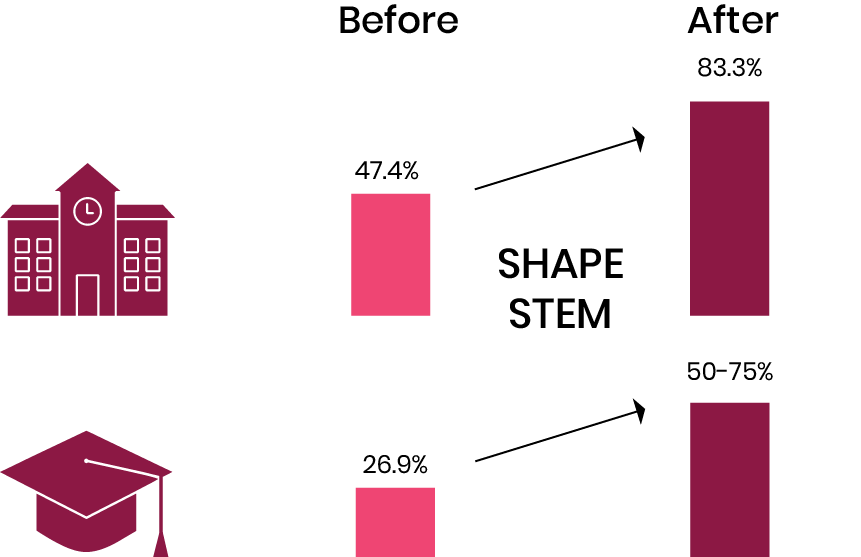
Historically, students from low-income backgrounds have faced steep hurdles in completing STEM degrees. At SHU, only 26.9% of low-income STEM majors graduated within four years between 2015 and 2017, compared to nearly 47% of their higher-income peers.
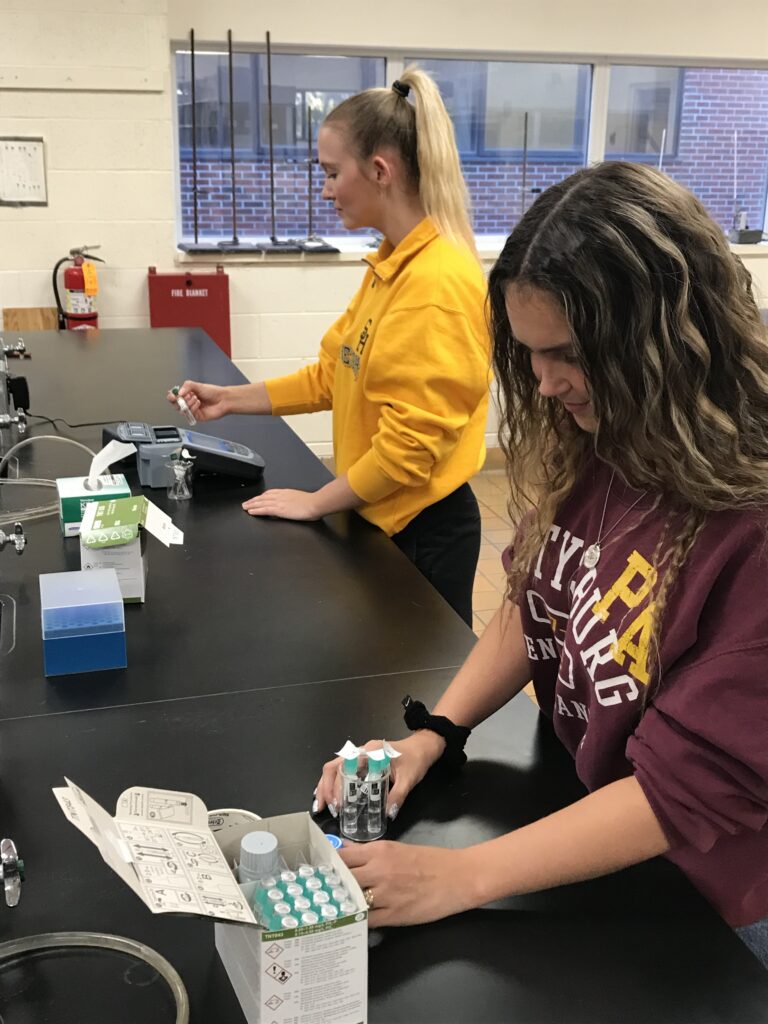
SHAPE STEM set out to change that. The program provides scholarships to reduce financial strain, faculty and peer mentoring to build confidence, and research opportunities that foster motivation and a strong sense of STEM identity among students.
The impact has been striking. First-year retention of low-income STEM students rose from 47.4% to 83.3% after SHAPE STEM began, surpassing rates for higher-income students. Graduation rates also improved dramatically, climbing to 50% for the first cohorts and putting later cohorts on track for 75% completion. These gains show that when given the right support, students can not only match but exceed traditional outcomes.
Science in Action: Water Quality Research
A distinctive feature of SHAPE STEM is its focus on hands-on research tied to local issues. One project that captured both student and community interest involved water quality monitoring in Adrian, Michigan.
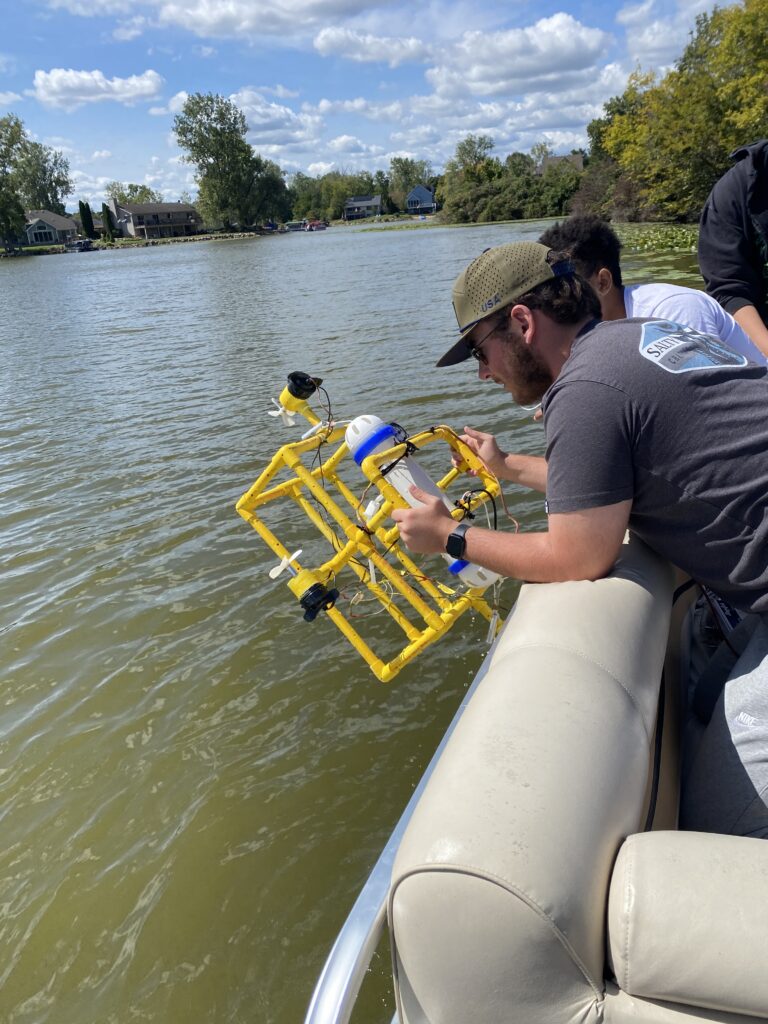
Lake Adrian is a man-made reservoir that supplies about half the city’s drinking water. Residents had raised concerns about its taste and odor, but boat access restrictions made traditional water sampling difficult. To overcome this, SHAPE STEM students designed and built remotely operated underwater vehicles (ROVs) equipped with sensors and samplers. From the shoreline, students piloted these robots to collect high-precision water samples.
Testing revealed that nitrate levels in the lake fluctuated but stayed within safe limits, while phosphate levels were consistently too low to detect. These findings provided reassurance to the community, while giving students valuable experience in engineering, environmental monitoring, and teamwork.
Responding to Harmful Algal Blooms
The summer of 2024 brought another pressing challenge: harmful cyanobacteria blooms in several Lenawee County lakes near Loch Erin, which is upstream of Lake Adrian. These blooms, fuelled by nutrient runoff, can release toxins dangerous to humans and animals.
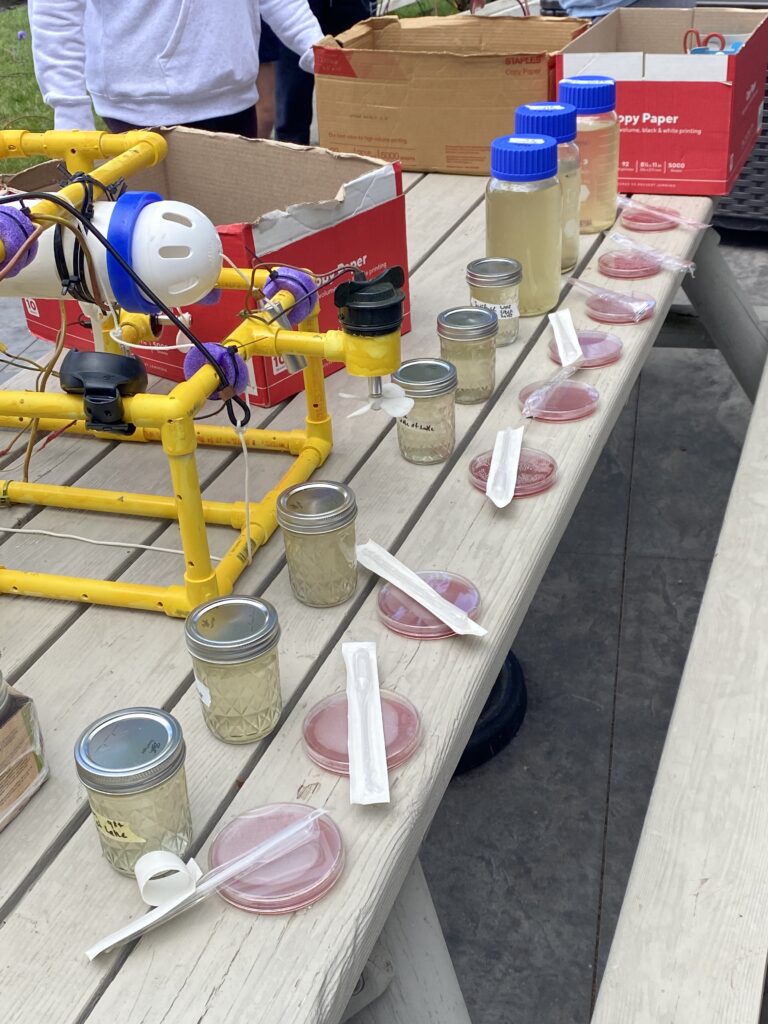
SHAPE STEM students investigated. Using their ROVs, they sampled water at eight sites around Loch Erin, and cultured the sampled bacteria in the lab. By applying DNA sequencing techniques, they identified two species: Citrobacter freundii and Pseudomonas protegens. Both are considered potential indicators of fecal contamination and can act as opportunistic pathogens.
The discovery underscored the importance of continued monitoring in the River Raisin watershed, which provides drinking water to Adrian and surrounding communities. It also demonstrated how undergraduate students, under the guidance of faculty mentors, can contribute directly to environmental knowledge and public health.
Building Skills Beyond the Lab
While research is central to SHAPE STEM, the program also emphasizes professional growth. Students present their work at national and regional conferences, including STEM gatherings in Chicago, San Diego, and Washington, D.C., as well as Michigan Academy of Science, Arts, and Letters meetings across the state.
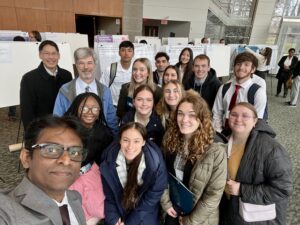
For many, these experiences are transformative. Standing beside their posters, explaining their projects, and networking with peers builds confidence and opens doors. Several SHAPE STEM students have secured internships with the State of Michigan and local industries as a direct result of their presentations.
As one student explained, ‘Conferences allowed me to have a better understanding of what I want to do in the future.’ Others highlighted how working with upper-level peers during research made them feel more comfortable asking questions and taking risks.
Voices of the Scholars
The impact of SHAPE STEM is best captured in the words of the students themselves.
‘Doing the group research project kept me engaged and helped me to find new interests. I also had a lot of fun with it and working with new people.’
‘Being able to collaborate with other students made it more fun and easier to learn.’
‘The faculty mentors were kind and helpful, and they helped me in and out of the classroom.’
‘I would work an extreme amount of hours between two jobs, hoping to earn enough to pay for college. Being a part of the S-STEM program helped lift the financial burden. It was a blessing and the most incredible experience I have participated in.’
These reflections highlight the program’s multi-layered approach: financial relief, academic mentoring, peer support, and real-world research.
Looking Ahead
With continued NSF support, the SHAPE STEM team are expanding opportunities to include engineering and cybersecurity majors, ensuring that more disciplines benefit from hands-on research and holistic support.
They also hope to deepen collaborations with local communities and agencies, addressing real environmental concerns while giving students practical experience. By linking education with sustainability goals, the program aims to prepare graduates who will contribute not only to Michigan’s workforce, but also to global efforts to achieve the United Nations’ Sustainable Development Goals.
A Model for the Future
The story of SHAPE STEM demonstrates the power of education tailored to students’ needs and community challenges. By combining scholarships, mentoring, and authentic research experiences, Siena Heights University has created a program that not only bridges equity gaps but also produces graduates ready to tackle some of society’s most pressing problems.
SHARE

DOWNLOAD E-BOOK
REFERENCE
https://doi.org/10.33548/SCIENTIA1331
MEET THE RESEARCHER
Prof Jun Tsuji
STEM and Health Sciences Division, Siena Heights University, Adrian, MI, USA
Jun Tsuji is Professor of Biology and Dean of STEM and Health Sciences at Siena Heights University. He earned his PhD in Genetics from Michigan State University, and his research expertise includes behavioural studies of the imported cabbageworm, Pieris rapae. His publications explore how color and environmental cues influence insect foraging and host plant selection.
A committed mentor, Prof Tsuji has guided numerous students to regional and national research awards, fostering the next generation of scientists. He also directs the SHU S-STEM Scholarship Program and serves as principal investigator of the SHAPE STEM initiative, which supports low-income students in STEM. Beyond his scientific work, Dr. Tsuji authored The Soul of DNA, a book that earned him a nomination for the Margaret W. Rossiter Women in the History of Science Prize and recognition at Smithsonian and Ellis Island exhibitions.
CONTACT
LI: https://www.linkedin.com/in/jun-tsuji-15154a31a/
Prof Steven Wathen
Department of Chemistry, Siena Heights University, Adrian, MI, USA
Steven Wathen is Professor of Chemistry at Siena Heights University, where he teaches a wide range of courses including General, Organic, Analytical, and Biological Chemistry, as well as Biochemistry, Environmental Science, and Toxicology. He earned his PhD in Chemistry from The Ohio State University, specializing in bio-organic chemistry, and later expanded his research into organic chemistry, biological chemistry, and the use of cheminformatics to advance green chemistry education.
Prof Wathen has guided numerous undergraduate research projects across chemistry, biology, and environmental science, fostering interdisciplinary scientific exploration. He is an active member of the American Chemical Society, the Michigan College Chemistry Teachers Association, and the Lenawee Intermediate School District STEM Advisory Board. As co-principal investigator of the SHAPE STEM program, he helps lead efforts to recruit and support underrepresented students in STEM fields. His current work emphasizes integrating computer technology into chemistry education to enhance teaching, research, and sustainability.
CONTACT
E: swathen@sienaheights.edu
LI: https://www.linkedin.com/in/stevenpwathen/
FUNDING
This material is based upon work supported by the National Science Foundation under grant numbers 1741778 and 2221384. Any opinions, findings, and conclusions or recommendations expressed in this material are those of the authors and do not necessarily reflect the views of the National Science Foundation.
FURTHER READING
REPUBLISH OUR ARTICLES
We encourage all formats of sharing and republishing of our articles. Whether you want to host on your website, publication or blog, we welcome this. Find out more
Creative Commons Licence (CC BY 4.0)
This work is licensed under a Creative Commons Attribution 4.0 International License. 
What does this mean?
Share: You can copy and redistribute the material in any medium or format
Adapt: You can change, and build upon the material for any purpose, even commercially.
Credit: You must give appropriate credit, provide a link to the license, and indicate if changes were made.
SUBSCRIBE NOW
Follow Us
MORE ARTICLES YOU MAY LIKE
Prof Candis M. Morello – Prof Jan D. Hirsch | Recent innovations in pharmacy education
A pioneering research team from the Skaggs School of Pharmacy and Pharmaceutical Sciences, University of California, San Diego, United States, has been instrumental in developing innovative techniques for teaching pharmacy students. The Next Generation of Pharmacist Educators (NextGen-RxEd) programme is a new method of training the next generation of pharmacist educators and academics. To help pharmacists and pharmacy students visualise the complex issues experienced by their patients, the team led by Professors Candis Morello and Jan Hirsch developed an innovative educational tool, called the Medication Therapy Management (MTM) Spider Web.

Alex Spezowka | Responsible Research Writing in the Age of AI: From Detection to Transparency
Artificial intelligence is often discussed as a future challenge for research, yet it is already shaping how many papers are written. Drawing on emerging evidence and recent analysis, work led by Alex Spezowka highlights a key shift in thinking: rather than trying to detect AI use, the focus is moving towards how it can be used responsibly. This has important implications for how research is produced, evaluated, and trusted.

Professor Richard Ludueña | Two Turkish Cities Were Essential in the Development of Science and Religion – a Work in Progress
This book explores the history of the area in Turkey where these two cities lie. Prof Richard Ludueña and his daughter visited Harran and Sanliurfa (formerly Edessa) in 2014. He found them fascinating and wanted to learn more about their histories, but found no book that focused on their history from the beginning to modern times. So, he decided to write one.
Harran still bears its ancient name, but Edessa has had a great variety of names and is now called Sanliurfa. Our story goes back long before the cities were founded, back to the late Neolithic site of Göbekli Tepe, where monuments have carvings consistent with a destructive comet.

Professor Loren Babcock | The Race to Save Fossils From the Hands of Time
Ohio Wesleyan University’s geological collection, which was amassed in Delaware, Ohio, USA, is among the oldest in America, but decades after those who assembled the collection retired and passed on, the collection fell into obscurity and its storage area was repurposed. Prof Loren Babcock, Director of the Orton Geological Museum at The Ohio State University, is leading a 3-year rescue project to stabilise, catalogue, and digitise more than 15,000 specimens. From rediscovered scientific-name-bearing type fossils to ethically sourced collections linked to abolitionist networks, the initiative promises not only to safeguard irreplaceable scientific material, but to revive a once overlooked foundation of American geology for future generations.