
Physicists typically have two frameworks for considering mechanics – a classical picture, looking at larger-scale objects, or a quantum picture, considering things on a subatomic scale. Where the boundary between these two pictures lies is an open question. Dr Khaled Mnaymneh from National Research Council Canada and Carleton University argues that this boundary does not exist. Through his analysis of Bell’s inequality, configuration space, and counterfactual definiteness, his work highlights the importance of considering these foundational principles in our study of the world around us.
Our Theories of Mechanics
Our theories of mechanics help us to understand the forces and motion occurring in the world around us, and we broadly divide these theories into two categories, namely classical and quantum mechanics. Classical mechanics builds from Newton’s work in the 17th century, and can be applied to larger, or macroscopic, objects. Quantum mechanics focuses on a smaller scale, typically looking at particles smaller than an atom, and was formulated in the 20th century to further our understanding of light and matter at the submicroscopic scale. It has introduced concepts such as entanglement, or correlations between quantum particles, which are collapsed when the state is measured. However, with these two theories, researchers have been trying to understand where the boundary lies – at what point do we transfer from a classical to a quantum picture?
Dr Khaled Mnaymneh’s work suggests that this boundary does not exist. For example, when we typically think about plotting a snapshot of a particle’s motion at a given time, we would represent this using x, y, and z coordinates on a graph representing three-dimensional space. In a concept from classical mechanics called Hamilton’s principle, the mapping used is known as configuration space. Configuration space represents this motion a single point in a higher dimensional space. Dr Mnaymneh highlights how Hamilton’s principle links configuration space and 3D space, and suggests that this should form part of the theories we use to describe the reality of the world around us.

Violating Bell’s Inequality
But this was not considered in early quantum mechanical theories – for example, Einstein, Podolsky, and Rosen’s work, which suggested that quantum mechanics did not fully describe reality and that there may be some additional, hidden variables that need to be considered. This was followed by Bell, who established a set of constraints that would have to be obeyed if particles were acting under a local hidden variable theory in a three-dimensional space. This is often referred to as Bell’s inequality, and by showing that these constraints are not obeyed in experiments, this inequality is violated. These experiments were seen as evidence of some boundary between classical and quantum theories.
But recent experiments suggest that there may be entanglement in the classical picture too, and Dr Mnaymneh highlights how this could affect how we consider counterfactual definiteness (CFD) in these theories. CFD suggests that an object has values for all of the characteristics we could measure, even if we don’t measure them. This is often assumed in classical mechanics – for example, if we flip a coin, but don’t look at it, we still know it will either land heads or tails. However, in a quantum system, CFD is typically rejected.
But the concept of classical entanglement means CFD could not be included in classical theories. Dr Mnaymneh highlights how, if CFD is lacking in all spaces, Bell’s inequality must also fail classically – removing the distinction that others previously used to establish the classical-quantum boundary and arguing that perhaps this violation comes from the lack of CFD instead.
Moreover, Dr Mnaymneh notes that the absence of CFD is closely tied to the concept of contextuality: the dependence of measurement outcomes on how, or in what context, they are measured. If CFD cannot hold even in classical configuration space, then contextuality becomes a universal property of nature rather than a uniquely quantum one. This insight has profound implications for emerging quantum technologies, where controlling contextuality, often manifesting as contextual drift in experimental setups, remains a daunting challenge as the scale of these systems increases. Understanding how such drift arises from the very structure of physical reality may be essential for developing stable and truly scalable quantum devices.

Lacking Counterfactual Definiteness in the Classical Domain
Dr Mnaymneh’s work also looks at how classical definitions could be expanded to cover the whole of reality, instead of having a boundary between classical and quantum. To do this, he considers how we would not have CFD if there were no initial conditions, or knowledge about the initial properties of our particles. Dr Mnaymneh carries out this analysis by considering a section between two points at different times in configuration space. This leads to a Hamilton–Jacobi equation (non-linear differential equation), and its solution is given by a function which describes Hamilton’s principle.
From this, Dr Mnaymneh can draw similarities between his analysis and some of the statistical descriptions used in quantum mechanics. He suggests that, as the probabilistic picture of particles in a quantum system arises due to unknowns about the system, there is information that we also can’t access in this classical description. Dr Mnaymneh suggests this foundational, as we have no initial conditions in our reality.

Motivating the Lack of Initial Conditions Using Experiments
To consider this point further, Dr Mnaymneh also considers the experimental aspect of violating Bell’s inequality. To do this experimentally, let’s imagine we are measuring a pair of quantum particles which can have two possible measurement outcomes. We then have two detectors: A, which is always set to measurement setting a, and B, which the scientist can choose to either set to measurement setting b or c. By finding the probability that we see a correlation between the different detectors for different measurement settings, we can use these values to calculate whether a Bell inequality has been violated.
Dr Mnaymneh highlights Bell’s assumption of CFD, noting how Bell wrote about how this concerns experiments where the property of the quantum particle is only measured once. This makes changing detector B from setting b to c a distant counterfactual setting – a future, hypothetical setting that differs from the current one. If all measurements happen at once, this means our Bell inequality requires both performed and unperformed results – but without CFD, these unperformed results don’t exist, and the bound of this inequality is violated. Dr Mnaymneh then argues that, without initial variables, we don’t have CFD in classical configuration space either, and this bound is also violated here.
If this is the case, Dr Mnaymneh’s work could have implications for how we think about future technologies. Whilst current developments in quantum technologies look into how we can use entanglement, without a classical-quantum boundary there is potential to study stronger-than-quantum correlations. This could perhaps open up a new avenue for technologies altogether!
Overall, Dr Mnaymneh’s work into the foundational principles of mechanics suggests that there is no boundary between classical and quantum mechanical theories. By utilising configuration space, he considers how the classical domain can also lack CFD if there are no initial conditions. Dr Mnaymneh also considers how, without CFD in the classical domain, Bell’s inequality can be violated for both quantum and classical cases, removing a delineation that was previously used to establish a classical–quantum boundary. Through this analysis, Dr Mnaymneh highlights not only the impacts this could have on our current development of quantum technologies, but also demonstrates the importance of considering foundational principles as we grow our understanding of both classical and quantum systems.
SHARE

DOWNLOAD E-BOOK

REFERENCE
https://doi.org/10.33548/SCIENTIA1335
MEET THE RESEARCHER
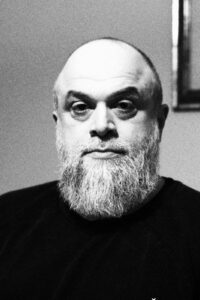
Dr Khaled Mnaymneh
National Research Council Canada & Department of Electronics, Carleton University
Ottawa
Canada
Dr Khaled Mnaymneh currently is a Senior Scientist at the National Research Council Canada, as well as working as an Adjunct Research Professor in the Department of Electronics at Carleton University. Throughout his career, Dr Mnaymneh has worked on many different aspects of quantum technology development, from nanofabrication through to integrated quantum photonic devices. He has led international collaborations to discover more about using silicon nitride in photonic devices utilising quantum dots as photon sources, and how different building blocks can be used together in hybrid photonic technologies. Dr Mnaymneh’s work also looks into the foundations of quantum mechanics, considering them from both a philosophical perspective and how this can be applied in the laboratory, which helps us to innovate new approaches and frameworks for developing quantum technologies. His work has been widely published, with over 100 peer-reviewed publications. Alongside his research, Dr Mnaymneh has served as the general co-Chair of the International Conference on Metamaterials, Photonic Crystals and Plasmonics.
CONTACT
E: khaled.mnaymneh@nrc.ca
W: Khaled Mnaymneh, PEng | LinkedIn
LI: National Research Council Canada / Conseil national de recherches Canada: Posts | LinkedIn
FURTHER READING
K Mnaymneh, On removing the classical-quantum boundary, AIP Advances, 2024, 14, 105012. DOI: https://doi.org/10.1063/5.0206221
REPUBLISH OUR ARTICLES
We encourage all formats of sharing and republishing of our articles. Whether you want to host on your website, publication or blog, we welcome this. Find out more
Creative Commons Licence (CC BY 4.0)
This work is licensed under a Creative Commons Attribution 4.0 International License. 
What does this mean?
Share: You can copy and redistribute the material in any medium or format
Adapt: You can change, and build upon the material for any purpose, even commercially.
Credit: You must give appropriate credit, provide a link to the license, and indicate if changes were made.
SUBSCRIBE NOW
Follow Us
MORE ARTICLES YOU MAY LIKE
Sara F Martin | The New Paradigm: Two Fundamental 22-year Solar Cycles Always Present on the Sun
For millennia, humans have looked up towards the life-giving Sun and sought to understand its nature. One of its earliest features noticeable before the age of technology was the presence of small dark patches scattered across its surface – sunspots. These blemishes appeared to wax and wane on a regular 11-year cycle, which was thought for over a century to be a fundamental time period governing the Sun’s magnetic activity. But new discoveries suggest a radically different understanding where sunspots are merely peak phases of two, more fundamental 22- year magnetic cycles present simultaneously in different bands of latitude.

Professor Tian Yu Cao | Twistor Theory: A New Framework for Quantum Gravity
At Boston University, Professor Tian Yu Cao is rethinking the foundations of modern physics. His work builds on twistor theory which demonstrates that spacetime is secondarily derived from twistor constructions, but goes further to highlight the most important implication of the Penrose transform in that the primary physical agents can only be mathematically described by elements of cohomology with the defining feature having roots in spin. This view of primary agents combines with Cao’s other major claim that quantum behaviour itself may arise from the physical property of spin leads to a new consistent framework of quantum gravity in which long-standing puzzles in black holes (evaporations) and cosmology (transitions between cycles of cosmos) can be adequately addressed, with the crucial help from the on-going development of operator product expansion formular defined on twistor space.
Professor Mikhail V. Medvedev | Plasma Waves in Extreme Magnetic Fields: Exploring the Quantum Regime
In environments where magnetic fields exceed even the limits of classical physics, such as magnetars and next-generation laser experiments, plasma behaviour is fundamentally altered by quantum effects. Professor Mikhail V. Medvedev and colleagues have developed a framework to understand how these extreme conditions reshape plasma waves, revealing that while familiar wave structures persist, their properties are significantly modified. These insights provide a foundation for interpreting astrophysical observations and advancing high-energy plasma experiments.

Distinguished Professor Michael Zhdanov | Mapping Magma and Drilling for Oil: New Methods for Geophysical Modelling
Geophysicists use a variety of different methods to peer beneath the Earth’s surface. Seismic activity, gravitational fields , and magnetic fields each offer their own windows into the world underground, but, in isolation, are incapable of giving us the full picture. Combining data from distinct geophysical surveys, however, is its own challenge. For a number of years, a team of researchers led by Professor Michael Zhdanov has worked to develop a mathematical framework capable of generating detailed geophysical models from multiphysics data.
Through application to modelling magma chambers underneath Yellowstone and searching for oil deposits in the Barents Sea, they demonstrate that their approach can produce robust and accurate predictions