
Deok-Young Lee – Dr Sin Hyuk Yim | Navigating the Quantum Frontier with Atom Spin Gyroscope Technology
Deok-Young Lee from the Korea Advanced Institute of Science and Technology and collaborator Dr Sin Hyuk Yim, affiliated with South Korea’s Agency for Defense Development work together to lead the advancement of quantum sensing technology. Their innovative research in developing rubidium-xenon gas cells has improved the precision and efficiency of atom spin gyroscopes, significantly driving forward the field of quantum measurement.
Atom Spin Gyroscopes
In the exciting field of quantum technology, atom spin gyroscopes (ASGs) have emerged as pivotal instruments for precision measurement. Based on quantum mechanics, these gyroscopes offer enhanced accuracy and sensitivity over traditional methods, making them essential in various demanding applications such as aerospace and deep-sea navigation.
The development of ASGs represents a significant step forward in measurement technology, enabling more reliable data collection in challenging environments. Central to these developments are Dr Sin Hyuk Yim from the Agency for Defense Development in South Korea and Deok-Young Lee from the Korea Advanced Institute of Science and Technology.
Their work focuses on advancing ASGs by fabricating rubidium-xenon (Rb-Xe) gas cells. Dr Yim’s expertise in atomic physics and quantum sensors, combined with Lee’s background in physics, focused on optimising the ASGs to be more compact and reliable, which is crucial for broader applications. Their pursuit is not just to enhance the existing capabilities of ASGs but to innovate and discover new potential applications, thereby contributing significantly to the evolution of quantum measurement technologies.
Utilising the Spin Properties of Atoms
ASGs rely on quantum mechanical principles for their operation. Unlike traditional gyroscopes that depend on mechanical rotation and inertia principles, ASGs utilise the spin properties of atoms, offering a higher degree of precision and sensitivity.
At the core of ASG functionality is the concept of Larmor precession, a quantum phenomenon observed in the spin of atoms. In ASGs, this involves the manipulation of atomic spin states, typically of noble gases like xenon, using magnetic fields. When these atoms are subjected to an external magnetic field, their spins precess, or rotate, about the axis of the magnetic field at a specific frequency known as the Larmor frequency. This frequency is highly sensitive to changes in the magnetic field, making ASGs extremely effective in detecting even minute alterations in orientation or position.
The advantage of ASGs over traditional gyroscopes lies in their reliance on atomic properties, which are less susceptible to external disturbances and do not suffer from mechanical wear and tear. This leads to a longer lifespan and reduced maintenance requirements, alongside the heightened accuracy and sensitivity inherent in quantum-based systems. Consequently, ASGs are increasingly preferred in applications requiring high precision, such as aerospace navigation, where accurate measurement of orientation and position is critical.

Innovative Fabrication of Rubidium-Xenon Gas Cells
A key aspect of Deok-Young Lee’s research is the innovative fabrication of Rb-Xe gas cells. These gas cells are critical for the efficient functioning of ASGs, and their fabrication requires precise and controlled processes.
The team’s process begins with the meticulous preparation of the gas cells. Ensuring the purity of these cells is paramount, as any contaminants can significantly impact the performance of the gyroscopes. To this end, the cells undergo a comprehensive cleaning regimen. This involves using neutral detergents, followed by rinsing with methanol and acetone. After the cleaning, the cells are subjected to high temperatures exceeding 550 degrees Celsius to remove any residual organic materials. This rigorous cleaning process ensures that the cells are free from impurities that could affect the atomic spin measurements.
Once cleaned, the cells are placed in an ultra-high vacuum environment. This step is crucial for removing any remaining impurities and preventing contamination. Maintaining a high vacuum is essential for the stability of the Rb-Xe mixture and for the accurate functioning of the ASGs.
A significant innovation in their process is the introduction of nitrogen (N2) and hydrogen (H2) gases into the cells. Adding N2 quenches the alkali atoms, enhancing the efficiency of the pumping process. Meanwhile, H2 gas plays a vital role in forming a rubidium hydride coating on the inner surface of the cell. This coating increases the transverse spin relaxation time of the xenon nuclear spin, which allows for a more prolonged and stable observation of the Larmor precession, leading to more accurate and sensitive measurements in the ASGs.
By maintaining a clean and controlled environment throughout the fabrication process and innovatively using nitrogen and hydrogen gases, they have successfully enhanced the performance and reliability of ASGs, paving the way for more accurate and sensitive quantum sensing applications.
Larmor precession refers to the rotation of the spin of atomic nuclei, like those in xenon gas when exposed to a magnetic field. The Larmor frequency is highly sensitive to changes in the magnetic field and is fundamental to the operation of ASGs. The Rb-Xe gas cells are specifically designed to create an optimal environment for observing and measuring Larmor precession. These cells contain a mixture of rubidium and xenon gases, where the rubidium atoms are used to polarise the xenon nuclei, making their spins aligned in a certain direction. When these polarised xenon atoms are subjected to an external magnetic field, their spins begin to precess, and this motion can be precisely measured.
Thus, the Rb-Xe gas cells are not just containers for the gases but are intricately designed to improve the fundamental quantum process of Larmor precession, directly impacting the performance and accuracy of ASGs in practical applications.
The extended spin relaxation times have practical implications across various fields. In aerospace and deep-sea exploration, where accurate navigation is vital, these improved ASGs offer enhanced reliability and precision. In scientific research, particularly in areas like quantum physics and material science, the heightened sensitivity of these gyroscopes allows for more accurate measurements and observations. Furthermore, potential applications in medical imaging and brain wave mapping are also envisaged, where the precise detection capabilities of ASGs could lead to breakthroughs in diagnostics and neurological studies.

Exciting New Horizons
Looking ahead, Deok-Young Lee and his colleagues are keen to explore the potential of ASGs further. One area of future research is the miniaturisation of these devices. Smaller, more compact ASGs could be integrated into a wider range of equipment and technologies, broadening their applications. Additionally, the team is interested in exploring how variations in the composition of the gas cells might affect the performance of ASGs, potentially leading to even greater sensitivity and precision. Finally, they also have a plan to develop a quantum magnetometer for detecting hidden target and underground structures.
The broader impact of their work on quantum technology and scientific innovation is substantial. By advancing ASG technology, they are contributing to the development of more sophisticated quantum sensors. These sensors could revolutionise a variety of fields, from navigation and geophysics to healthcare and environmental monitoring. Deok-Young Lee and his colleagues are committed to shaping the future landscape of quantum technology and its applications in various scientific and practical domains.
SHARE

DOWNLOAD E-BOOK

REFERENCE
https://doi.org/10.33548/SCIENTIA1173
MEET THE RESEARCHERS

Mr Deok-Young Lee
Korea Advanced Institute of Science and Technology
Daejeon
Republic of Korea
Mr Deok-Young Lee holds a BS in Physics and MS in Future Strategy, both from the Korea Advanced Institute of Science and Technology. He currently is working towards his PhD in Physics at the same institution. Since June 2021, he has also worked as a researcher at the Center for Future Defense Technology & Entrepreneurship and previously held positions at the Korea Research Institute of Standards and Science.
CONTACT
E: dleeao@kaist.ac.kr

Dr Sin Hyuk Yim
Agency for Defense Development
Daejeon
Republic of Korea
Dr Sin Hyuk Yim earned his PhD in Physics from Korea University in 2012, specialising in atomic physics and quantum sensor technology. Since joining the Agency for Defense Development in 2012, Dr Yim has made significant contributions to the field, particularly in atomic magnetometers and atom spin gyroscopes. His work focuses on the innovative fabrication of atomic vapour cells, work which is essential for advancing quantum sensor technology. Notably, he has been involved in groundbreaking research on Rubidium-Xenon gas cells for atom spin gyroscopes, enhancing their precision and efficiency. His publications include research on magnetic anomaly detection using drones and the development of low-magnetic packaging for laser diode chips in atomic sensors.
KEY COLLABORATOR
Dr Sangkyung Lee, Agency for Defense Development, Republic of Korea
FURTHER READING
MM Kim, S Lee, SH Yim, A low-magnetic packaging for a distributed Bragg reflector laser diode chip for atomic sensor applications, Journal of Applied Physics, 2023, 133, 164502. DOI: https://doi.org/10.1063/5.0141434
SH Yim, D-Y Lee, S Lee, MM Kim, Experimental setup to fabricate Rb-Xe gas cells for atom spin gyroscopes, AIP Advances, 2022, 12, 015025. DOI: https://doi.org/10.1063/5.0069211
D-Y Lee, S Lee, MM Kim, SH Yim, Magnetic-field-inhomogeneity-induced transverse-spin relaxation of gaseous 129Xe in a cubic cell with a stem, Physical Review A, 2021, 104, 042819. DOI: https://doi.org/10.1103/PhysRevA.104.042819

REPUBLISH OUR ARTICLES
We encourage all formats of sharing and republishing of our articles. Whether you want to host on your website, publication or blog, we welcome this. Find out more
Creative Commons Licence (CC BY 4.0)
This work is licensed under a Creative Commons Attribution 4.0 International License. 
What does this mean?
Share: You can copy and redistribute the material in any medium or format
Adapt: You can change, and build upon the material for any purpose, even commercially.
Credit: You must give appropriate credit, provide a link to the license, and indicate if changes were made.
SUBSCRIBE NOW
Follow Us
MORE ARTICLES YOU MAY LIKE
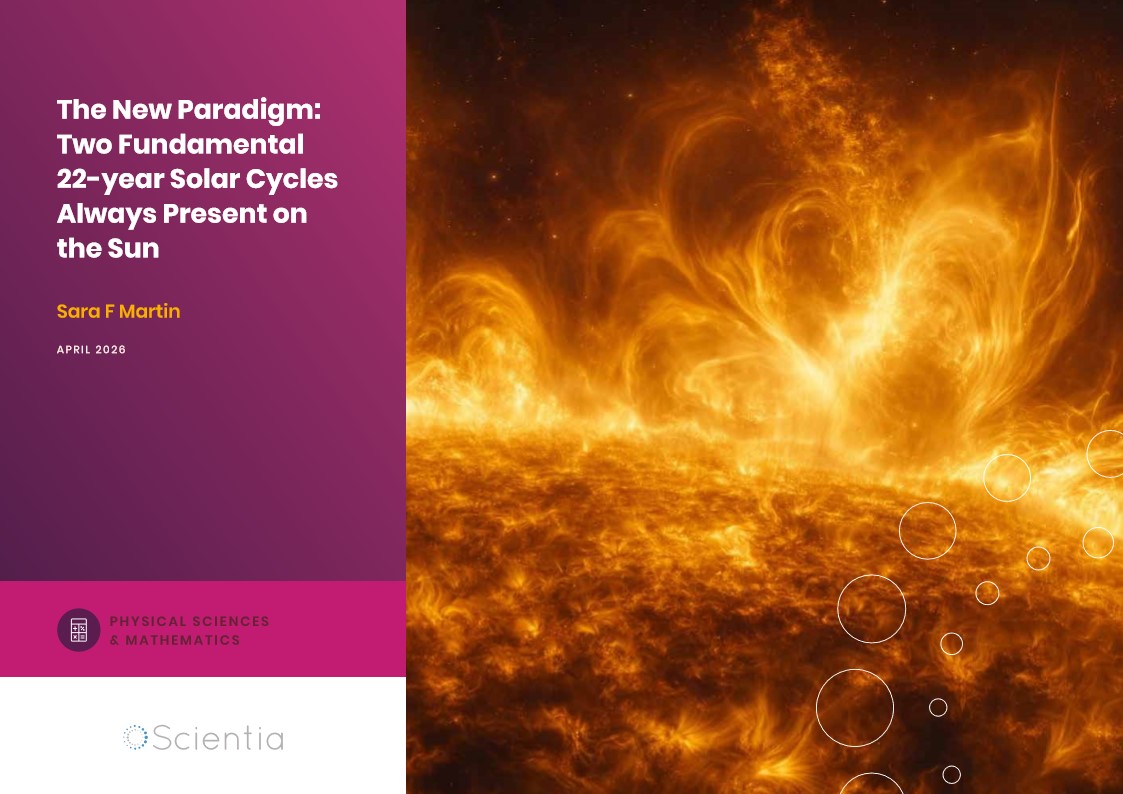
Sara F Martin | The New Paradigm: Two Fundamental 22-year Solar Cycles Always Present on the Sun
For millennia, humans have looked up towards the life-giving Sun and sought to understand its nature. One of its earliest features noticeable before the age of technology was the presence of small dark patches scattered across its surface – sunspots. These blemishes appeared to wax and wane on a regular 11-year cycle, which was thought for over a century to be a fundamental time period governing the Sun’s magnetic activity. But new discoveries suggest a radically different understanding where sunspots are merely peak phases of two, more fundamental 22- year magnetic cycles present simultaneously in different bands of latitude.

Professor Tian Yu Cao | Twistor Theory: A New Framework for Quantum Gravity
At Boston University, Professor Tian Yu Cao is rethinking the foundations of modern physics. His work builds on twistor theory which demonstrates that spacetime is secondarily derived from twistor constructions, but goes further to highlight the most important implication of the Penrose transform in that the primary physical agents can only be mathematically described by elements of cohomology with the defining feature having roots in spin. This view of primary agents combines with Cao’s other major claim that quantum behaviour itself may arise from the physical property of spin leads to a new consistent framework of quantum gravity in which long-standing puzzles in black holes (evaporations) and cosmology (transitions between cycles of cosmos) can be adequately addressed, with the crucial help from the on-going development of operator product expansion formular defined on twistor space.
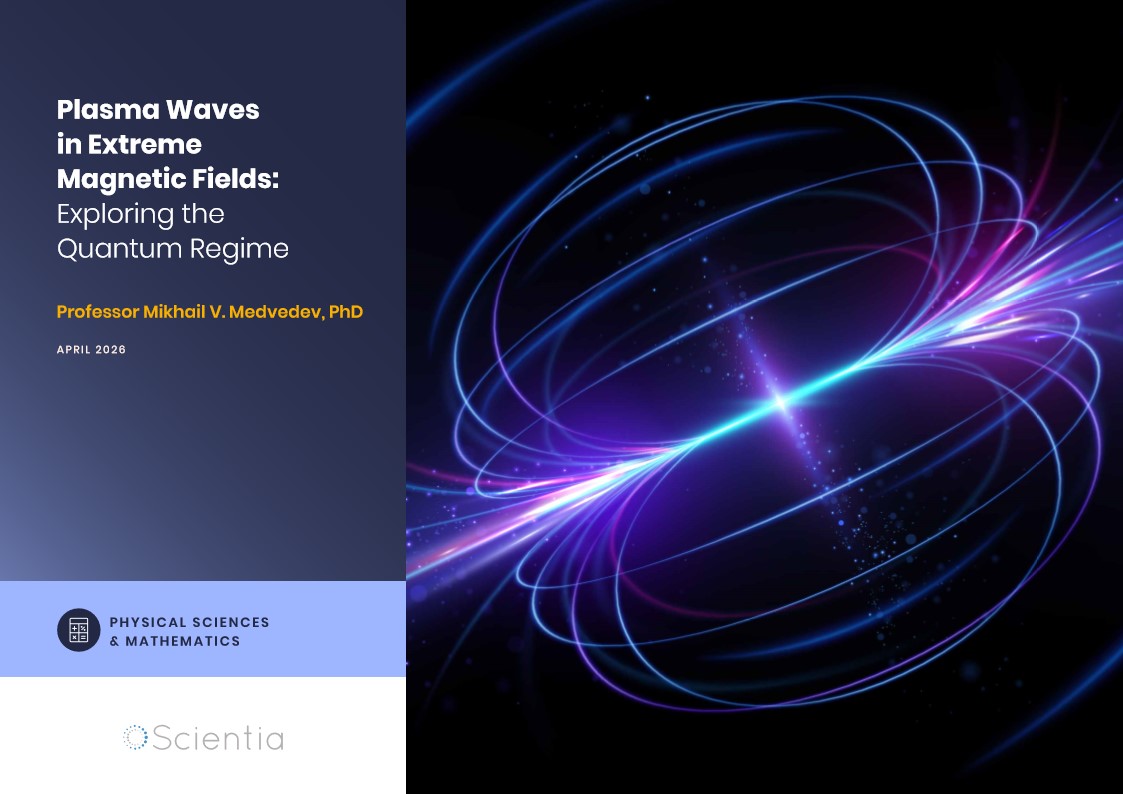
Professor Mikhail V. Medvedev | Plasma Waves in Extreme Magnetic Fields: Exploring the Quantum Regime
In environments where magnetic fields exceed even the limits of classical physics, such as magnetars and next-generation laser experiments, plasma behaviour is fundamentally altered by quantum effects. Professor Mikhail V. Medvedev and colleagues have developed a framework to understand how these extreme conditions reshape plasma waves, revealing that while familiar wave structures persist, their properties are significantly modified. These insights provide a foundation for interpreting astrophysical observations and advancing high-energy plasma experiments.

Distinguished Professor Michael Zhdanov | Mapping Magma and Drilling for Oil: New Methods for Geophysical Modelling
Geophysicists use a variety of different methods to peer beneath the Earth’s surface. Seismic activity, gravitational fields , and magnetic fields each offer their own windows into the world underground, but, in isolation, are incapable of giving us the full picture. Combining data from distinct geophysical surveys, however, is its own challenge. For a number of years, a team of researchers led by Professor Michael Zhdanov has worked to develop a mathematical framework capable of generating detailed geophysical models from multiphysics data.
Through application to modelling magma chambers underneath Yellowstone and searching for oil deposits in the Barents Sea, they demonstrate that their approach can produce robust and accurate predictions