
Dr Dustin McIntyre | Using Laser-Induced Breakdown Spectroscopy to Detect Rare Earth Elements and Monitor Carbon Sequestration
Whether identifying contaminants in our water courses or searching for the rare minerals our modern technology depends on, being able to monitor the natural world in real-time has never been more critical. Dr Dustin McIntyre and his colleagues from the US Department of Energy’s National Energy Technology Laboratory have been working to understand better the impact of some of our most vital industries using novel approaches in laser-induced breakdown spectroscopy.
Delicate Technology in a Harsh Environment
Environmental monitoring is essential for understanding and protecting the natural world. Unfortunately, many current monitoring technologies are delicate, complex, and unsuited to being taken into the field. For instance, sensors and spectrometers typically require careful handling and calibration to ensure accurate readings. Traditional analysis methods often require samples to be returned to a lab and prepared to measure their chemical makeup, making them inappropriate for real-time monitoring.
Dr Dustin McIntyre and his team at the National Energy Technology Laboratory (NETL) saw an opportunity to deploy laser-induced breakdown spectroscopy (LIBS) outside of the lab to monitor groundwater contamination and detect rare earth elements – both high priorities in the development of low carbon and negative emissions technologies. This interdisciplinary team set out to use their expertise across spectroscopy, chemistry, and environmental science to develop a portable sensor that could meet the challenges researchers and environmental monitoring programmes face.
The Benefits of Laser-induced Breakdown Spectroscopy
Dr McIntyre identified LIBS as a strong candidate for improving in situ analysis as the technology requires very little sample preparation and provides results instantaneously. As the name suggests, LIBS works by sending a high-energy laser pulse at a sample to create a tiny, intense flash of plasma. The plasma emits light that can be analysed to determine the composition of the material. This methodology lends itself to in situ analysis across a wide range of applications, as LIBS works on solids, liquids and gases.
While previous research had demonstrated that LIBS can work well underwater, no one had developed specialised sensors for environmental monitoring and detection. Dr McIntyre suspected that LIBS could provide the level of accuracy required for environmental monitoring under field conditions with the right design features.
A New Sensor Design
Dr McIntyre and his team designed a prototype LIBS sensor that could handle being used in the field. They used a special type of laser called a passively Q-switched microchip laser. This laser was chosen for its simplicity and reliability. The design included a fibre optic cable that separates the sensor from more delicate equipment, keeping expensive parts safe on the surface. In contrast, only the robust sensor head is exposed to harsh conditions where it interacts with the sample, such as underground or deep underwater.
Once the design was finalised, the team assembled a prototype using off-the-shelf components. The first step was to test if the new sensor was sensitive enough for two key applications: detecting rare earth elements, and detecting contaminants in groundwater associated with CO2 leakage from geological carbon storage (GCS).

Detecting Rare Earth Elements
Rare Earth Elements (REEs) are essential for various high-tech applications, including electronics, lasers, and batteries. The increasing demand for these materials has raised concerns about their ongoing availability. Additionally, current methods of extracting REEs have a high environmental and economic cost. Dr McIntyre saw the opportunity to use their LIBS sensor to improve the detection of REEs, supporting the industry in finding new sources and optimising extraction from existing sources.
To test the prototype sensor’s ability to detect REEs, Dr McIntyre ran a series of lab experiments on liquid and solid samples from acid mine drainage hydraulic fracturing produced water sources. The team used Europium (Eu) and Ytterbium (Yb) in varying liquid concentrations and solid pellets. The team were excited to find that their sensor was incredibly effective at accurately identifying concentrations of Eu and Yb and could detect these REEs in concentrations as low as 1 part per million. These results demonstrate that Dr McIntyre’s LIBS sensor was comparable to or better than those achieved with traditional laboratory systems and showed great potential for field deployment.
Estimating CO2 Leakage from Groundwater Contamination
Alongside REE detection, Dr McIntyre’s team wanted to test how well their sensor could detect groundwater contaminants. In particular, those associated with geological carbon storage. GCS involves injecting CO2 into deep rock formations, oil fields or mining sites to remove it from the atmosphere. A potential barrier to the widespread use of this relatively new technique is the risk of CO2 leaks. If CO2 leaks occur, they can contaminate groundwater supplies with metals and acids found in the injection site. These contaminants can pollute aquifers, vital for drinking water and agriculture.
Dr McIntyre predicted that if his new LIBS sensor could detect dissolved metals in groundwater, such as potassium (K), calcium (Ca) and strontium (Sr), it could be used to indirectly detect CO2 leaks and monitor the impact of injection projects on groundwater.
Dr McIntyre and his team tested their prototype sensor’s ability to detect and quantify K, Ca and Sr in aqueous solution, simulating the underwater conditions found in the field. Like the REE experiment, the team was ecstatic to see that, after some optimisation, the sensor would accurately measure the concentration of the tested dissolved metals. They also showed that a LIBS approach was comparable to, or better than, traditional lab-based methods.
Assessing CO2 Injection Sites
When CO2 is injected into a storage site it produces carbonic acid when it contacts water in the subsurface, it can react with the surrounding rock and affect its ability to store the gas, risking a leak and further site degradation. At high CO2 and low pH conditions, metal carbonates found in the rock, such as CaCO₃, dissolve into groundwater, changing the structure of the rock and potentially causing contamination. The dissolution rate of carbonates is a key metric in understanding how an injection site reacts to the CO2.
After the successes of their initial experiments on dissolved metals, Dr McIntyre wanted to demonstrate that LIBS had real practical application potential. He saw that if he could demonstrate that his LIBS sensor could be used to measure the dissolution rate of carbonates in real-time, it could provide an easy and convenient tool for assessing and monitoring CO2 leak risks during GCS projects.
The team set up another series of lab experiments to study the dissolution of CaCO₃, followed by further experiments on three other common mineral carbonates (MgCO₃, MnCO₃, SrCO₃) under varying CO₂ pressures (ambient to 250 bar). Again, the LIBS sensor was used to great effect. These experiments showed that the methodology for underwater LIBS could track the changing metal concentrations as the carbonates dissolve under a range of practically relevant conditions and to a high degree of accuracy.
The NETL team’s work to develop and optimise LIBS across these projects provides a foundation for the application of LIBS in environmental monitoring, carbon management, and resource exploration. The researchers remain committed to bringing this novel approach out of the lab and into real-world application.
SHARE

DOWNLOAD E-BOOK

REFERENCE
https://doi.org/10.33548/SCIENTIA1134
MEET THE RESEARCHER
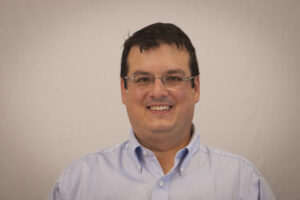
Dr Dustin McIntyre
National Energy Technology Laboratory, U.S. Department of Energy, Morgantown, WV, USA
Dr Dustin McIntyre holds a PhD in Mechanical Engineering from West Virginia University (2007) and has over 20 years of experience at the U.S. Department of Energy’s National Energy Technology Laboratory. His research focuses on Laser-Induced Breakdown Spectroscopy (LIBS) for environmental monitoring and resource characterisation, particularly for rare earth elements and groundwater quality. Dr McIntyre has played a key role in developing innovative sensor technologies that enhance the capability for in situ analysis in harsh environments. He has published extensively, contributing to the advancement of optical techniques for quick and accurate measurements in subsurface applications. His work on LIBS received an R&D 100 Award in 2019. He has provided significant support for youth and school science programmes across West Virginia and southwestern Pennsylvania.
CONTACT
E: dustin.mcintyre@netl.doe.gov
X: https://www.linkedin.com/in/dustin-mcintyre-63bb6113/
KEY COLLABORATORS:
Dr Daniel Hartzler, National Energy Technology Laboratory, U.S. Department of Energy
Dr Chet Bhatt, National Energy Technology Laboratory, U.S. Department of Energy
Dr Jinesh Jain, National Energy Technology Laboratory, U.S. Department of Energy
Dr Harry Edenborn, National Energy Technology Laboratory, U.S. Department of Energy
FUNDING
U.S. Department of Energy
FURTHER READING
DA Hartzler, JC Jain, DL McIntyre, Development of a subsurface LIBS sensor for in situ groundwater quality monitoring with applications in CO₂ leak sensing in carbon sequestration, Scientific Reports, 2019, 9, 4430. DOI: https://doi.org/10.1038/s41598-019-41025-3
CR Bhatt, JC Jain, HM Edenborn, DL McIntyre, Mineral carbonate dissolution with increasing CO₂ pressure measured by underwater laser induced breakdown spectroscopy and its application in carbon sequestration, Geochemical Journal, 2019, 205, 120170. DOI: https://doi.org/10.1016/j.gca.2019.07.001
REPUBLISH OUR ARTICLES
We encourage all formats of sharing and republishing of our articles. Whether you want to host on your website, publication or blog, we welcome this. Find out more
Creative Commons Licence (CC BY 4.0)
This work is licensed under a Creative Commons Attribution 4.0 International License. 
What does this mean?
Share: You can copy and redistribute the material in any medium or format
Adapt: You can change, and build upon the material for any purpose, even commercially.
Credit: You must give appropriate credit, provide a link to the license, and indicate if changes were made.
SUBSCRIBE NOW
Follow Us
MORE ARTICLES YOU MAY LIKE

Dr Kenric Nelson | Modelling the Extreme: A New Technique for Training Risk-Aware Artificial Intelligence
Category 5 hurricanes, financial crashes, and global pandemics are just a few examples of rare events whose high risks necessitate understanding and mitigation. Developments in artificial intelligence (AI) could go a long way towards improving our ability to model and mitigate the impacts of such extreme events, but current training methods are often unable to deal effectively with outliers in data – which is exactly what extreme events are. If outliers are present in training data, they skew the AI’s expectations, but if they’re omitted entirely, models will wrongly assume they never occur. To address this shortcoming, the Photrek team, led by Dr Kenric Nelson, has developed a new training technique to design more robust AI systems that can cope with rare, extreme events.
Revolutionising Chemical Safety: How AI Could Replace Animal Testing
Modern life exposes us to a staggering array of synthetic substances—over 350,000 chemicals are registered for use worldwide, found in products as diverse as pesticides, plastics, cosmetics, and pharmaceuticals. Ensuring the safety of all these compounds is a daunting task. Researchers led by Prof Jinhee Choi at University of Seoul are developing cutting-edge artificial intelligence models to predict the potential dangers toxicity of chemicals, with the aim of reducing the need for controversial animal experiments. By analysing vast toxicology databases and pioneering new AI techniques, Prof Choi’s team is working towards a future where the safety of everything from industrial compounds to household products can be assessed more quickly, cheaply, and humanely.
Dr Philipp Jordt | Finding the Best Way for Large Research Facilities to Handle All Their Data
As technology advances, physical experiments are performed by bigger, more powerful, and more sophisticated machines. Research conducted using these large-scale facilities (LSF) typically involves collaboration between the operating staff, instrument scientists, and external research groups, who propose specific experiments to be performed. With many people involved and such large volumes of data generated by each experiment, it has become challenging to make sure that results are collected, catalogued, stored, and distributed efficiently.
The German consortium DAPHNE4NFDI has been working to integrate Electronic Laboratory Notebooks (ELNs) into the Photon and Neutron (PaN) research community. One of their main goals has been to develop the decision-making process behind how research facilities, universities, and researchers can evaluate the range of ELNs available and decide on which solution to integrate into their operations.

Putting AI in your Ears with 3D Neural Networks
It’s difficult to communicate with someone when neither of you speak the same language; apps and online tools like Google Translate can help to bridge the gap, but they hardly make for a natural conversation. However, the rise of artificial intelligence (AI) has opened the door for the development of speech-to-speech technology, where spoken language is translated instantly in real time. To bring this idea closer to reality, a collaboration of European researchers led by Professor Cristell Maneux at the University of Bordeaux have proposed concepts for a 3D artificial neural network accelerator. This ultra-compact, highly efficient design could enable the construction of standalone earpieces capable of translating spoken language instantly, with no need for internet access.
Ongoing research by Professor Han Lamers (University of Oslo) and Professor Bettina Reitz-Joosse (University of Groningen) reveals how Fascist Italy weaponized ancient Rome’s language to legitimise its power and connect Mussolini’s regime to Italy’s imperial past. Their projects involve collaboration with an international team of mostly junior researchers based in Norway, the Netherlands, Austria, and Italy.