
Dr Warren Strober | Unravelling the Complex Causes of Crohn’s Disease
Crohn’s Disease (CD) is a type of inflammatory bowel disease that is due to abnormalities of the gastrointestinal (GI) immune system that result in immunologic hyper-responsiveness to normal GI constituents. It causes severe and recurrent GI symptoms that can be managed but not cured, except in rare cases where histocompatible bone marrow transplantation can be applied to replace the errant immune system.
Dr Warren Strober from the National Institutes of Health (NIH) in the USA, specialises in the study of the GI immune system, both when it operates normally to maintain homeostasis, as well as when it operates abnormally causing health issues such as CD.
A Closer Look at Crohn’s Disease
The myriad unpleasant GI symptoms caused by CD, including but not limited to diarrhoea, stomach cramps, fatigue, weight loss, and rectal bleeding, are usually treated by medications such as steroids, immunosuppressants, and anti-cytokine biologics that act in various ways to calm the inflamed gut. In rare cases, usually in children, CD is caused by a discrete genetic defect (a mutation) that shifts the GI immune system into overdrive and chronic inflammation. However, in most cases, CD is caused by a complex and usually undefined mixure of genetic and environmental factors that together drive the GI immune system into a similar hyperactive state.
One focus of Dr Strober’s work is the investigation of the genes controlling immune responses and how these genes cause the kind of inflammation seen in CD. In many cases, the genes of interest were first identified in Genome-Wide Association Studies (GWAS) —a methodology that identifies small gene variations (called polymorphisms) more frequently occurring in individuals with a particular disease. Thus, these polymorphisms identify genes causing disease.
Among the several hundred CD-associated polymorphisms that have been found so far, those with the strongest association with CD are in a gene encoding NOD2 —a protein present in intestinal cells that triggers immune responses to components of the cell wall of bacteria present in the GI tract. Dr Strober and his associates discovered that cells bearing abnormal NOD2 protein as a result of these polymorphisms have an impairment in their ability to down-regulate the innate immune responses elicited by organisms in the normal gut microflora. This discovery provided a molecular explanation of how CD can be caused by an overly active intestinal immune response.

The ATG16L1 Gene
Recently, Dr Strober explored the immunologic consequences of a polymorphism affecting the ATG16L1 gene. The protein encoded by this gene is essential to a cellular function called autophagy, which had also been identified by GWAS to be more frequently disrupted in patients with Crohn’s disease. For this study, Dr Strober collaborated with Dr Fuping Zhang, a long-standing colleague who heads the group of scientists at the CAS Key Laboratory of Pathologic Microbiology and Immunology, in Beijing, China, who performed the majority of the work.
Autophagy is a process that facilitates the disposal of unwanted proteins within cells. The CD-associated polymorphism in the ATG16L1 gene (designated ATG16L1T300A) is characterized by a change in a single nucleotide; this results in a form of ATG16L1 that is susceptible to cleavage and loss of function when exposed to cleaving proteins called caspases, which become activated during cell stimulation and inflammation.
Dr Strober says that, even though the ATG16L1 gene has been well-studied, the mechanisms by which the ATG16L1T300A polymorphism serves as a contributor to CD is not yet fully understood. One possibility is based on the finding that autophagy is necessary for cellular clearance of damaging protein clusters that arise in gut epithelial cells subject to excessive stress caused by loss-of-function mutations or polymorphisms in genes encoding stress-regulating proteins; as a result, epithelial cells with the ATG16L1T300A polymorphism are more subject to cell death. This is of particular relevance to specialised epithelial cells of the small intestine known as Paneth cells, cells that ordinarily secrete proteins that regulate bacterial growth and prevent inflammation; if these cells have the ATG16L1T300A polymorphism and thus undergo cell death, the way is open to intestinal inflammation and CD. A major problem with this possibility is that inactivating mutations or polymorphisms in stress-related genes are rare; thus, they cannot yet explain the vast majority of cases of CD in which the ATG16L1T300A polymorphism may have a contributory role.
A second possibility as to the origin of the increased CD susceptibility in people carrying the ATG16L1T300A polymorphism is that it causes an increase in the production of pro-inflammatory cytokines; these signaling proteins are used by cells to communicate and regulate the inflammatory process.

Investigating the Polymorphism
Dr Strober and Dr Zhang reasoned that the ATG16L1T300A polymorphism causing CD might be related to the the effect of autophagy on the function of particular cell receptors called toll-like receptors (TLR) and NOD-like receptors (NLR). When stimulated by their respective ligands, these receptors signal cells to activate nuclear factor kappa B (NF-κB), a protein that plays an essential role in the synthesis (transcription) of immunologic pro-infammatory cytokine responses.
To explore this possibility they studied human macrophages (a type of immune cell in the blood and tisues that expresses the ATG16L1 gene) isolated from individuals with and without the ATG16L1T300A polymorphism. In addition, they studied normal and “knock-in” mouse macrophages—cells in which a normal ATG16L1 gene had been replaced by an ATG16L1T300A gene. They found that, when appropriately stimulated by TLR or NLR ligands, cells expressing the CD-associated ATG16L1T300A polymorphism exhibited enhanced pro-inflammatory responses compared to cells expressing normal ATG16L1 because of increased activation of NF-κB. These findings established that autophagy was acting as a rheostat for NF-κB activation and that impaired autophagy (such as that due to the CD-associated ATG16L1 polymorphism) is accompanied by increased NF-κB activation.

Strong Explanatory Evidence
In studies examining the molecular mechanisms undergirding these findings, Drs Strober and Zhang found that the ATG16L1T300A polymorphism and its accompanying autophagy clearance defect led to accumulation of a ubiquitinating molecule called SQSTM1/p62 that, in turn, caused enhanced ubiquitination of essential NF-κB-activating molecules. Ubiquitination is a process during which a small protein called ubiquitin is added on to a target protein and thus facilitates its interactions with other proteins. The SQSTM1/p62 accumulation or possible accumulation of other ubiquitinating molecules therefore emerged as a likely cause of increased NF-κB-activation. Since removal of SQSTM1/p62 from cells normalized NF-κB-activaton, this proved to be the case.

The Key to Understanding Crohn’s Disease
Along with the team in Beijing, Drs Strober and Zhang have obtained strong evidence showing how and why a disruption of autophagy due to the ATG16L1T300A polymorphism leads to enhanced TLR- or NLR-mediated signalling and NF-κB-mediated inflammatory responses. They thereby established that this polymorphism is a risk-factor or cause of CD, at least in part, because it causes increased NF-κB-driven inflammation. These studies thus provide a further molecular explanation of how CD may be due to immune over-drive. Interestingly, since they also found that the ATG16L1T300A polymorphism causes increased inflammatory responses of cells from individuals bearing this polymorphism who do not have CD, it is possible that, while functioning as a risk factor for CD, this polymorphism also serves as a factor that protects normal individuals from infection.
SHARE

DOWNLOAD E-BOOK

REFERENCE
https://doi.org/10.33548/SCIENTIA1198
MEET THE RESEARCHER

Dr Warren Strober
National Institute of Allergy and Infectious Diseases, National Institutes of Health, Maryland, MD, USA
Dr Warren Strober obtained his MD from the University of Rochester in 1962 and completed his internship and residency at the Strong Memorial Hospital, New York. He has occupied various scientific and administrative positions at the National Institutes of Health (NIH) and is currently Chief of the Mucosal Immunity Section at the National Institute of Allergy and Infectious Diseases. Outside of NIH he has served as Chair of the American Board of Allergy and Immunology, President of the Mucosal Immunity Society and Chair of the Advisory Board for the Harvard Digestive Diseases Center. He has held numerous editorships, including those at the Journal of Immunology, the Journal of Clinical Investigation and Mucosal Immunity. Throughout his well-published career, Dr Strober has received multiple honours and awards, including the William Beaumont Prize from the American Gastroenterological Association, the Lifetime Achievement Award from the Society of Mucosal Immunology and Ismar Boas Medal of the German Society of Digestive Diseases. His areas of research interest are mucosal immunity, immunological abnormalities of the gastrointestinal system and immunological deficiency states.
CONTACT
FURTHER READING
P Gao, H Liu, H Huang, et al., The Crohn Disease-associated ATG16L1T300A polymorphism regulates inflammatory responses by modulating TLR- and NLR-mediated signaling, Autophagy, 2022, 18(11), 2561–2575, DOI: https://doi.org/10.1080/15548627.2022.2039991
REPUBLISH OUR ARTICLES
We encourage all formats of sharing and republishing of our articles. Whether you want to host on your website, publication or blog, we welcome this. Find out more
Creative Commons Licence (CC BY 4.0)
This work is licensed under a Creative Commons Attribution 4.0 International License. 
What does this mean?
Share: You can copy and redistribute the material in any medium or format
Adapt: You can change, and build upon the material for any purpose, even commercially.
Credit: You must give appropriate credit, provide a link to the license, and indicate if changes were made.
SUBSCRIBE NOW
Follow Us
MORE ARTICLES YOU MAY LIKE

Assoc Prof. Nicholas Brown | Rethinking Prostate Care: A New Frontier in Treating Benign Prostatic Hyperplasia
For millions of men, ageing brings with it a set of frustrating and often disruptive urinary symptoms. These symptoms, caused by benign prostatic hyperplasia, or BPH, can affect sleep, confidence, and overall quality of life. Traditionally, treatment follows a familiar path. Patients begin with medications, often for years, and may eventually progress to surgery if symptoms worsen. Yet this pathway is not without its drawbacks. Medications can cause side effects, while surgery carries risks and recovery time. In recent years, a minimally invasive interventional radiology procedure called prostate artery embolisation, or PAE, has begun to challenge this traditional model. At the forefront of this shift is a collaborative research group, led by Dr. Nicholas Brown of the University of Queensland, whose series of P-EASY studies has explored whether PAE could transform how BPH is treated, particularly at earlier stages.

Jean Lycke | Addressing Unmet Medical Needs in Mucosal Disease: A Close-to-Market Innovation Approach
Recurrent Aphthous Stomatitis (RAS) is an oral condition characterized by one or several painful mucosal ulcers. RAS affects a large proportion of the population and has a point prevalence of approximately 2–3%, daily. The etiology remains unknown, and there is currently no curative treatment. Most patients experience recurring episodes over time, with each episode typically lasting up to a week. Here, we describe the development of a mucoadhesive patch which, when applied over a RAS ulcer, provides rapid pain relief. The patch is easy for patients to apply when symptoms begin and has the potential to be used as an over-the-counter product. The development of the Mucocort mucoadhesive patch is an example of a Close-to-Market innovation strategy that embraces simplicity within a complex healthcare system. By simplifying the product concept, the team has reduced the number of regulatory steps required before market approval. This MedTech/Pharma innovation model, known as the “4R” framework – Re-purposing, Re-formulation, Re-positioning, and Re-patenting – has guided the program from concept to commercialization. In addition to the biodegradable mucoadhesive patch developed for RAS ulcers, the team is extending the innovation concept to a mucoadhesive gel formulation for the prevention and treatment of chemotherapy-induced mucositis. This gel-based program is being commercialized separately through MucoShield.
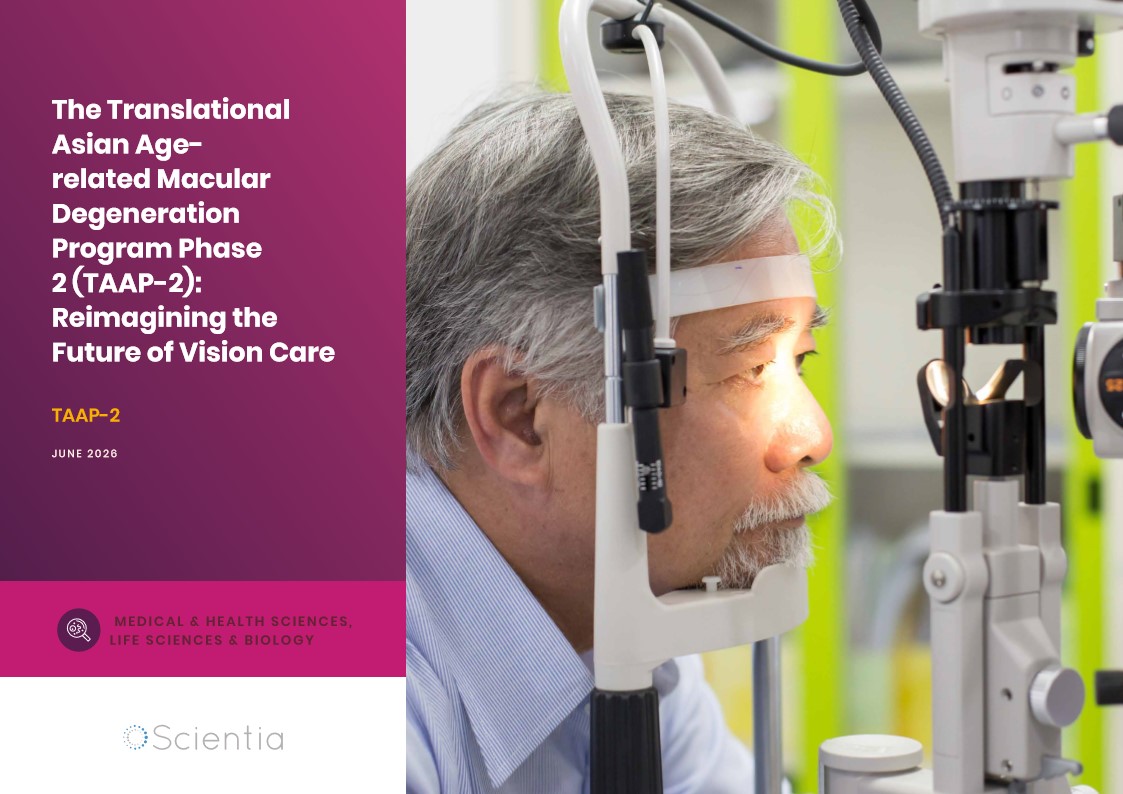
The Translational Asian Agerelated Macular Degeneration Program Phase 2 (TAAP-2): Reimagining the Future of Vision Care
Age-related macular degeneration, often abbreviated as AMD, is one of the leading causes of vision loss among older adults worldwide. In Asia, where populations are ageing rapidly, its impact is particularly profound. For many, the disease quietly erodes central vision, making everyday activities such as reading, driving, and recognising faces increasingly difficult. Against this backdrop, the Translational Asian Age-related Macular Degeneration Programme, or TAAP for short, has emerged as a bold and ambitious effort to confront the disease headon. Now in its second phase, TAAP-2 represents a significant evolution in both scientific scope and clinical ambition.

Ms. Aikaterini Dritsoula | Looking Beyond Snoring: How Hidden Airway Problems Shape Children’s Sleep
For many parents, a child’s snoring may seem harmless, even endearing. Yet in some cases, it signals something more serious. Obstructive sleep apnoea is a condition in which a child’s breathing is repeatedly disrupted during sleep. These interruptions can affect growth, behaviour, and learning. Children with this condition may toss and turn at night, struggle to concentrate during the day, or show signs of hyperactivity and fatigue. Traditionally, enlarged tonsils and adenoids have been seen as the main culprits. Surgery to remove them has long been considered the standard treatment. However, research led by Consultant ENT Surgeon Ms. Aikaterini Dritsoula of The Leeds Teaching Hospitals NHS Trust invites us to look deeper. Her work suggests that the story is often more complex, especially in very young children.