
Featured writer: Helen Rickard
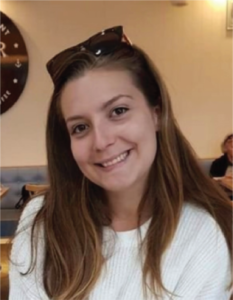 Helen holds a PhD in Microbiology from University College London, carried out in collaboration with a local paediatric hospital. Her doctoral research focused on understanding how microbes are transmitted through the built environment, with the aim of informing infection prevention and improving healthcare design. With a strong foundation in biological and biomedical sciences, Helen has worked across academic, clinical, and public health research settings, gaining expertise in infectious diseases and the real-world application of science to protect health. Helen is now an Impact Fellow with UCL’s Institute of Healthcare Engineering, where she is learning more about how to increase the impact of academic research through communication, engagement, and policy to benefit both researchers and communities.
She has a particular interest in using scientific evidence to guide policy and improve health outcomes, and has contributed to projects that connect research with decision-making at both local and national levels. Helen is also an experienced science communicator and has spent several years writing about scientific and medical research for a broad audience. She is passionate about making complex science accessible and meaningful to the people it affects.
Do you have a preferred place to write, or time of day? What does a day in the life of a science writer like you look like?
I started writing for Scientia during my PhD, so from the beginning it’s been something I’ve fit around lab work and other commitments. That’s meant finding a rhythm that works for me, and over time I’ve discovered that I’m far more focused in the lab during the mornings and much better at writing in the evenings. I’m really lucky to have quite a bit of control over my schedule, so I’ve been able to plan my days around those natural working patterns.
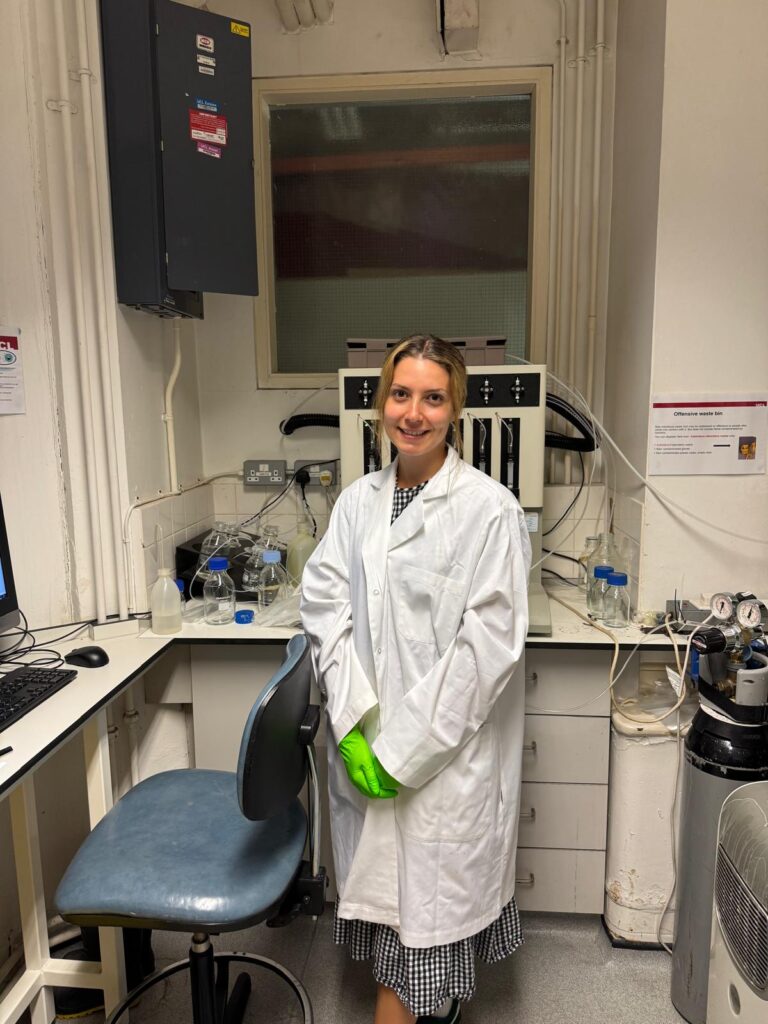
A typical day starts early; I like getting into the lab while it’s still quiet. I find I can get a lot done first thing, especially before anyone else has claimed the equipment (or the radio). After a full day in the lab, I always make sure I have a proper break before I even think about writing. That usually means getting outside for a bit, having some dinner, and resetting my brain.
Writing always starts with a cup of tea. I have a little study at home that looks out onto the street. It’s the perfect spot, I can be nosy when I need a break, but it’s still quiet enough to concentrate. Because I’ve been writing alongside my other work for a few years now, the rhythm of research during the day and writing in the evening has become a really nice balance. It gives me space to think about science from a different perspective, and I actually find that writing often helps me reflect more clearly on the value and impact of research, including my own. It’s a nice reminder, especially on days when things don’t go to plan, that science is part of a much bigger picture.
Could you describe your process? How do you go about crafting these articles?
I always start with a cup of tea – it’s basically a requirement at this point! Then I begin by thinking about the bigger picture. Before diving into the specific research papers, I usually do some background reading to better understand the context of the work. This often means looking at trusted sources like NHS or charity websites, especially for articles dealing with disease areas or public health. I find it helps me connect the science to the people it affects. For example, in an article I wrote on research conducted by Dr Burt Nabors and his team, the team were investigating the role of very specific molecules and compounds, but those tiny molecules have huge implications for how we understand and treat aggressive forms of brain cancer. That balance between the fine details and the broader human impact is something I always try to capture.
Once I’ve understood the wider context, I’ll read through the papers in full to get a general sense of the research. With multi-paper articles, researchers often tell us if they want the focus to be on a particular theme or breakthrough. If that’s the case, I’ll re-read the papers with that focus in mind, highlighting key points and pulling out recurring themes. Then I start sketching out subheadings, usually working from broad to specific, starting with the problem or disease area, then moving into the findings and applications.
Something I always aim for is ending the article with a strong closing sentence or two that reinforces why the research matters. So much of the work I get to write about has the potential to bring real benefits to people around the world, and I think it’s incredibly important that those stories are told in a way that people can understand and connect with.
Finally, I absolutely have to leave at least a day between writing and proofreading. If I don’t give myself that bit of distance, I can never see my own spelling mistakes or awkward phrasing. A fresh pair of eyes (even if they’re still my own) makes all the difference.
How did you start writing for Scientia? What motivated you to do this?
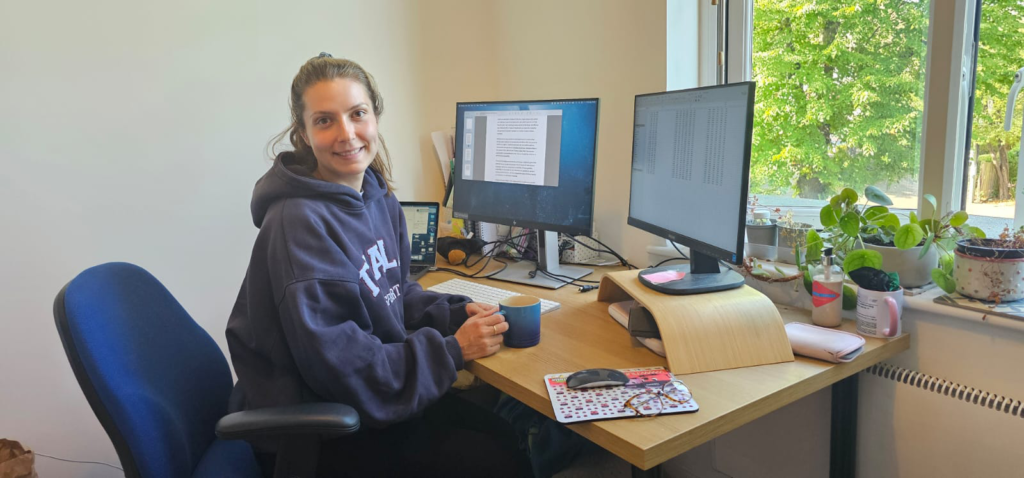
I started writing for Scientia in the second year of my PhD. At the time, none of my experiments were working, and I was going through one of those phases where I wasn’t sure if academic research was really for me (I think we’ve all been there?). I’ve always been passionate about the “why” behind research, my own work is very applied, and I’ve always believed that the value of science lies in the benefits it can bring to people and society. I’d also been involved in a few public engagement and science communication projects, and I realised how much I enjoyed talking about science with people outside of academia.
One particularly frustrating day, after yet another failed experiment, I found myself half-seriously looking up science-related jobs online and stumbled across the advert for Scientia. It sounded like exactly the kind of thing I’d enjoy: reading about interesting research and helping to explain it in a way that more people could understand and appreciate. I applied, did the writing test, and got the role!
Happily, I did end up falling back in love with my own research not long after, but I’ve kept writing for Scientia ever since. It’s been a great creative outlet alongside lab work, and a lovely reminder of all the amazing research that’s going on outside of my own little niche.
What have you learned from the articles you’ve written?
I’ve learned so much from writing these articles over the last few years! One of the biggest things has been how to communicate complex science clearly and engage with different audiences. I’m now much better at identifying the key points in a piece of research and understanding what non-specialist readers are most likely to find interesting, and how to help them understand what can be very complex scientific concepts. When you’re close to your own research, it’s easy to get caught up in the fine details, which are really important, but not always what draws people in or helps them care about what we are doing.
Writing for a wider audience has really helped me shift perspective and focus more on the “why” behind the work. It’s also taught me how to support researchers in communicating the value of their work more effectively. I’ve learned how to bring out the real-world impact of a study, whether that’s improving patient care, informing policy, or tackling broader societal challenges, and present it in a way that resonates beyond the academic community. That kind of clarity isn’t just helpful for public engagement; it also strengthens how researchers present their work to funders, collaborators, and policymakers. By helping authors tell a clear, compelling story about why their research matters, I’ve seen how good communication can really amplify its reach and influence.
It’s also been a brilliant way to learn about fascinating research that I might never have come across otherwise. I’m a keen runner and so very aware of my own knees and ankles so one of my favourite pieces I’ve had the opportunity to work on has been Dr Markus Regauer’s work on ankle injuries. I also really enjoy articles that focus on innovation, new technologies or processes that make healthcare more effective or more patient-friendly. For example, Dr Stefano Mischler’s study exploring how a simple urine test could monitor the wear on joint replacements was such a smart non-invasive solution to a really big problem. Dr Omar Islam’s work on portable MRI scans for ICU patients was a great example of adapting high-tech equipment to meet real-world needs.
Overall, writing for Scientia has helped me build a really useful set of communication skills, and shown me just how important it is to make research accessible, relatable, and relevant to the people it’s ultimately meant to benefit.
SHARE

DOWNLOAD E-BOOK
REFERENCE
https://doi.org/10.33548/Issue154.02
REPUBLISH OUR ARTICLES
We encourage all formats of sharing and republishing of our articles. Whether you want to host on your website, publication or blog, we welcome this. Find out more
Creative Commons Licence (CC BY 4.0)
This work is licensed under a Creative Commons Attribution 4.0 International License. 
What does this mean?
Share: You can copy and redistribute the material in any medium or format
Adapt: You can change, and build upon the material for any purpose, even commercially.
Credit: You must give appropriate credit, provide a link to the license, and indicate if changes were made.
SUBSCRIBE NOW
Follow Us
MORE ARTICLES YOU MAY LIKE

Dr Haydee Laza | Identifying Aphidresistance to Protect Future Crops
Insect pests, such as aphids, are capable of decimating crop yields, leading to severe economic loss. Some plants, however, have developed traits that make them resistant to such pests. Identifying these traits in plants, however, is not simple. Dr. Haydee Laza from Texas Tech University has worked with colleagues to identify several sorghum aphidresistant leaf structure traits in sorghums. These traits can be used as the basis for developing future screening methods for identifying aphid resistance in sorghums, subsequently protecting future crop yields.

Dr. Colleen Fisher | Singing to the Lions: Tackling Childhood Trauma in Zimbabwe Through Creative Psychosocial Support
Mental health challenges are one of the biggest issues facing children and adolescents across the world, particularly in low-resource settings. In Zimbabwe, a 3-day intervention called Singing to the Lions is helping young people build resilience through creative, traumainformed workshops. Dr Colleen Fisher and colleagues in Zimbabwe and the U.S. led the first formal evaluation of the intervention, offering new insight into how locally grounded intervention approaches can support youth mental health at scale.
Dr Rhett Martin | Governing Nature at the Edge of Collapse
For millions of men, ageing brings with it a set of frustrating and often disruptive urinary symptoms. These symptoms, caused by benign prostatic hyperplasia, or BPH, can affect sleep, confidence, and overall quality of life. Traditionally, treatment follows a familiar path. Patients begin with medications, often for years, and may eventually progress to surgery if symptoms worsen. Yet this pathway is not without its drawbacks. Medications can cause side effects, while surgery carries risks and recovery time. In recent years, a minimally invasive interventional radiology procedure called prostate artery embolisation, or PAE, has begun to challenge this traditional model. At the forefront of this shift is a collaborative research group, led by Dr. Nicholas Brown of the University of Queensland, whose series of P-EASY studies has explored whether PAE could transform how BPH is treated, particularly at earlier stages.

Assoc Prof. Nicholas Brown | Rethinking Prostate Care: A New Frontier in Treating Benign Prostatic Hyperplasia
For millions of men, ageing brings with it a set of frustrating and often disruptive urinary symptoms. These symptoms, caused by benign prostatic hyperplasia, or BPH, can affect sleep, confidence, and overall quality of life. Traditionally, treatment follows a familiar path. Patients begin with medications, often for years, and may eventually progress to surgery if symptoms worsen. Yet this pathway is not without its drawbacks. Medications can cause side effects, while surgery carries risks and recovery time. In recent years, a minimally invasive interventional radiology procedure called prostate artery embolisation, or PAE, has begun to challenge this traditional model. At the forefront of this shift is a collaborative research group, led by Dr. Nicholas Brown of the University of Queensland, whose series of P-EASY studies has explored whether PAE could transform how BPH is treated, particularly at earlier stages.