
Featured writer: Janine Galliano
 Hi, I’m Janine Galliano. I’m a science writer for Scientia, where I help highlight the ground-breaking research, and raise awareness of the exceptional scientific work carried out by scientists from across the globe. I hold an MSc in Environmental Consultancy, a BSc (Hons) in Geography and Environmental Management, and a PgCert in Biodiversity, Wildlife, and Ecosystem Health. With over a decade of experience in the environmental sector, my work has spanned research, sustainability, and policy.
In addition to science writing, I’m also an indie horror author, and a contributor to SmartGirlStories.com, where I help share the stories of motivational women, amplifying their voices to inspire future generations. Outside of writing, I designed the Brelli Bag, a rain-cover protector for your handbags, and serve as a trustee for Whole Wild World, a re-wilding charity dedicated to restoring ecosystems and reconnecting communities with nature.
Stories –in all their forms– are powerful tools for sharing knowledge, deepening understanding, and helping us grow as individuals, whilst affording us a greater awareness of the world around us. I strive to write in as many formats as a can, including running a blog on my Goodreads author page.
Do you have a preferred place to write, or time of day? What does a day in the life of a science writer like you look like?
My preferred place to write is my home office—a calm and quiet space, where I’ve positioned my desk to face the window and soak in as much natural light as possible. From my seat, I can see my small collection of potted plants on the terrace, which brings a sense of peace and connection to the outdoors. Mornings are definitely when I’m most productive, it’s when my mind feels clearest and I tend to have the greatest focus and creative energy.
That said, I do often find myself working in the afternoons or evenings too, especially when juggling other work commitments. One of the real benefits of working as a freelance writer is the flexibility—it allows you to shape your day around your life. While routine can be comforting, I also love being able to switch things up, whether it’s taking the morning off to enjoy some sunshine, or spending time with friends and family, and then picking up work again later.
As a science writer, and as part of my work, a chunk of my day is spent reading new research and keeping up to date with environmental news. The environmental field is incredibly dynamic and constantly evolving, so there is always something new to learn—new discoveries, emerging technologies, new environmental issues. I often say you could dedicate your entire life to studying the environment and still only scratch the surface.
Research is a key part of the writing process, especially when I’m covering topics I’m less familiar with. Some journal articles are very technical, so I take time to break them down, and make sure I truly understand the science before getting down to writing. I also try to separate writing and editing as much as possible—getting the first draft out without overthinking, then coming back later with fresh eyes. Breaking up writing sessions often brings fresh perspective, especially important when tackling complex papers or multiple papers. Being a science writer is finding a balance between curiosity, creativity, and careful attention to detail.

Could you describe your process? How do you go about crafting these articles?
When working on a project, I follow a set of carefully developed steps that I now approach almost religiously. These steps help make the article-writing process as smooth and efficient as possible, ensuring that the final piece truly reflects the hard work of the scientist or scientific team behind it.
My process usually begins by drafting a detailed biography of the scientist, or scientists, involved in the paper. This step is crucial because it gives me a personal introduction to who they are—their background, their passion, their journey, and the dedication they’ve invested in their field. I find this particularly inspiring, and I believe that understanding the people behind the research enriches the article, and helps me create a narrative that captures not just the science but also the human drive behind it.
Next, I usually print out the scientific paper— guilty, but it’s always double-sided and on recycled paper and then gets recycled, I promise! This helps me engage more physically with the text, helps me focus and minimises distractions. I then read slowly through the paper once, to get a general sense of its context. After this initial read, I go through the article again, this time highlighting key elements, such as the introduction to the subject, important concepts, the methodology, results, major findings, conclusions, and any proposed future directions. This allows me to identify the core messages I need to convey in the article.
Once I have these elements, the next stage involves collating the information onto a document and the work begins in making it flow and read coherently, as well as ensuring I capture what makes the work undertaken interesting. Here, I also expand on points that might need further detail or context, ensuring the article can be understood by readers without a scientific background.
Finally, the draft undergoes extensive editing and rewriting. This process is essential to ensure that the summary does justice to the original paper. It’s about more than just simplifying jargon, it’s about making complex ideas accessible, and helping readers appreciate why the research matters.
How did you start writing for Scientia? What motivated you to do this?
I had reached a point in both my life and career where I felt I needed a change—a desire to do more with my education, my skills, and the experiences I’d accumulated over the years. The quote often attributed to Robin Sharma, “Do not live the same year 75 times and call it a life,” has always resonated with me. It served as a reminder that growth comes from taking new paths, and it inspired me to start pursuing one of my own.
At the same time, having already written a couple of novels, I wanted to expand my writing portfolio and take on new challenges in different formats and subject areas. I was also increasingly drawn to the idea of remote work—not just for the flexibility it provides in terms of where I live and work, but for the access it offers to a wider range of opportunities and collaborations.
One area I’ve always felt strongly about is environmental awareness and education. Throughout my career, I’ve been fortunate to work on various environmental campaigns and educational initiatives in schools. These experiences have shown me that meaningful change often begins with education. By fostering awareness and understanding, especially among younger generations, we can create a ripple effect that leads to real impact—both in individual lives, and in addressing the broader environmental challenges we face.
With this in mind, I began exploring roles that would allow me to combine my passion for writing with my interest in science communication and environmental outreach. Fortunately, not long after starting my search, I came across an opportunity to join Scientia as a science writer. I thought Scientia was a great platform, in that it translates complex scientific work into compelling narratives. As part of the application process, I was asked to write a sample piece, and I enjoyed breaking down the technical material and summarising the essence of the article. I was delighted when I received the invitation to join Scientia’s pool of science writers, feeling it was the beginning of embarking on a new career path.

What have you learned from the articles you’ve written?
Learning more about the subject matter behind each article is great. But for me, what’s even more meaningful is learning about the people behind the research—their careers, their journeys, and the dedication that has brought them to the point of publishing these scientific papers. Their stories inspire me. They motivate me to keep moving forward in my own environmental career and offer a sense of hope and reassurance: that there are people out there who continue to dedicate their lives to science, to research, and to deepening our understanding of environmental challenges and their solutions.
One experience that deeply impacted me, was swimming with manta rays in the Maldives, where a quote by Baba Dioum was pinned to the centre’s door. It read: “In the end, we will conserve only what we love; we will love only what we understand; and we will understand only what we are taught.” With each article I write, I not only further my own understanding—I help others do the same.
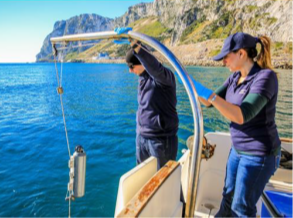 A great deal of time and care goes into each article, and I find that a part of each one stays with me long after it’s finished. I’ve been fortunate to work on a wide range of scientific journals, each offering new insights and expanding my understanding of the world. For example, I’ve explored the benefits of co-generation systems in residential buildings, which can reduce carbon footprints while improving energy resiliency, and the importance of promoting cleaner energy sources and carbon capture technology. Other articles have deepened my awareness of the complex relationships between water quality, usage, and scarcity—especially during droughts and heatwaves—and how nature-based solutions can be used to address urban flooding through more holistic, sustainable flood management approaches. I’ve also learned about the upcycling of single-use plastics, turning waste into useful materials, and how augmented reality can support education, exploring deltaic reservoirs, as an example, or learning more about the life of Alfred Russel Wallace and the place where he independently outlined his theory of evolution through natural selection.
SHARE

DOWNLOAD E-BOOK

REFERENCE
https://doi.org/10.33548/Issue155.2
REPUBLISH OUR ARTICLES
We encourage all formats of sharing and republishing of our articles. Whether you want to host on your website, publication or blog, we welcome this. Find out more
Creative Commons Licence (CC BY 4.0)
This work is licensed under a Creative Commons Attribution 4.0 International License. 
What does this mean?
Share: You can copy and redistribute the material in any medium or format
Adapt: You can change, and build upon the material for any purpose, even commercially.
Credit: You must give appropriate credit, provide a link to the license, and indicate if changes were made.
SUBSCRIBE NOW
Follow Us
MORE ARTICLES YOU MAY LIKE

Dr Haydee Laza | Identifying Aphidresistance to Protect Future Crops
Insect pests, such as aphids, are capable of decimating crop yields, leading to severe economic loss. Some plants, however, have developed traits that make them resistant to such pests. Identifying these traits in plants, however, is not simple. Dr. Haydee Laza from Texas Tech University has worked with colleagues to identify several sorghum aphidresistant leaf structure traits in sorghums. These traits can be used as the basis for developing future screening methods for identifying aphid resistance in sorghums, subsequently protecting future crop yields.

Dr. Colleen Fisher | Singing to the Lions: Tackling Childhood Trauma in Zimbabwe Through Creative Psychosocial Support
Mental health challenges are one of the biggest issues facing children and adolescents across the world, particularly in low-resource settings. In Zimbabwe, a 3-day intervention called Singing to the Lions is helping young people build resilience through creative, traumainformed workshops. Dr Colleen Fisher and colleagues in Zimbabwe and the U.S. led the first formal evaluation of the intervention, offering new insight into how locally grounded intervention approaches can support youth mental health at scale.
Dr Rhett Martin | Governing Nature at the Edge of Collapse
For millions of men, ageing brings with it a set of frustrating and often disruptive urinary symptoms. These symptoms, caused by benign prostatic hyperplasia, or BPH, can affect sleep, confidence, and overall quality of life. Traditionally, treatment follows a familiar path. Patients begin with medications, often for years, and may eventually progress to surgery if symptoms worsen. Yet this pathway is not without its drawbacks. Medications can cause side effects, while surgery carries risks and recovery time. In recent years, a minimally invasive interventional radiology procedure called prostate artery embolisation, or PAE, has begun to challenge this traditional model. At the forefront of this shift is a collaborative research group, led by Dr. Nicholas Brown of the University of Queensland, whose series of P-EASY studies has explored whether PAE could transform how BPH is treated, particularly at earlier stages.

Assoc Prof. Nicholas Brown | Rethinking Prostate Care: A New Frontier in Treating Benign Prostatic Hyperplasia
For millions of men, ageing brings with it a set of frustrating and often disruptive urinary symptoms. These symptoms, caused by benign prostatic hyperplasia, or BPH, can affect sleep, confidence, and overall quality of life. Traditionally, treatment follows a familiar path. Patients begin with medications, often for years, and may eventually progress to surgery if symptoms worsen. Yet this pathway is not without its drawbacks. Medications can cause side effects, while surgery carries risks and recovery time. In recent years, a minimally invasive interventional radiology procedure called prostate artery embolisation, or PAE, has begun to challenge this traditional model. At the forefront of this shift is a collaborative research group, led by Dr. Nicholas Brown of the University of Queensland, whose series of P-EASY studies has explored whether PAE could transform how BPH is treated, particularly at earlier stages.