
Professor Arthur Nielsen | Overcoming Relationship Challenges: An Expert’s Guide to Couple Therapy
Navigating relationships can be challenging. From money issues, raising children, job pressures, and extramarital affairs, there are an array of issues couples present to therapists. In his 40+ years of experience as a psychiatrist, psychoanalyst, and couple therapist, Professor Arthur Nielsen has built a wealth of knowledge regarding how to support couples.
In addition to more than 40 research publications, he has published his insights in two textbooks: A Roadmap for Couple Therapy: Integrating Systemic, Psychodynamic, and Behavioral Approaches and Integrative Couple Therapy in Action: A Practical Guide for Handling Common Relationship Problems and Crises, both of which are valuable resources for therapists navigating couple therapy.
Why Couple Therapy is so Challenging for Couples and Therapists
Commencing therapy can be challenging: for the client it requires emotional vulnerability and openness; for the therapist it requires careful consideration of the client’s individual needs and application of the appropriate techniques to achieve desired outcomes. Therapists must navigate two unique, sometimes conflicting, psychologies, pasts, motivations, and dedication to therapy and the relationship. Additionally, with a multitude of therapeutic modalities available, therapists may become overwhelmed as to which may be optimal for the couple.
Traditionally, couple therapy involved unstructured sessions where a therapist facilitated direct conversation between partners to resolve immediate issues. Professor Nielsen terms this Couple Therapy 1.0. However, this model often proves insufficient for systemic conflicts within the relationship so that “upgrades” to this are required to improve effectiveness. To provide couple therapists with a robust framework for addressing deeper issues, Professor Nielsen draws on his decades of experience in the field and extensive review of clinical and research publications to describe a more effective approach to couple therapy, one that draws on the best practices from the various name-branded approaches currently available.

Beyond the Traditional Method: An Integrative Approach to Couple Therapy
Beyond the conventional approach to couple therapy, Professor Nielsen recommends integration of systemic, psychodynamic, and behavioral approaches to optimize outcomes for couples. This begins by placing attention on the couples’ interpersonal processes: prioritizing resolution of how couples interact above what they are interacting about. Systemic interventions then label the negative interaction cycle as the enemy. In doing so, the blame on either individual is minimized and the problem becomes objectified in a way that makes it a common target the couple can attack.
Psychodynamic interventions center on identifying underlying issues that exist below the surface of the communication problems of the negative interaction cycles. The goal of this approach is to reduce defensiveness and blame and facilitate acceptance, forgiveness, and empathy. Behavioral interventions include teaching skills regarding communication, emotional regulation, and how to have difficult conversations.
Professor Nielsen also applies additional interventions in couple therapy. Measures such as resolving tangible issues in the relationship, recommending self-help materials, teaching problem-solving and negotiation techniques, encouraging positive interactions, and working to restore sexual intimacy are all techniques that can be applied concurrently to the interventions described above.

Communication is Key: Overcoming Couples’ Challenges with Speaking and Listening
During his time as a couple therapist, Professor Nielsen has become all too familiar with the common challenges couples face when it comes to articulating their needs and receiving criticism. He explains that asking for what a person wants is difficult because it exposes vulnerability, raising fears of rejection or disappointment. Drawing on self psychology and social psychological research, he notes that individuals often underestimate others’ willingness to meet their needs, internalizing beliefs of being undeserving or burdensome. In therapy, he encourages clients to shift from demands to requests, to make their needs concrete and direct, and to explore the fears that make asking risky. Role-play and in-session coaching provide a safe space to practice these new approaches, helping couples transform asking into an act of intimacy rather than a source of tension.
Professor Nielsen also highlights how listening to criticism is equally fraught, often triggering defensiveness, misinterpretation, or emotional withdrawal. Rather than recognizing criticism as a partner’s expression of unmet needs or vulnerabilities, many experience it as an attack. He employs strategies to slow down defensive reactions, reframe criticism as an underlying longing, and use empathic reflection so that the listener focuses on emotional meaning rather than surface conflict. By helping partners distinguish intent from impact and practice staying present with uncomfortable feedback, therapists can build tolerance and resilience in the face of criticism.
Across both challenges, Professor Nielsen integrates psychoanalytic, behavioral, and systems perspectives to show how small but significant shifts in these everyday interactions can improve intimacy and resilience. Ultimately, he positions these skills as central targets for effective couple therapy.

A Toolkit for Therapists: Professor Nielsen’s Roadmap for Couple Therapy
For therapists seeking a comprehensive, flexible, and user-friendly template for conducting couple therapy, Professor Nielsen’s textbook A Roadmap for Couple Therapy: Integrating Systemic, Psychodynamic, and Behavioral Approaches, provides a valuable resource. In the book, Prof Nielsen describes the three main approaches to conceptualizing couple distress and treatment (systemic, psychodynamic, and behavioral) and shows how they can be integrated into a model that draws on the best of each. While other textbooks typically present just one modality of couple therapy and lack cohesion between them, Professor Nielsen’s book engages several viewpoints, outlining how to combine and sequence different approaches into one model.
Beginner and experienced therapists will derive value from Professor Nielsen’s roadmap, which covers both fundamental and advanced techniques. A Roadmap for Couple Therapy provides an important resource for therapists who are navigating the complexity of supporting couples to revive and repair their relationships.

Building on the Roadmap: Applying Therapeutic Techniques to Common Couples’ Challenges
Building on the roadmap detailed in his first book, Professor Nielsen wrote a second book. Integrative Couple Therapy in Action: A Practical Guide for Handling Common Relationship Problems and Crises offers therapists a practical guide to addressing common and complex couple therapy issues. While A Roadmap for Couple Therapy centers on how to help couples talk to each other, Professor Nielsen’s latest book focuses on what they are talking about. It describes common sources of conflict in relationships, including ones concerning sex, parenting, money, and extramarital affairs. Unlike other texts that focus solely on theory and technique, Integrative Couple Therapy in Action delves into the details of each topic, describing why these issues are so stressful for clients and challenging for therapists. Professor Nielsen provides in-depth case studies which bring each specific issue and therapeutic challenge to life.
Together, Professor Nielsen’s textbooks provide invaluable resources for therapists of all skill levels looking to understand key relationship issues and how to support couples in therapy. By combining teachings from A Roadmap for Couple Therapy, which describes the principal approaches to couple problems and treatment, with Integrative Couple Therapy in Action, which details how to apply the integrative model to common problems that couples face, therapists will be well equipped to treat clients who seek help for relationship problems. By conveying his decades of experience and extensive research in digestible and user-friendly resources for therapists, Professor Nielsen provides what Jay Lebow, a former chief editor of the prestigious journal, Family Process, has described as “two of the best books ever written about couple therapy.”
SHARE

DOWNLOAD E-BOOK

REFERENCE
https://doi.org/10.33548/SCIENTIA1319
MEET THE RESEARCHER
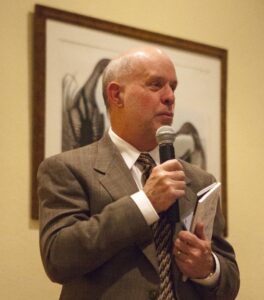
Professor Arthur Nielsen
Feinberg School of Medicine, Northwestern University, Evanston, IL, United States
Professor Arthur Nielsen obtained his undergraduate degree magna cum laude in Social Studies at Harvard College and his MD at Johns Hopkins University. He completed his psychiatry residency at Yale, undertook family therapy training at The Philadelphia Child Guidance Clinic, and graduated from The Chicago Institute for Psychoanalysis. Currently, Prof Nielsen is a full-time, practicing psychiatrist, psychoanalyst, and couple therapist based in Chicago, Illinois. He is a Clinical Professor of Psychiatry at Northwestern University’s Feinberg School of Medicine, a faculty member at the Chicago Institute for Psychoanalysis, and a faculty member at Chicago’s Institute for Clinical Social Work, where he is also Associate Director of the Integrative Psychoanalytic Couple Therapy Program.
He originated and for many years taught the undergraduate course, Marriage 101 at Northwestern University, now in its 25th year, and one of the most popular courses on campus. Prof Nielsen has authored more than 40 published professional papers as well as two textbooks in the field of couple therapy: A Roadmap for Couple Therapy: Integrating Systemic, Psychodynamic, and Behavioral Approaches and Integrative Couple Therapy in Action: A Practical Guide for Handling Common Relationship Problems and Crises.
CONTACT
E: arthur@arthurnielsenmd.com
W: https://www.arthurnielsenmd.com/
FURTHER READING
Nielsen, A. C. (2017). From Couple Therapy 1.0 to a Comprehensive Model: A Roadmap for Sequencing and Integrating Systemic, Psychodynamic, and Behavioral Approaches in Couple Therapy. Family Process, 56540–557. DOI: https://doi.org/10.1111/famp.12300
Nielsen, A. C. (2017). Psychodynamic couple therapy: A practical synthesis. Journal of Marital and Family Therapy, 43, 685–699. https://doi.org/10.1111/jmft.12236
Nielsen, A. C. (2023). Asking for things and listening to criticism: Two fundamental challenges in intimate relationships and targets for couple therapy. Psychoanalysis, Self and Context. 18(2), 262–280. DOI: https://doi.org/10.1080/24720038.2023.2183209


REPUBLISH OUR ARTICLES
We encourage all formats of sharing and republishing of our articles. Whether you want to host on your website, publication or blog, we welcome this. Find out more
Creative Commons Licence (CC BY 4.0)
This work is licensed under a Creative Commons Attribution 4.0 International License. 
What does this mean?
Share: You can copy and redistribute the material in any medium or format
Adapt: You can change, and build upon the material for any purpose, even commercially.
Credit: You must give appropriate credit, provide a link to the license, and indicate if changes were made.
SUBSCRIBE NOW
Follow Us
MORE ARTICLES YOU MAY LIKE

Dr. Colleen Fisher | Singing to the Lions: Tackling Childhood Trauma in Zimbabwe Through Creative Psychosocial Support
Mental health challenges are one of the biggest issues facing children and adolescents across the world, particularly in low-resource settings. In Zimbabwe, a 3-day intervention called Singing to the Lions is helping young people build resilience through creative, traumainformed workshops. Dr Colleen Fisher and colleagues in Zimbabwe and the U.S. led the first formal evaluation of the intervention, offering new insight into how locally grounded intervention approaches can support youth mental health at scale.

Professor Neil Coffee – Professor Vincent Versace | Mapping Health Access: Using Address-Level Intelligence for Smarter Services
Accessing healthcare is a serious challenge for people living in rural and remote Australia. Large distances, sparse populations, and limited services can prevent residents from receiving care when they need it. Professors Neil Coffee and Vincent Versace at Deakin University’s Centre for Australian Research into Access (CARA) are leading research to model healthcare service access across the country, to provide new insights that can guide health planning and policy, as well as other services such as education. This work combines the curation of detailed address level residential dwellings and road network data to calculate access to service metrics (time and distance). These metrics are applied to the simulated residential dwelling population, to quantify the population with poor access to health services.

Professor Tony Gerard Butler | Mental Health Treatment: A Critical Pathway in the Criminal Justice System
Professor Tony Butler of the University of New South Wales explores the dynamic relationship between mental health and justice, unravelling the transformative potential of mental health treatment in the criminal justice system. By navigating the complexities of mental health interventions and their implications for reoffending rates, Professor Butler’s research provides valuable insights into the inherent challenges – and opportunities – found at the intersection of mental health and justice.

Dr David Hansen – Abhishek Juneja | Coming of Age: Active Balancing in Adolescence
Adolescence, the transitional stage between childhood and adulthood, comes with challenges as well opportunities for growth and learning.