
Dr Kristiina A. Vogt | Dr Samantha De Abreu | Dr Maria Blancas – Indigenous Holistic Storytelling to Teach Environmental Science
Western approaches to environmental science typically focus on existing and future issues, such as climate change, and technological solutions to these issues. While these frameworks have their value, they often set aside holistic perspectives on land management, coexistence with nature, and ecosystem preservation. Dr Kristiina A. Vogt, Dr Samantha De Abreu and Dr Maria Blancas at the University of Washington are exploring the potential of holistic storytelling practices common among Indigenous communities to teach environmental science in more effective ways.
Beyond Western Environmental Science
Mitigating the adverse effects of climate change on natural environments, ecosystems, and animal species is of utmost importance. Ecologists and environmental scientists play key roles in protecting the environment; thus, they should be well-prepared to face both present and future environmental issues.
In Western countries, environmental problems are generally approached individually, without considering their political, economic, and societal aspects. As a result, solutions for tackling these problems have only been partly effective, with climate change and ecological breakdown continuously worsening over time.
Decisions about new environmental policies are also typically created from the top down, without considering the perspective of local communities and other stakeholders, or how these policies might affect them. Silencing locals and indigenous communities can greatly reduce the effectiveness of interventions, as effective policies should ideally account for their customs, needs, and lifestyles.
Indigenous tribes are also known to possess invaluable ancestral knowledge about how to adapt to environmental changes and to mitigate them. Including these communities in decision-making processes and learning from their perspectives could greatly improve the effectiveness and universal value of environmental policies.
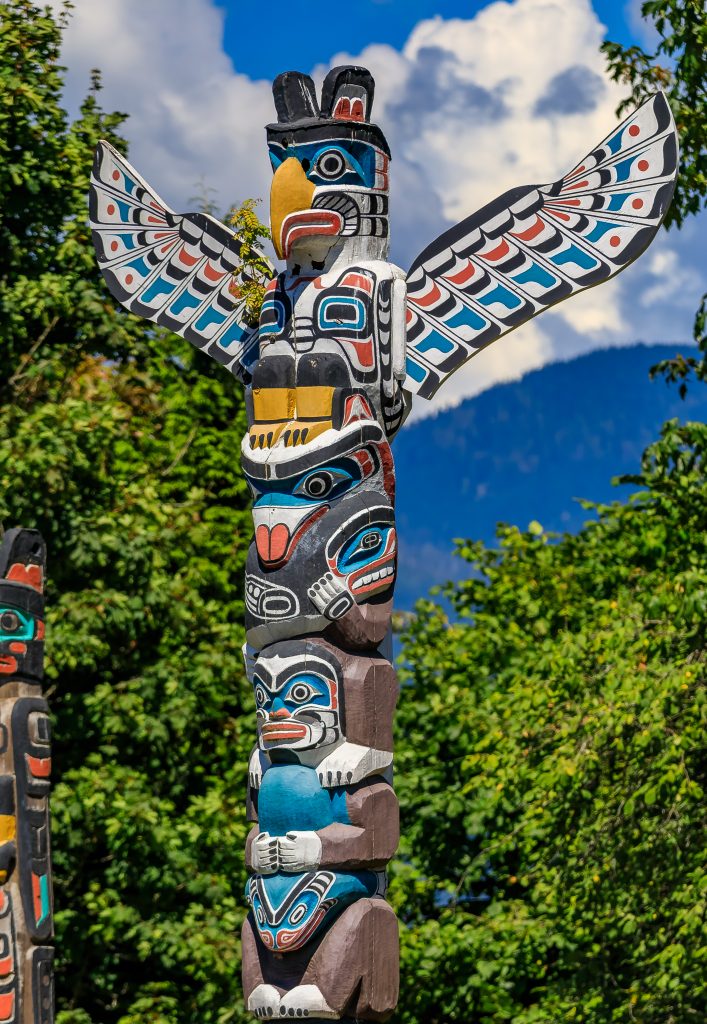
Indigenous Storytelling
Studies have shown that Indigenous people, who account for approximately 6% of the world’s population, safeguard 80% of the world’s remaining biodiversity. Their lands support a diverse range of plant and animal species because they carry precious knowledge of ecosystems and effective practices for preserving natural environments, which have been passed down for generations.
Dr Kristiina Vogt at University of Washington has been fascinated by Indigenous approaches to environmental conservation for years. Alongside Dr Samantha De Abreu and Dr Maria Blancas, she has been exploring the possibility of introducing these perspectives within classroom environments, specifically through Indigenous holistic storytelling.
Storytelling plays a crucial role in the inter-generational transfer of knowledge within Indigenous communities. Indigenous stories are often filled with wisdom, deep meanings, and valuable lessons about how to co-exist with local species, identify early warning signs of issues and imbalances, and preserve natural environments.
For centuries, the valuable knowledge acquired through these stories has allowed indigenous communities to anticipate environmental problems and limit their adverse impact on ecosystems. For instance, Aboriginal tribes in Australia implemented strategies to manage natural lands and promote the survival of kangaroos and other animals long before scientists gathered evidence of ecosystem degradation.
Challenging Science
Most existing environmental science courses are based on Western scientific practices, which entail the collection and analysis of data. Policymakers often heavily rely on scientific findings when drafting new policies, as they feel that these findings best illustrate ‘the truth’ about what works and what doesn’t.
On the other hand, common knowledge shared by locals and stories passed down by Indigenous communities are often perceived as unrealistic or inapplicable to real-world problems, unless they are backed by scientific evidence. Even if Western scientific practices were to try to validate this knowledge, they could only partly represent it and the many dimensions it touches on.
In their work, Dr Vogt and her colleagues explore the possibility that Indigenous knowledge, conveyed through storytelling, could greatly enhance Western environmental science courses. To do this, however, educators would need to employ a more ‘holistic’ approach, which considers and combines the many different dimensions of environmental issues.
Holistic storytelling involves linking different environmental issues across time and space, while also exploring their many implications and underlying dimensions. Dr Vogt strongly believes that teaching students about the interconnected nature of the many elements of life on Earth would better equip them to address both present and future environmental challenges.
These students could then go on to be wiser environmental scientists, drawing on both scientific practices and the valuable knowledge held by local and Indigenous communities. This could in turn promote more holistic, sustainable, and effective environmental policies.
Bringing Holistic Storytelling in the Classroom
Inspired by past findings highlighting the value of Indigenous storytelling, Dr Vogt has been introducing stories that Indigenous communities use to teach younger generations about preserving Earth’s ecosystems into Western environmental and forest science courses. In a 2022 paper, she and her colleagues introduced a new approach that could be used to bring holistic environmental concepts to modern classrooms.
The conceptual framework introduced by Dr Vogt’s team is based on the community-based design of holistic environmental curricula – a series of interventions developed over the course of three years in a classroom setting. The goal of these interventions is to introduce high-school and university students to environmental science concepts in ways that bridge different cultural perspectives.
Community-Based Research and Education
The new approach to environmental science devised by Dr Vogt’s team was incorporated in a course taught at a public research university starting from 2019. This course was offered to upper-level undergraduate students and graduate students of any discipline.
The course material was delivered by a diverse team of educators, including an environmental scientist, an environmental scholar and former chairperson of an Indigenous Tribe, an Indigenous storyteller and elder, an environmental scholar and Indigenous community leader, two environmental social scientists, an information scientist, a high-school teacher, and graduate students specialising in environmental science and policy. The students also took part in lectures held by other speakers from Indigenous communities, as well as land managers and scientists.
This unique holistic environmental science course spans across ten weeks, and three cohorts of students have taken part in it so far. During these weeks, the students first learn about Indigenous land management, holistic approaches to conservation, and Indigenous critical pedagogies.
The students are then asked to take part in group experiential learning exercises, where they are taught how to incorporate different cultural perspectives and understand environmental issues in a holistic way.
Finally, the students produce a holistic digital story or game focusing on one of the four themes touched upon during the course, namely marmots, dams, conservation planning-food security, and health or food quality. For example, the marmots theme covered climate change, conservation planning and landscape management, while dams included water management, water pollution, fish, tribes, and farmers.
A Promising Educational Approach
Dr Vogt and her colleagues evaluated the effects and potential value of their new course in several different ways. Firstly, the teaching team closely observed classroom activities and shared their views about the students’ engagement and development.
The educators also assessed the holistic stories produced by the students and the storyboards, ideas, and assignments associated with them. In addition, the students were asked to share feedback both during the course and after its completion.
In the program’s first year, Dr Vogt and her colleagues observed that students had trouble producing holistic stories and understanding their unique characteristics. In particular, they were unsure how to differentiate their holistic stories from linear or analytical narratives common in Western cultures. More specifically, the stories created by students often did not highlight interconnections between different elements in the systems they were considering, while others included irrelevant information.
The feedback gathered by the researchers inspired them to change some aspects of their course, for instance, including more lessons focusing on holistic storytelling approaches. In the second year of the program, these changes appeared to be fruitful, as more students successfully developed holistic stories that emphasised interactions between connected systems and included multiple viewpoints.
In the third year, the researchers decided to change the nature of the course’s final project, and asked students to create a holistic cooperative game instead of a story, as they felt that games allowed for greater interaction among students and Indigenous instructors. Overall, the students in year 3 shared overwhelmingly positive feedback, highlighting the value of the course for enriching their understanding of environmental sciences.
‘This class was very intellectually stimulating,’ said one of the students who attended the course in 2021. ‘It required me to think about environmental communication and education in a way that I hadn’t before, and to really try to balance the use of creativity with science. It also required a more holistic approach to environmental thinking, which really challenged me to think about the bigger picture.’
Holistic Environmental Practices
The recent work by Dr Vogt and her colleagues confirms the great value of Indigenous perspectives and storytelling as a means to broaden and enrich environmental science education. Her course has so far succeeded in introducing undergraduate students to both holistic storytelling and Indigenous conservation practices.
In the future, the conceptual framework behind the course could guide the development of other academic programs and initiatives that incorporate Indigenous ancestral knowledge into Western scientific practices. Combined, these programs would ensure that future environmental scientists are better equipped to face climate-related challenges in more effective and respectful ways, considering the viewpoints of all affected stakeholders, including local and Indigenous communities.
‘To tackle our most pressing environmental problems and develop sustainable solutions for the future, approaches that address systemic oppression, and promote diversity are needed,’ Dr Vogt concludes. ‘This research presents one educational framework that can be used to achieve these goals.’
SHARE

DOWNLOAD E-BOOK
LISTEN TO THE AUDIO
REFERENCE
https://doi.org/10.33548/SCIENTIA870
MEET THE RESEARCHERS
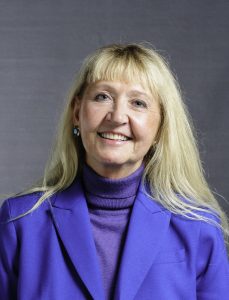
Dr Kristiina A Vogt
School of Environmental and Forest Sciences
University of Washington
Seattle, WA
USA
Dr Kristiina Vogt is a Professor of Environmental and Forest Sciences and the Founder of the Forest Systems and Bioenergy program at University of Washington. Born in Finland, she holds a BA in Biology from the University of Texas, an MS and PhD in Biology from New Mexico State University, and an honorary MA from Yale University. Dr Vogt is an expert on carbon and nutrient cycles at the ecosystem level, belowground ecology, conservation, nutrient cycling, invasive species, restoration ecology, and bioenergy. She is especially fascinated by the knowledge forming process used by local and Indigenous communities to mitigate the impact of climate change on large landscapes and maintain healthy ecosystems. Dr Vogt has also been working to develop tools to reliably measure the efficacy of conservation efforts and the effects of different land-uses on natural ecosystems.
CONTACT
E: kvogt@uw.edu
W: https://environment.uw.edu/faculty/kristiina-vogt/
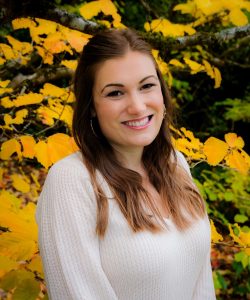
Dr Samantha De Abreu
School of Environmental and Forest Sciences
University of Washington
Seattle, WA
USA
Dr Samantha De Abreu completed her PhD research in the School of Environmental and Forest Sciences at the University of Washington. Her research is focused on environmental science education and fire management in the Pacific Northwest. Dr De Abreu is passionate about public scientific education and literacy. During her time at the University of Washington, she has worked on several civic concerns. She helped to form a single parents’ group for UW family housing, as well as a student parent/caregiver student organisation on campus. Dr De Abreu was a 2018 recipient of the UW HUSKY 100 award, which recognises students who are dedicated to positive change in their communities. When not focusing on research, she can be found exploring the Seattle area with her daughter.
CONTACT:
W: https://www.linkedin.com/in/samantha-de-abreu-ph-d-2777b31a2/
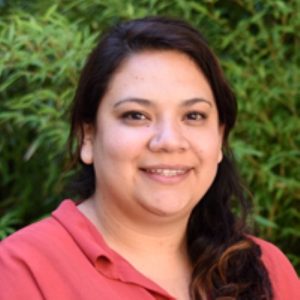
Dr Maria Blancas
School of Public Health
University of Washington
Seattle, WA
USA
Dr Maria Blancas earned a PhD from the University of Washington in the School of Environmental and Forest Sciences. She received the prestigious Bullitt Environmental Prize for her dissertation work, which focused on empowering farmworkers to tell their own stories. Her background primarily consists of community-engaged public health research and practice. Dr Blancas has helped to develop research instruments, trained community surveyors, provided qualitative data analysis support, and supported research translation and dissemination. Through her work with the Pacific Northwest Agricultural Safety and Health Center, she has also supported various outreach efforts, including community partnership development and serving on the needs assessment committee. Dr Blancas was recently appointed to serve as a member on the Washington State Environmental Justice Council. As the daughter of hard-working farmworkers, she is committed to ensuring farmworkers and their families are safe and healthy.
CONTACT
E: mblancas@uw.edu
FURTHER READING
S De Abreu, KA Vogt, A Schreier, P Fawcett, ME Marchand, DJ Vogt, M Tulee, L Martin, K Matsumoto, Teaching holistic environmental thought: A classroom approach, Thinking Skills & Creativity, 2022, 46, 101141.
KA Vogt, A Schreier, A Orloff, ME Marchand, DJ Vogt, P Fawcett, S De Abreu, T Purty, M Murphy-Williams, Building Environmental literacy through holistic storytelling, Online Journal of Ecology & Environmental Sciences, 2021, OJEES.MS.ID.000501.
ME Marchand, KA Vogt, AS Suntana, R Cawston, J C Gordon, M Siscawati, DJ Vogt, JD Tovey, R Sigurdardottir, PA Roads, The River of Life: Sustainable practices of Native Americans and Indigenous Peoples, Higher Education Press, 2013.

REPUBLISH OUR ARTICLES
We encourage all formats of sharing and republishing of our articles. Whether you want to host on your website, publication or blog, we welcome this. Find out more
Creative Commons Licence (CC BY 4.0)
This work is licensed under a Creative Commons Attribution 4.0 International License. 
What does this mean?
Share: You can copy and redistribute the material in any medium or format
Adapt: You can change, and build upon the material for any purpose, even commercially.
Credit: You must give appropriate credit, provide a link to the license, and indicate if changes were made.
SUBSCRIBE NOW
Follow Us
MORE ARTICLES YOU MAY LIKE
Dr Suzan Ilcan | Building Bridges Across Difference: How Women Refugees and Volunteers Foster Solidarity in Cyprus
Across Europe, refugees and asylum seekers often find themselves in precarious situations, facing limited access to housing, employment, education, and legal protection. While government responses have frequently proved inadequate, grass-roots movements have emerged to fill the gaps. These citizen-led initiatives represent more than simple charity; they embody new forms of political engagement where refugees and volunteers work together across differences to create useful change.
This issue is particularly pressing in the Republic of Cyprus (RoC), where the island’s own history of division and displacement shapes contemporary responses to newcomers. Since 2015, the RoC has experienced a dramatic increase in refugee arrivals, making it the EU member state with the highest number of asylum applications per capita in 2021. Yet despite – or perhaps because of – this pressure, women in the Cypriot city of Paphos have created remarkable spaces of collaboration and mutual support.

Prof Han Lamers | How Early Modern Scholars Used Ancient Greek to Shape Their National Identities
In early modern Europe, ancient Greek was far more than a scholarly pursuit. Intellectuals from many regions discovered that demonstrating resemblance of their native languages to Greek could elevate their cultural status, support claims of superiority over rival languages, and even advance religious and political causes. Sometimes called ‘Hellenising’, this phenomenon saw scholars from Italy to France, Germany, and the Netherlands, deliberately revealing —and often inventing— Greek features in their mother tongues.
Understanding how this worked requires examining specific cases where scholars used Greek to reshape their languages and advance their own agendas.

Professor Richard Ludueña | Two Turkish Cities Were Essential in the Development of Science and Religion – a Work in Progress
This book explores the history of the area in Turkey where these two cities lie. Prof Richard Ludueña and his daughter visited Harran and Sanliurfa (formerly Edessa) in 2014. He found them fascinating and wanted to learn more about their histories, but found no book that focused on their history from the beginning to modern times. So, he decided to write one.
Harran still bears its ancient name, but Edessa has had a great variety of names and is now called Sanliurfa. Our story goes back long before the cities were founded, back to the late Neolithic site of Göbekli Tepe, where monuments have carvings consistent with a destructive comet.

Professor Loren Babcock | The Race to Save Fossils From the Hands of Time
Ohio Wesleyan University’s geological collection, which was amassed in Delaware, Ohio, USA, is among the oldest in America, but decades after those who assembled the collection retired and passed on, the collection fell into obscurity and its storage area was repurposed. Prof Loren Babcock, Director of the Orton Geological Museum at The Ohio State University, is leading a 3-year rescue project to stabilise, catalogue, and digitise more than 15,000 specimens. From rediscovered scientific-name-bearing type fossils to ethically sourced collections linked to abolitionist networks, the initiative promises not only to safeguard irreplaceable scientific material, but to revive a once overlooked foundation of American geology for future generations.